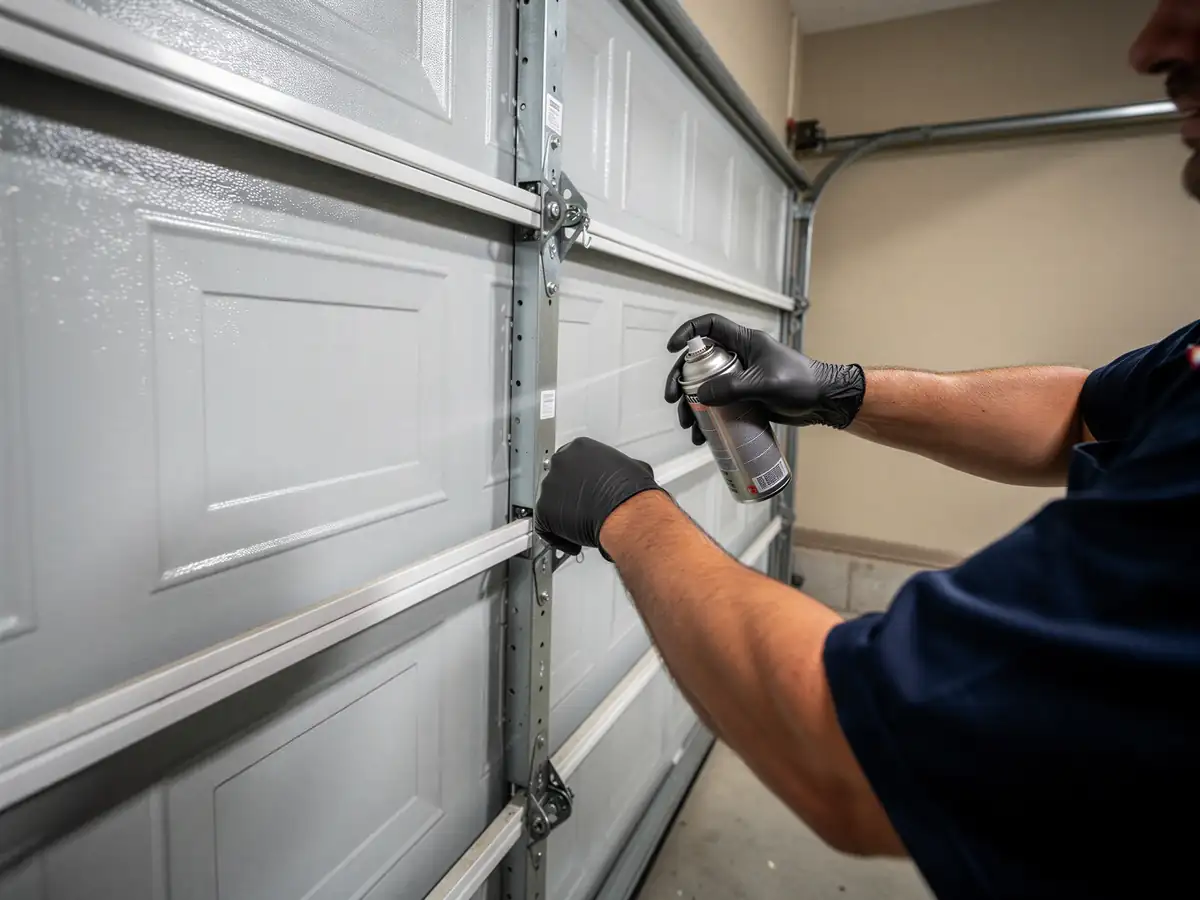
Why This Fails Locally
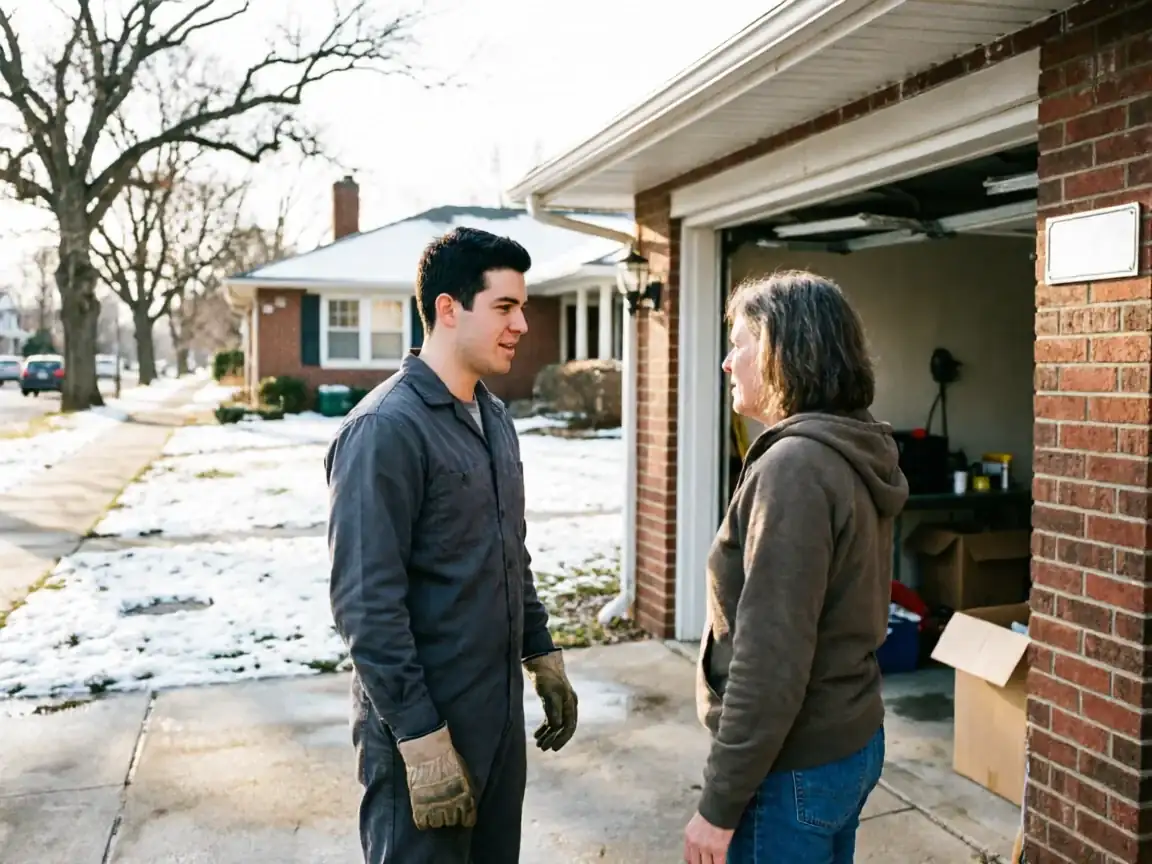
It's a 10-mile drive from our shop in Deerfield out to Libertyville, and that distance shapes how these calls get run. We don't keep a crew sitting in Libertyville waiting on a door to jump its track, so when a call comes in from this side of the county, we're often grouping it with another stop nearby rather than sending a truck out solo. That's not a knock on the town, it's just the math of covering 53 named areas from one base.
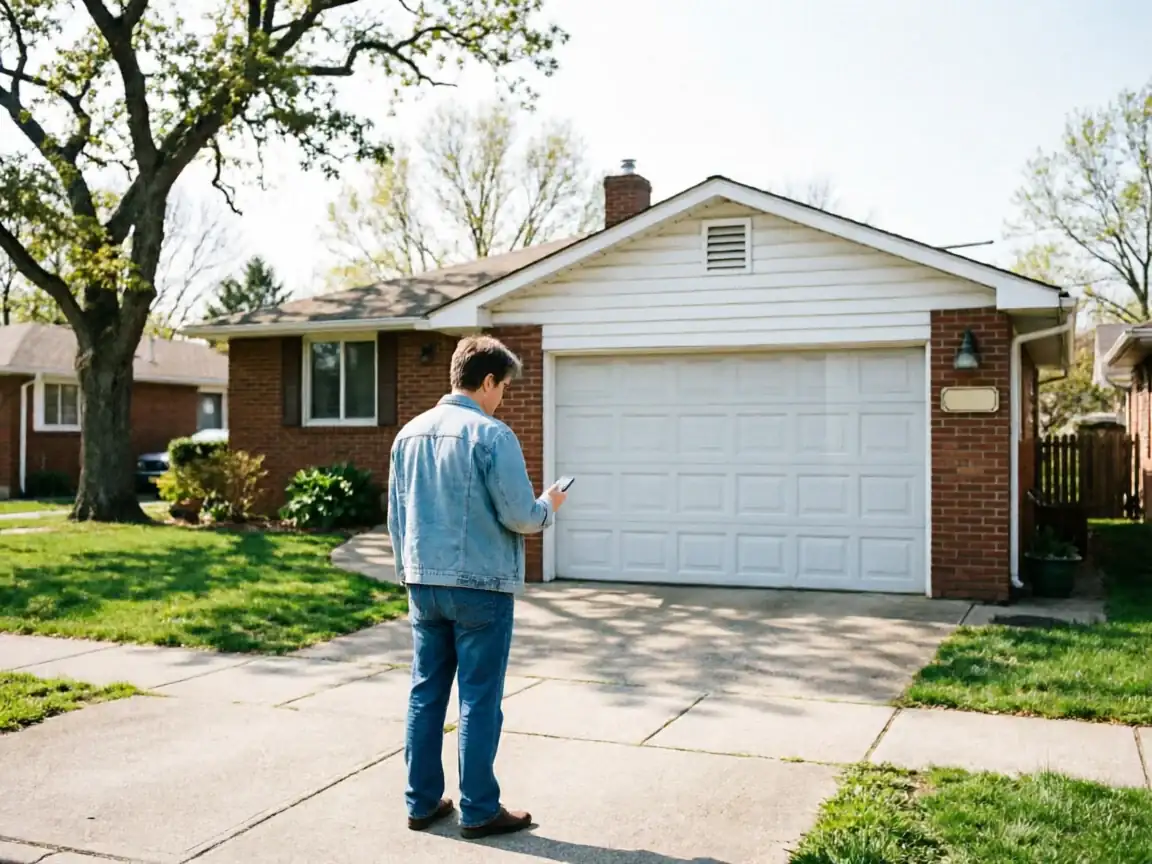
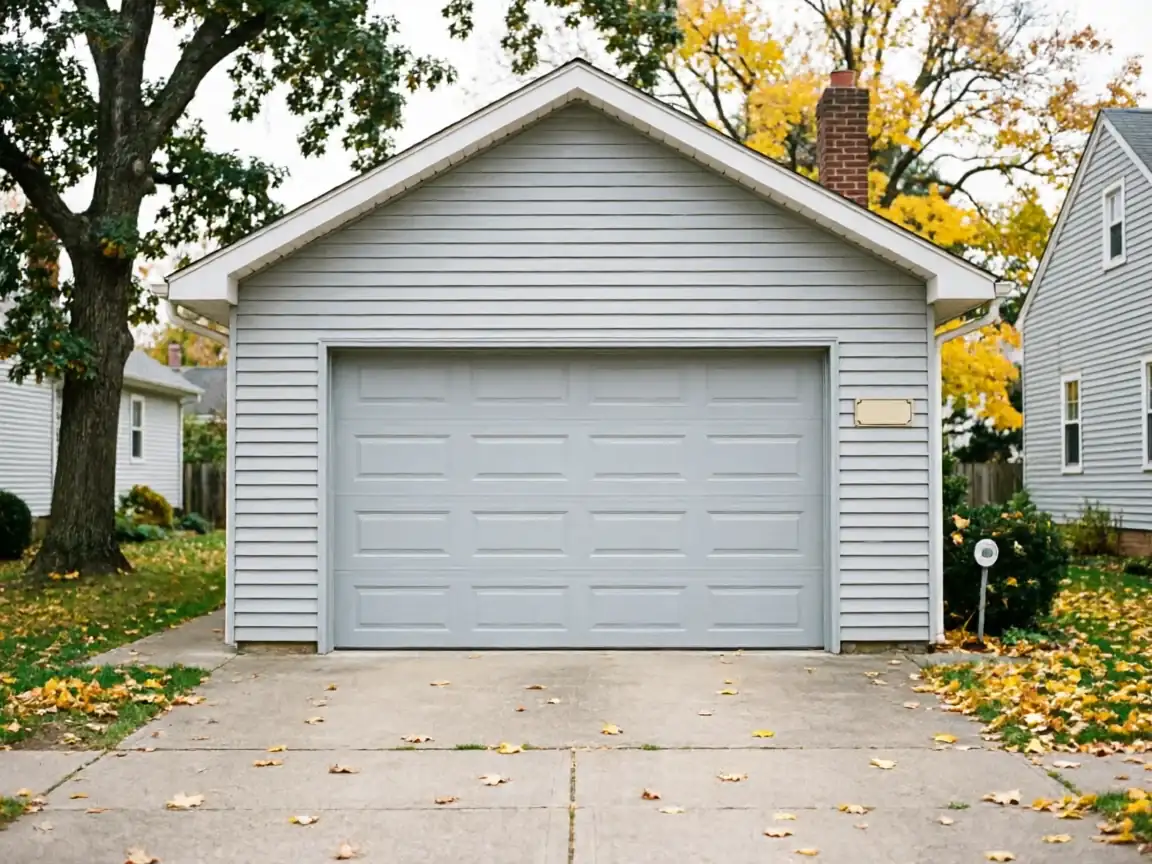
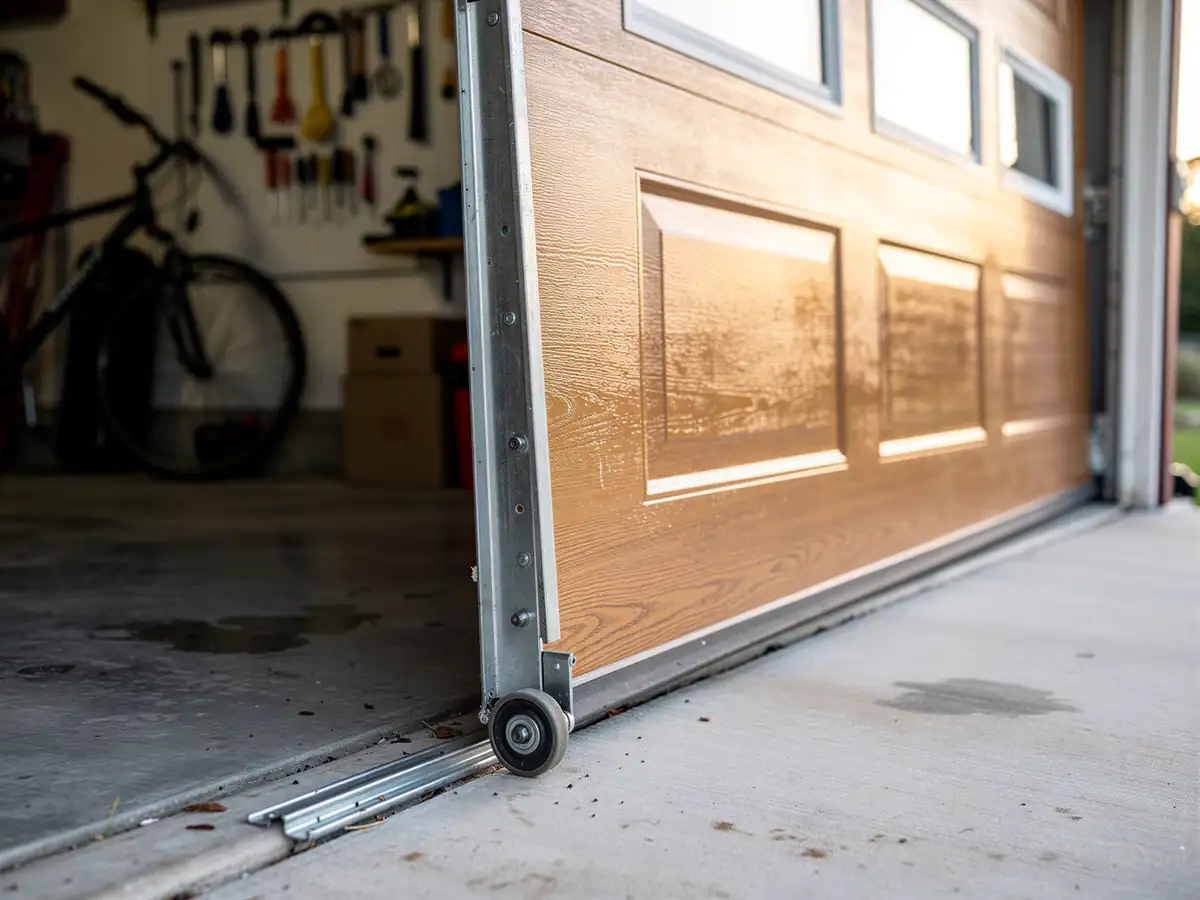
What we find once we're there tracks with the housing. Libertyville's homes went up mostly around 1976, right in line with the broader service area's 1960s-70s building wave and a median build year of 1977 across the territory. Doors from that era tend to run on lighter steel track than what's installed now, hung with hardware that wasn't built for 50 years of seasonal swing. A roller worn down on one side, or a track bracket that's worked loose from the jamb, walks the door off the rail slowly, then all at once. Add a slammed door or a car bumper tap and the whole panel can pop clean off one side.
See the main service page for the broader list of what we handle: /libertyville/garage-door-service/.
How Long It Takes
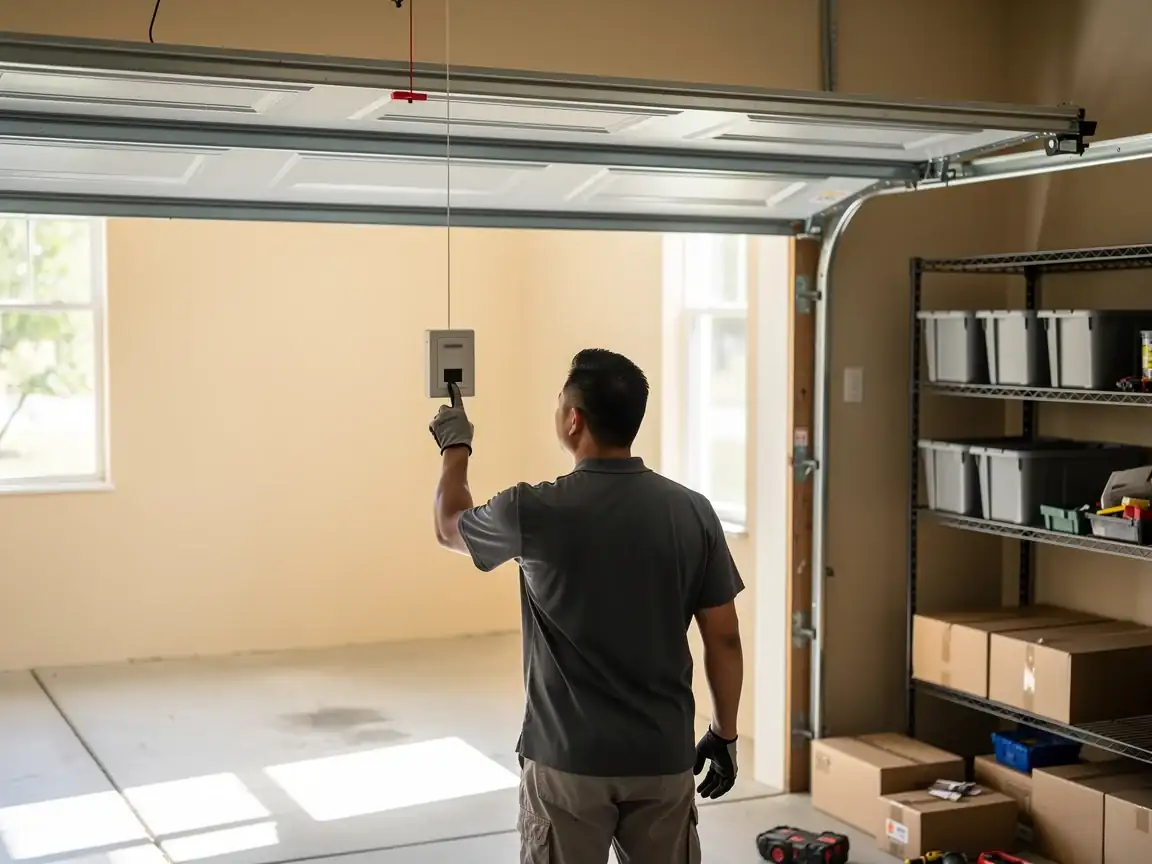
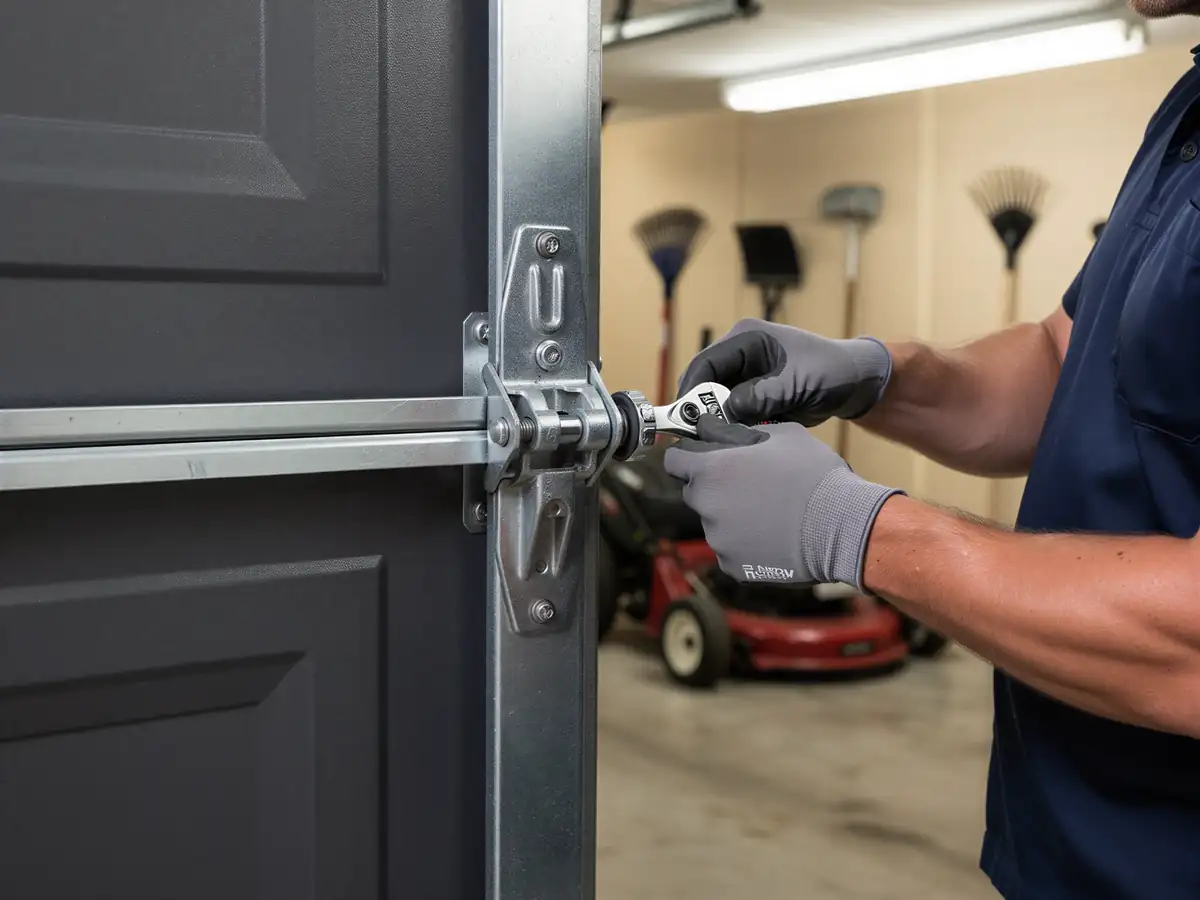
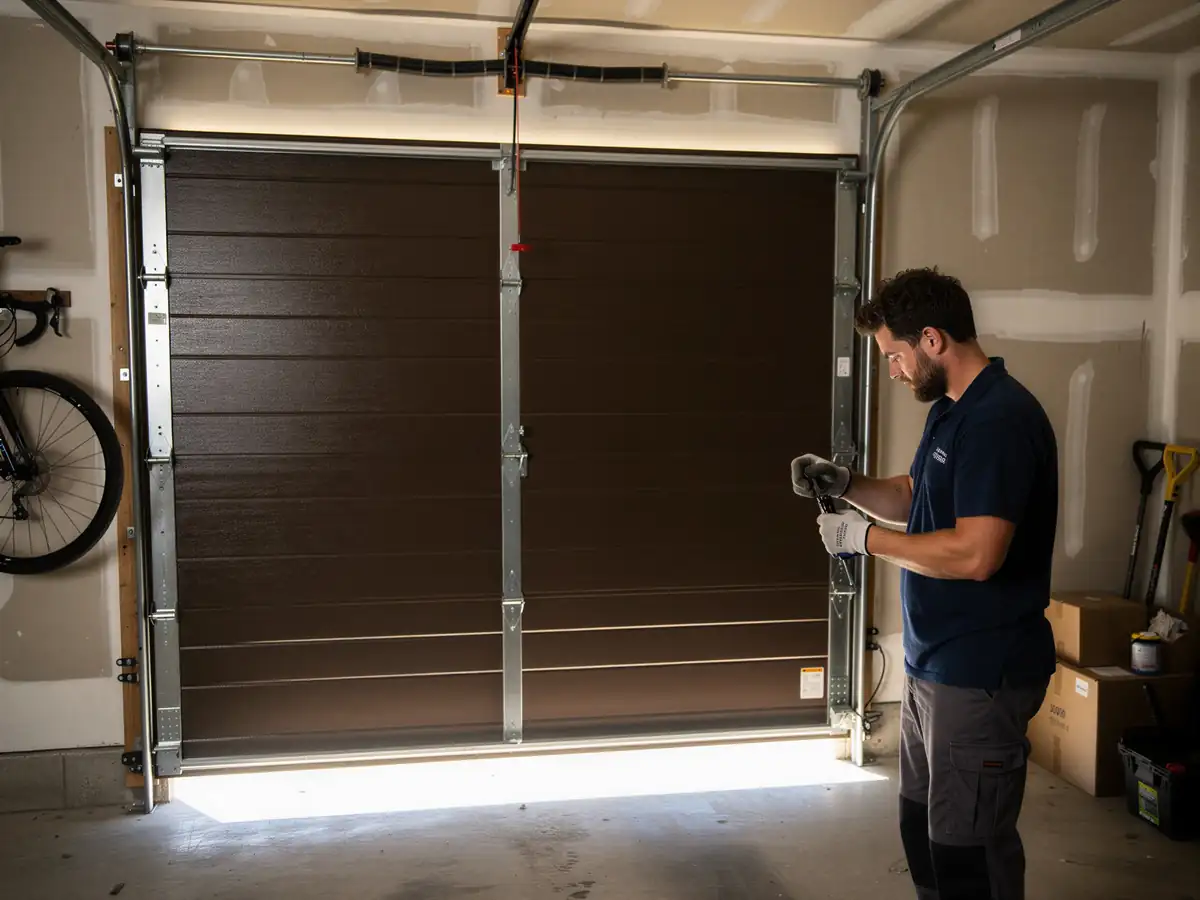
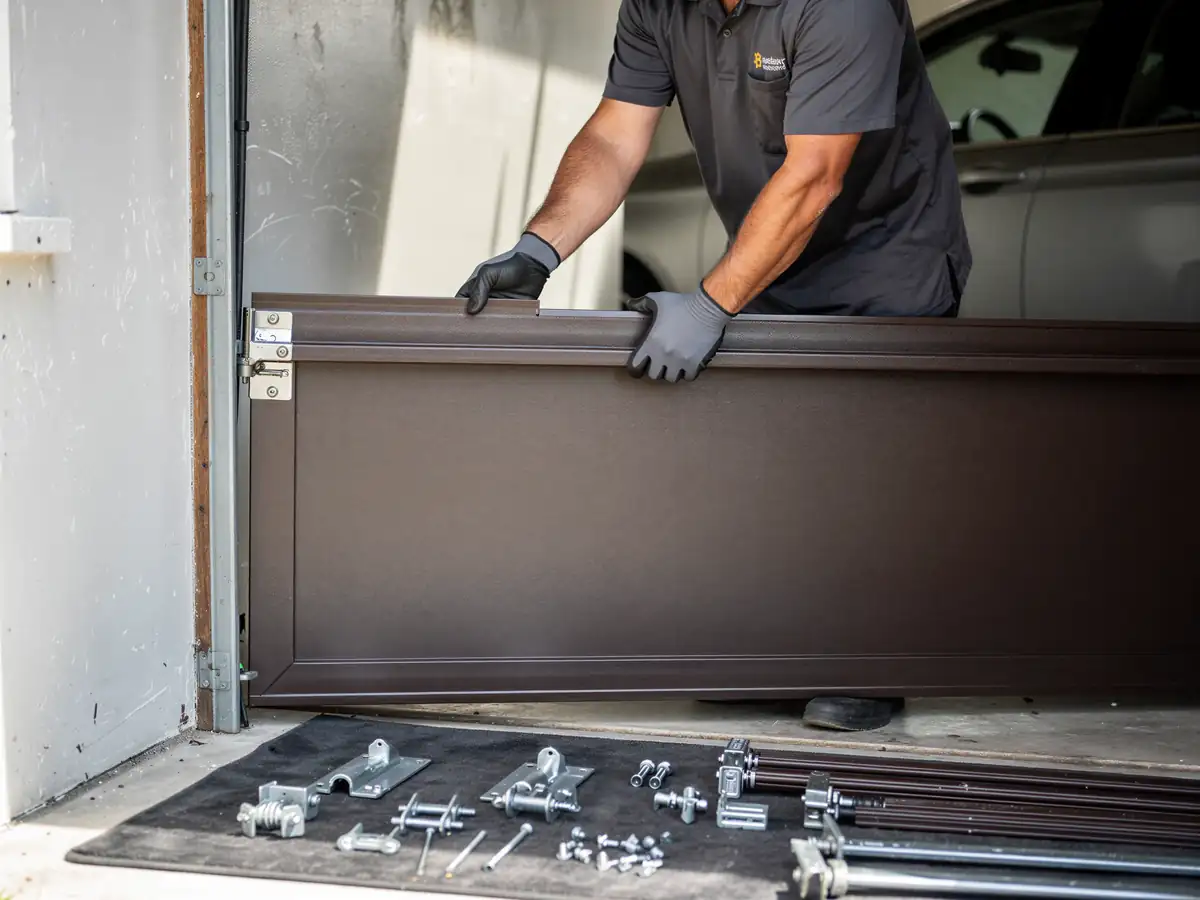
Once we're on-site, re-seating a door that's off-track but not bent is usually the fastest part of the visit - tightening loose track brackets, re-aligning the rail, and checking the rollers that let it happen. What takes longer is figuring out why it jumped in the first place, especially on a door from the 1976 building wave where the track gauge and roller stems don't always match what's on the truck for newer installs.
We won't quote a response window for Libertyville specifically - the 10-mile run from Deerfield means we're scheduling around other jobs on that side of the territory, not treating this as a standalone same-day stop. If the track itself is bent or the panel's cracked where it left the rail, that adds time, because we're no longer just resetting hardware, we're replacing it.
The honest limit here: if a specialty part isn't something we carry (more on that below), the fix gets split into two visits - one to stabilize the door so it's safe to use, and a second once the part's in. We'd rather tell you that up front than promise a one-trip fix we can't back up.
Can You Do This Yourself
If the door is just sitting crooked in the opening with no bent track and no broken cable
You can sometimes walk it back onto the rail by hand - open it partway, check that both sides are riding in their tracks evenly, and see if it closes square. That's about where DIY should stop.
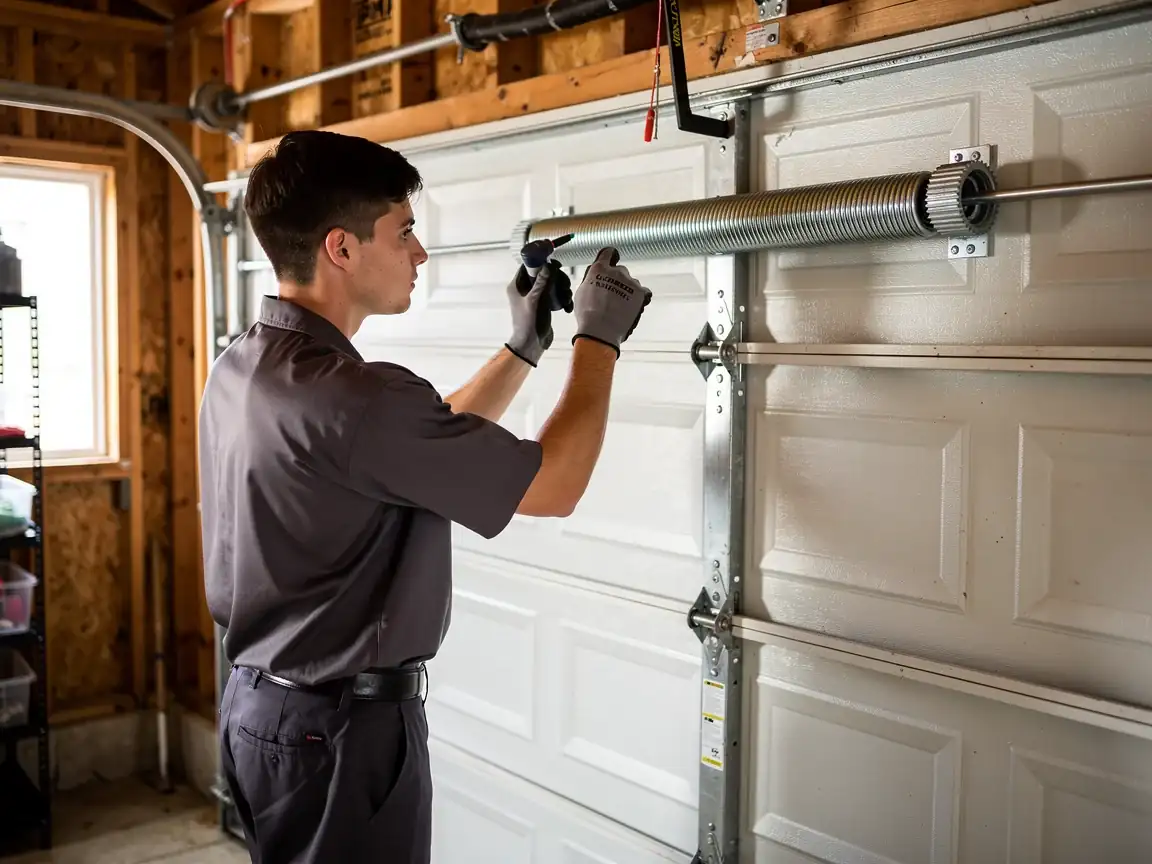
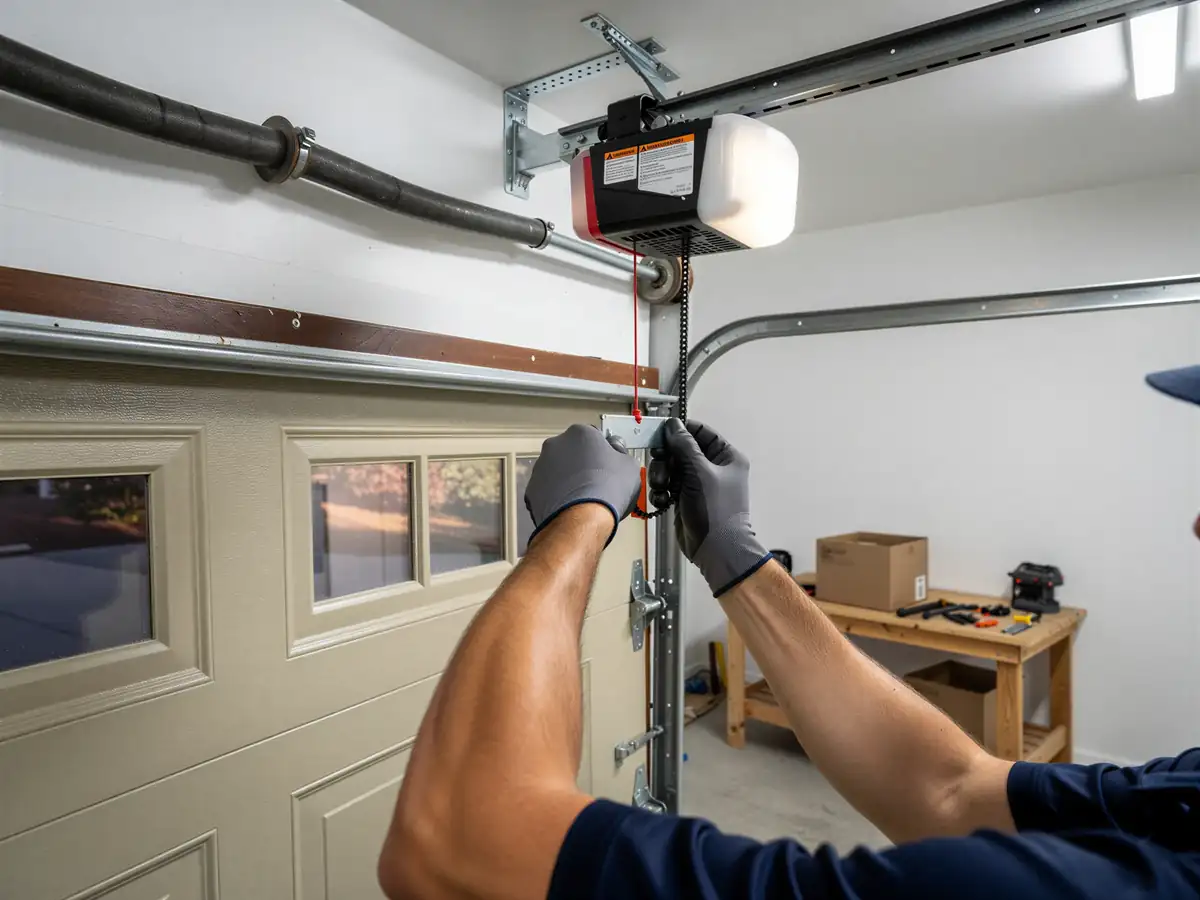
The spring system on a 1970s-era door carries real tension
And on these older torsion setups the anchor points are often not what you'd find on a door installed in the last decade. If a cable's involved, or if the door came off the track because a roller sheared or a hinge tore loose from the panel, that's not a weekend fix - it's a call. Forcing a door back onto bent track usually bends it worse and can drop the panel.
One thing worth checking yourself before you call anyone
Look at the bottom corners of the door for daylight gaps or a visibly bowed track. That tells us a lot before we even get there, and it's free to check.
What You Are Seeing
An off-track door doesn't always announce itself with a bang. Most of what we get called out for in this area starts as a door that closes unevenly - one corner touches down before the other, or there's a gap along one side you can see daylight through. Sometimes it's a grinding or popping sound partway through the cycle, which usually means a roller has already left the rail and is catching on the bracket.
On the 1976-vintage housing common here, we also see track that's simply worked loose from the framing over the decades - screws backed out of a jamb that's seen 45-plus years of seasonal wood movement, letting the whole rail flex when the door runs. That's different from a door knocked off-track by impact, and it changes the fix: one's a hardware tightening job, the other's often a track replacement.
If the door stops partway and won't go further in either direction, stop trying to force it with the opener. Running the motor against a jammed track is how a cracked panel becomes a cracked panel plus a burned-out opener. More detail on the signs is on the service page: /libertyville/garage-door-service/.
Parts We Carry
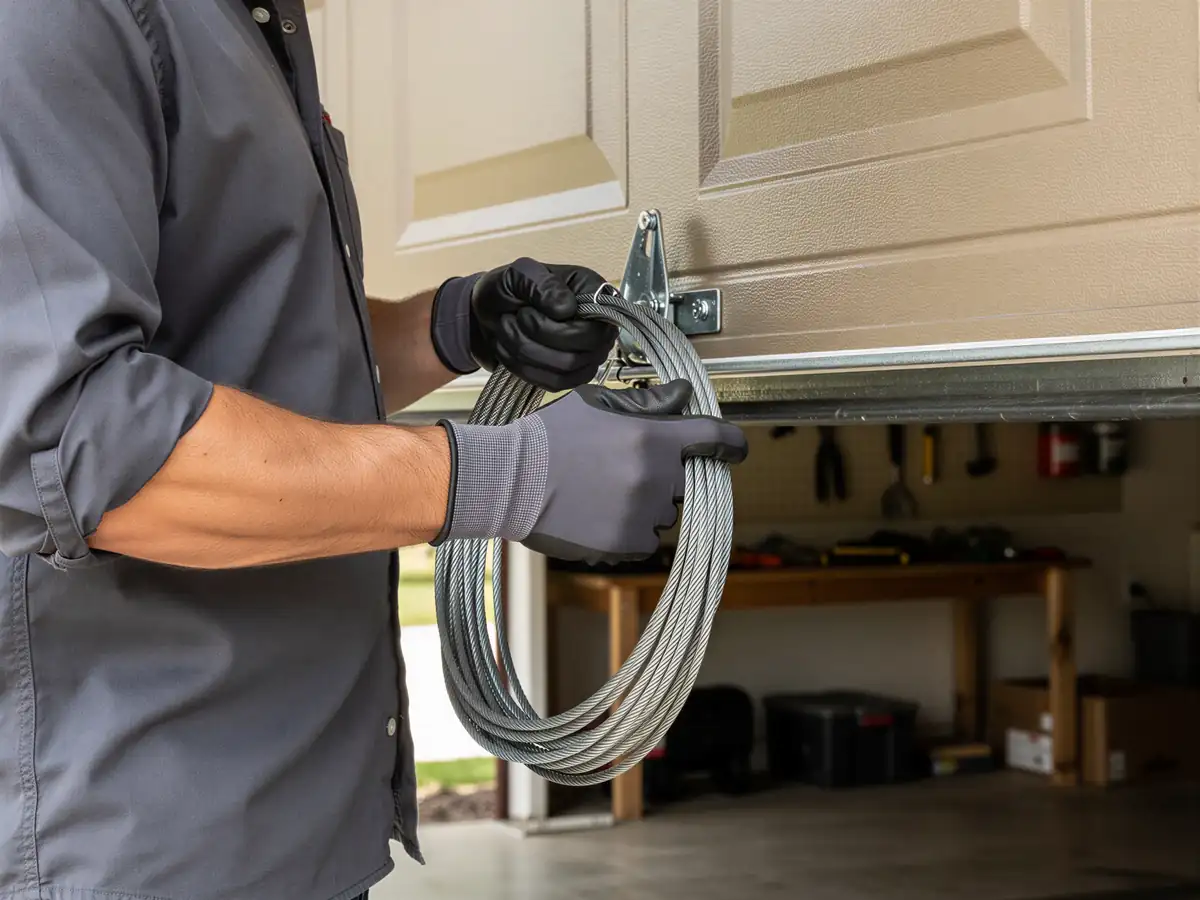
For off-track repairs, the truck carries standard rollers (steel and nylon), hinges, track sections in common widths, and cable for both torsion and extension setups - the stuff that covers most of what fails on doors across the service area's 1938-2009 housing range. For a door built around 1976, that usually covers the job in one visit.
Where we run into a wait is hardware specific to an older or less common door model - certain original hinge patterns or a track profile that isn't made anymore. When that happens, we order the part rather than substitute something that won't sit right, and that's the one honest limitation worth saying plainly: not every Libertyville door gets fixed same-visit if the hardware underneath it is unusual. We'd rather order the right piece than force a part that'll fail again in six months.
For a straightforward re-track or roller swap, most of what we need is already on the truck when we make the 10-mile trip out from Deerfield.