How Local Conditions Play In
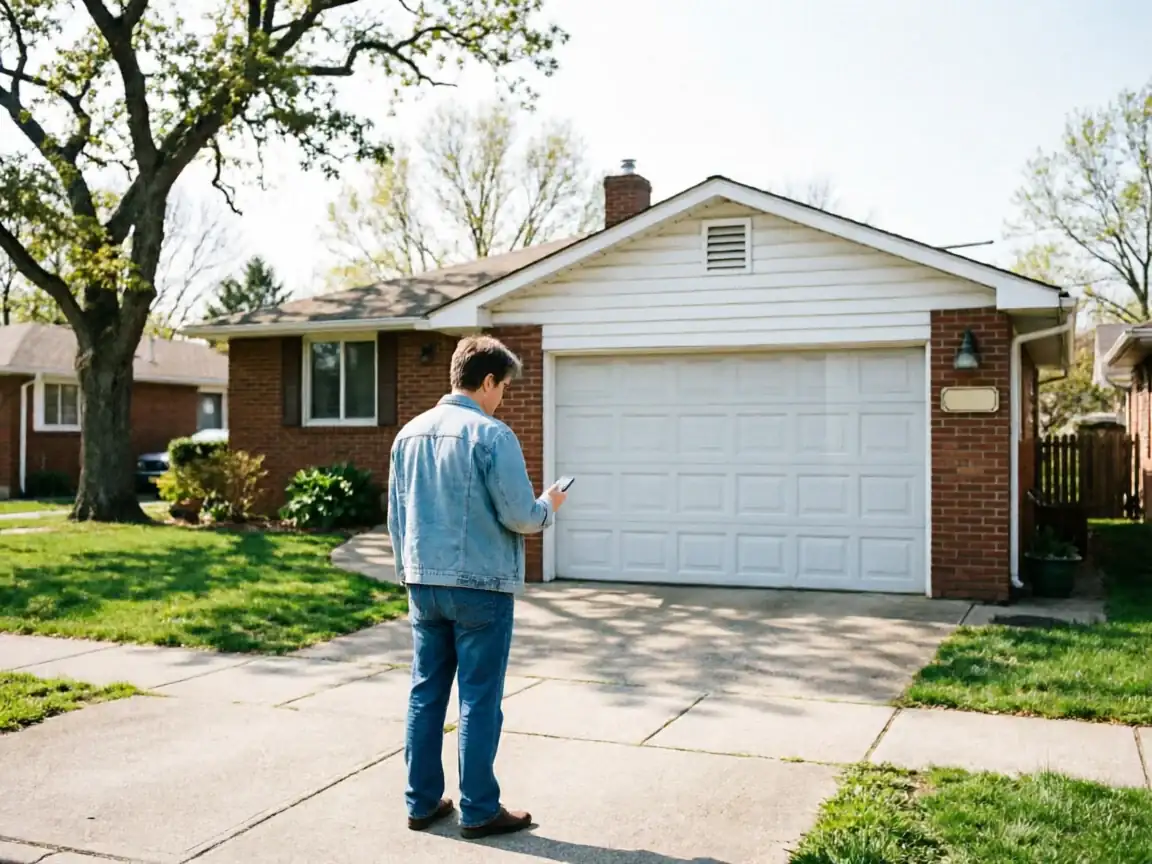
Most of Deerfield's housing went up between 1938 and 2009, with the bulk of it dating to the 1960s and 70s. That matters here because track hardware from that era was built to a different tolerance than what goes into new installs. Steel tracks from those decades are thinner-gauge, and over fifty-plus years the mounting brackets that hold them to the framing have worked loose a little at a time, even in houses where nothing else has been touched.
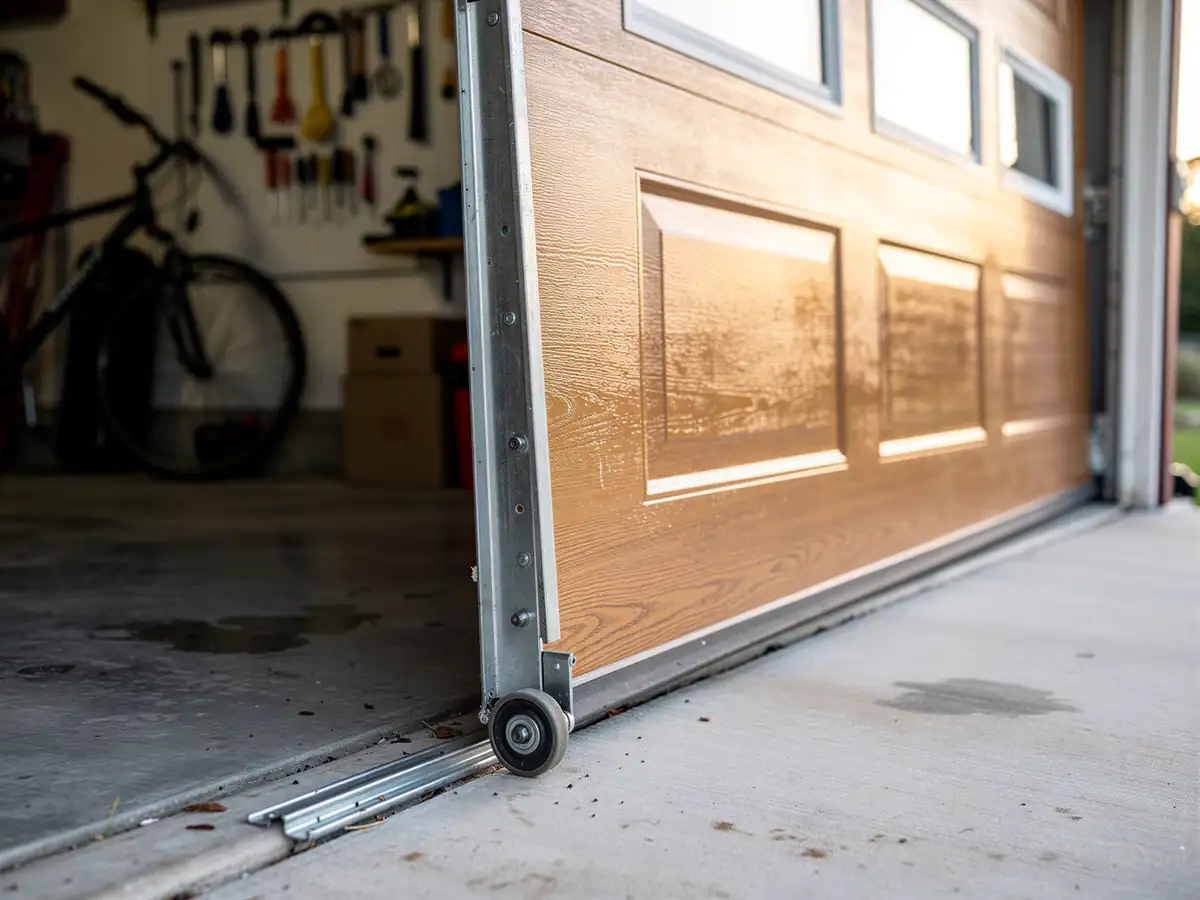
Add a cold climate on top of that. In a moderate-cold band like this one, the ground freezes and settles, concrete slabs shift a few fractions of an inch season to season, and the wood jamb a track is bolted to moves with the house. A track that was plumb in July can be a sixteenth of an inch off by January. That's not much, but it's enough for rollers to start riding the edge of the rail instead of the center, and that's the first stage of a door walking off track entirely.
In a house built in 1965 versus one built in 2005, the same amount of seasonal movement produces a different result, because the older track has had decades of cycles to loosen fasteners that were only ever torqued once.
When to Get Help
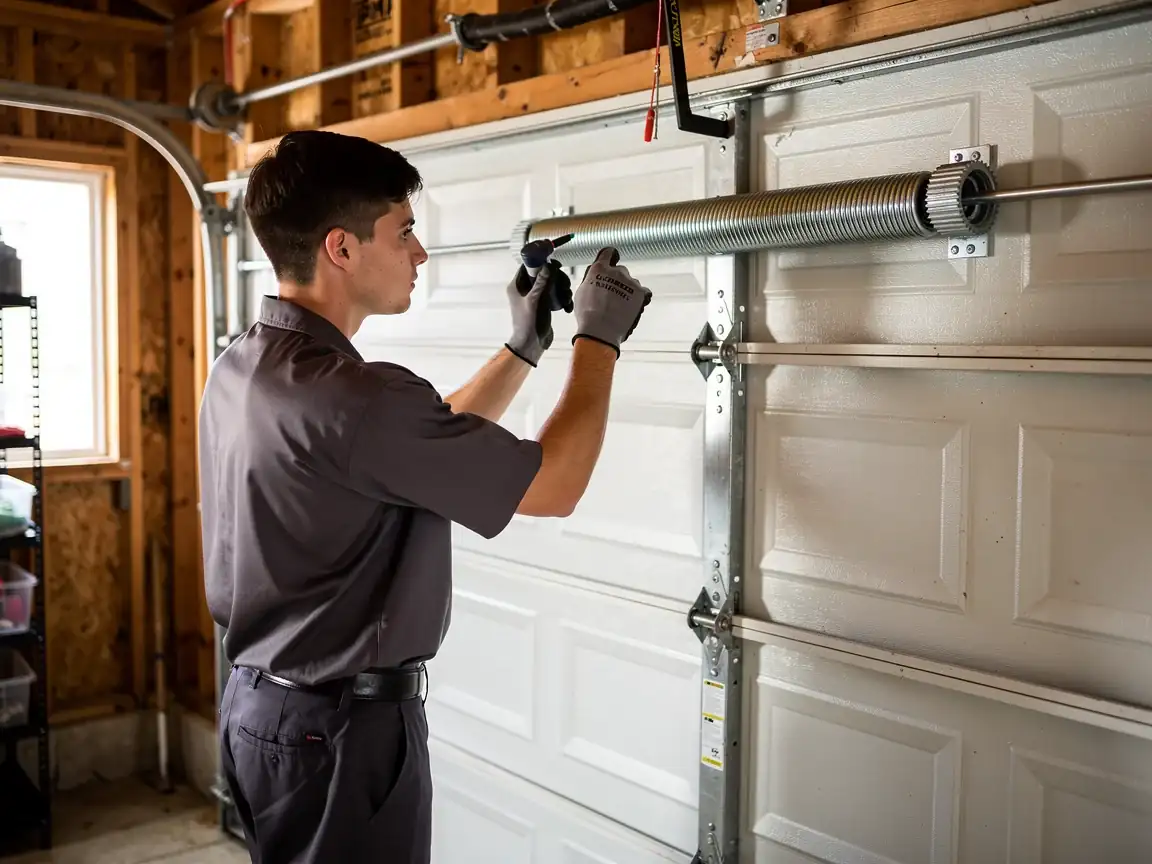
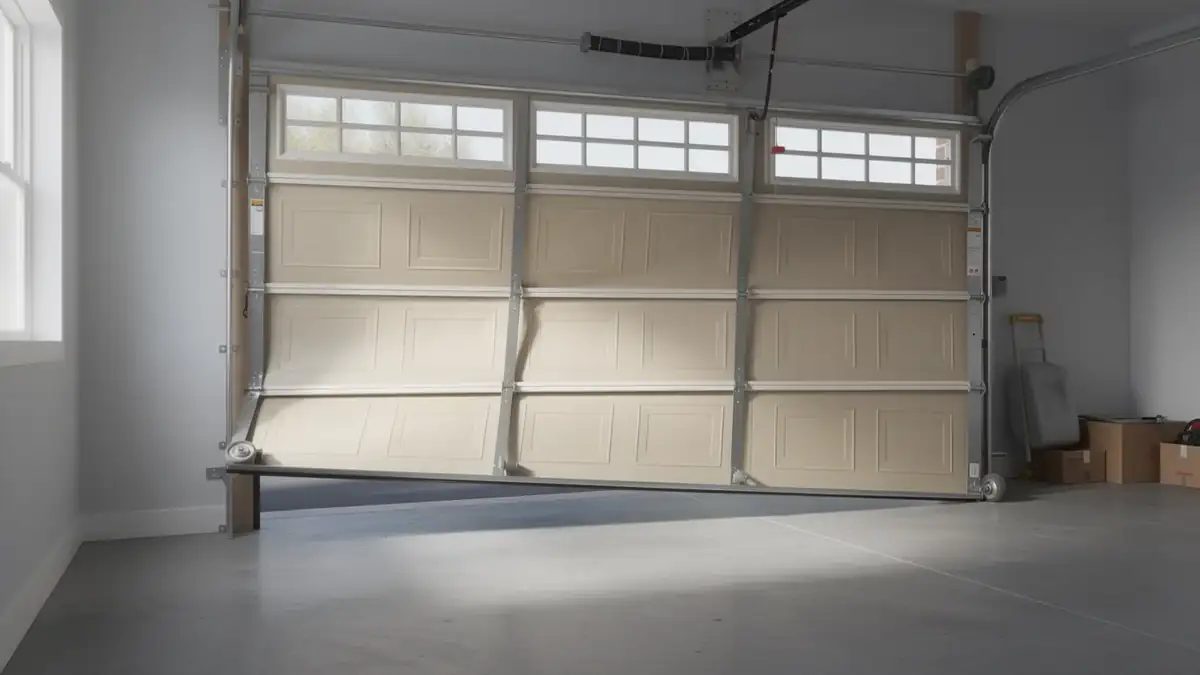
If a door is visibly crooked in the opening, if one roller has popped out of the rail while the others are still seated, or if you hear a scrape or a bang right as the door passes the midpoint of travel, stop running it. A door that's partway off track can come down unevenly, and the cable on the loose side can jump its drum.
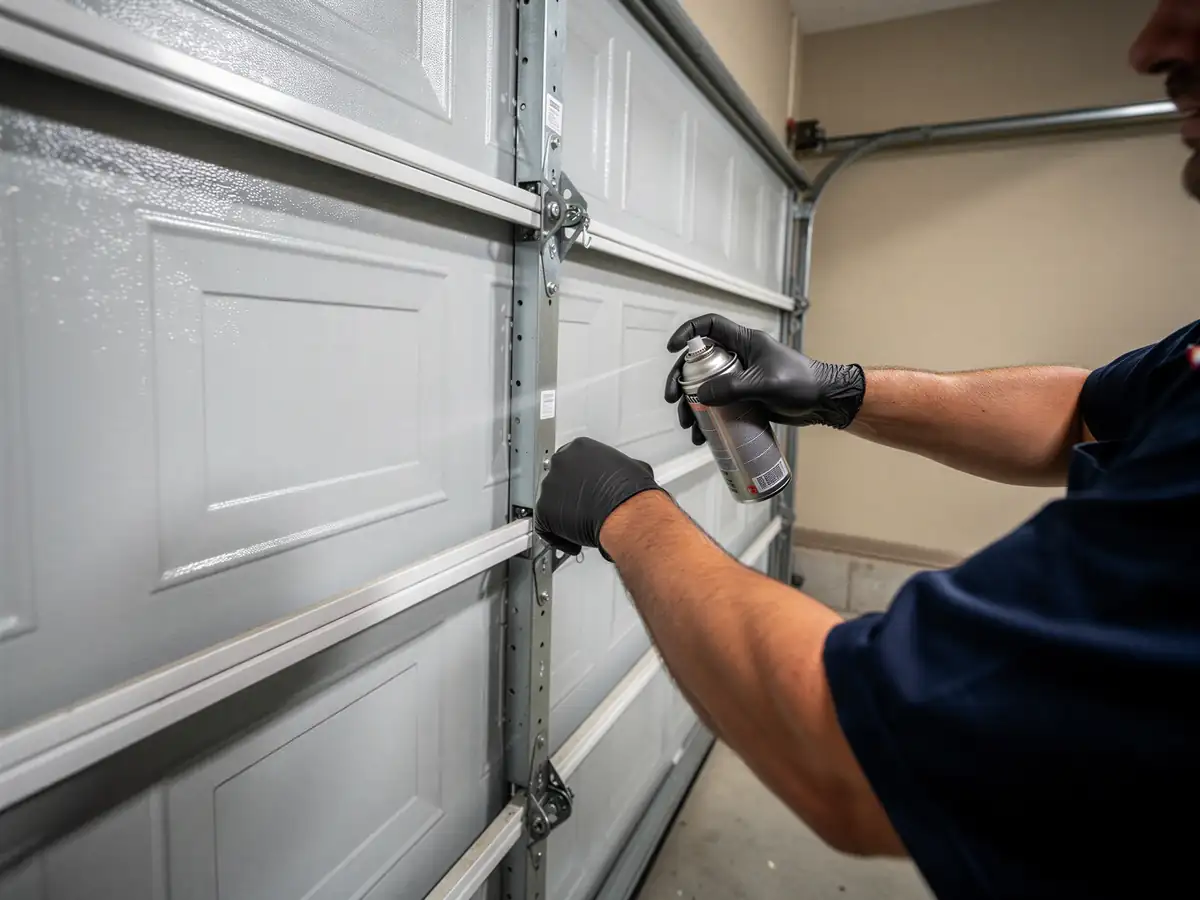
Call sooner rather than later if the house is on original 1960s or 70s hardware and you've never had the track brackets checked. That's a big share of the housing here, and bracket fasteners in a house that old are a known weak point, not a maybe. A quick inspection catches a loose bracket before it turns into a bent rail.
The Situation
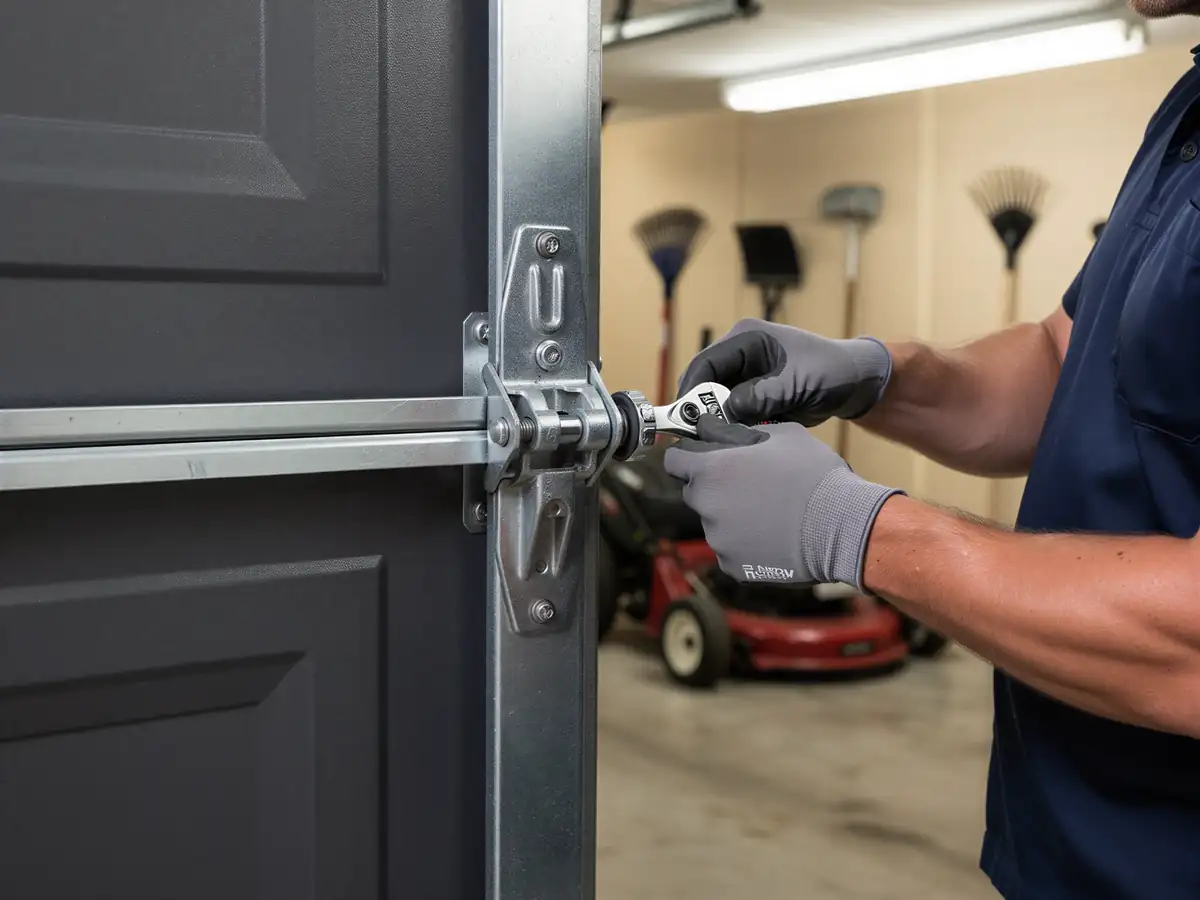
On a lot of Deerfield doors, what looks like "the door went off track" is really a bracket that pulled away from the jamb by a quarter inch
Letting the whole track lean out of plumb. The rollers keep trying to follow a straight line and the track isn't straight anymore, so they climb the lip of the rail instead of riding inside it. Once a roller is outside the track, the door binds, and most people's instinct is to force the opener through it, which bends the rail further.
On newer construction in the service area, built closer to 2009, this shows up less often because the framing hasn't gone through as many freeze-thaw cycles yet
But across the 53 named areas that make up this market, the majority of the stock is still that 1960s-70s generation, so a leaned-out bracket is one of the most common reasons we're called out at all.
The Common Mistake
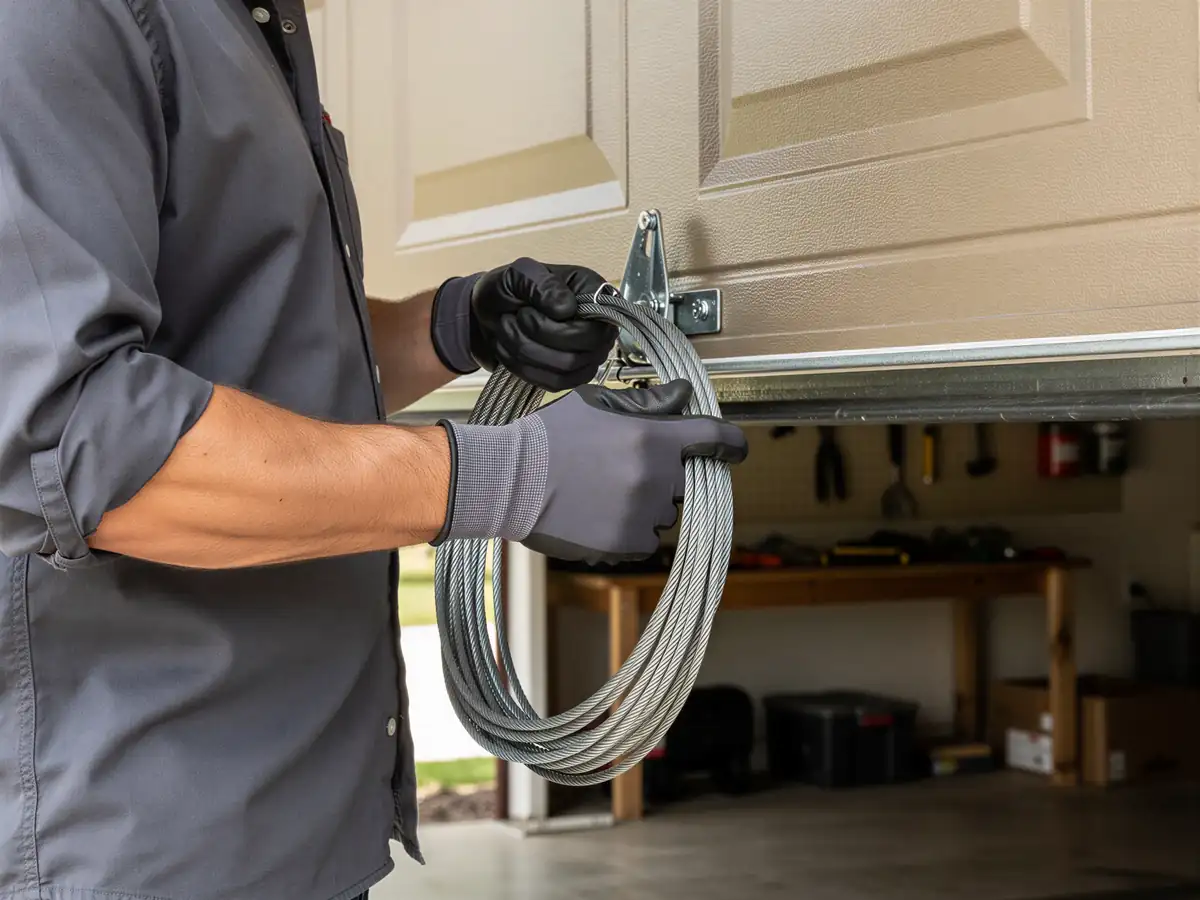
The mistake we see most is someone trying to muscle a derailed roller back into the rail by hand while the door is still under spring tension, or running the opener again to "see if it clears itself." Neither works reliably, and both can bend the track or snap a cable under load.
The other common mistake is treating a loose bracket as a one-time fix. In a house with original hardware from the 1960s or 70s, one loose bracket usually means the fasteners nearby are close behind it, since they were all installed at the same time and have taken the same decades of seasonal movement. Tightening the one that failed without checking the rest just buys a few more months before the next call.
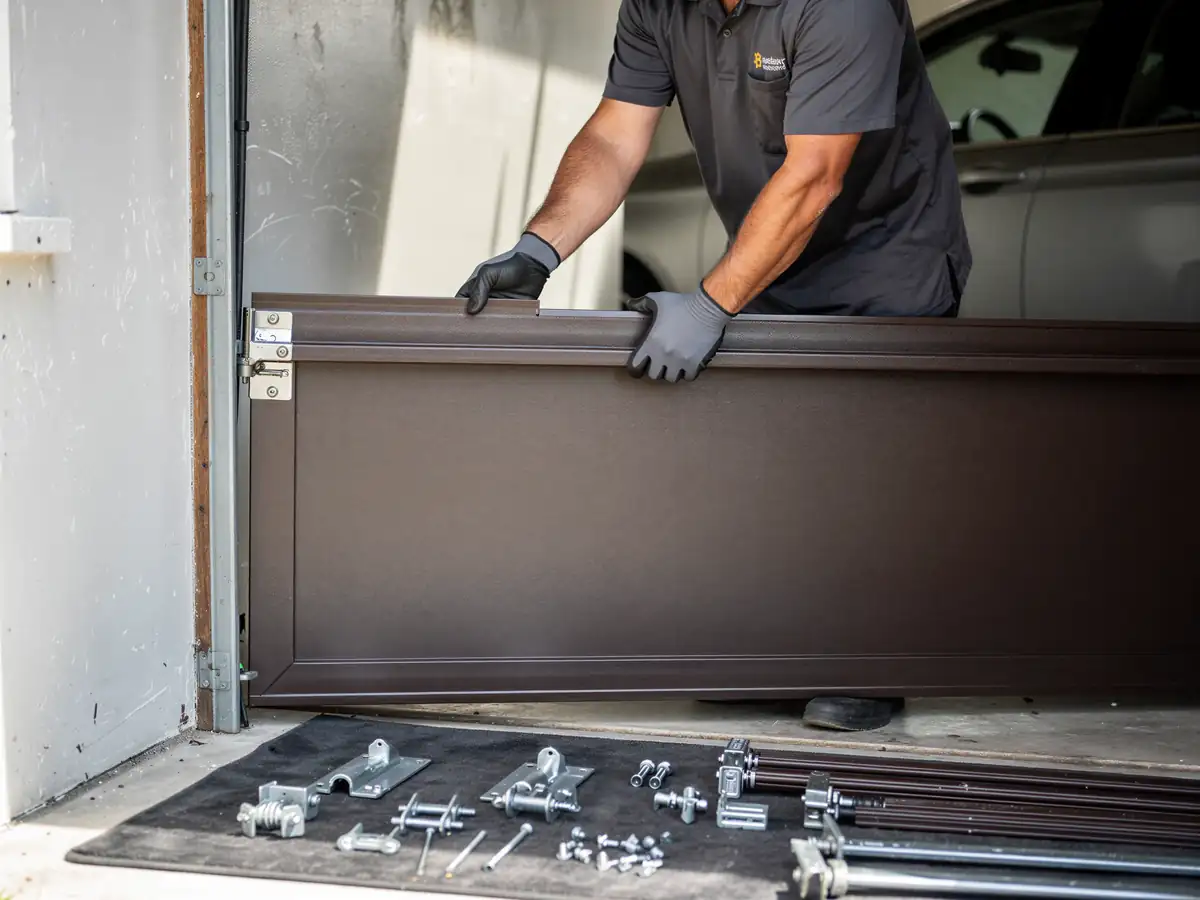
One honest limit here: if the track itself is bent, not just loose, straightening it rarely holds. Bent rail gets replaced, not hammered back into shape - a straightened track almost always drifts out of alignment again within a season.