How Local Conditions Play In
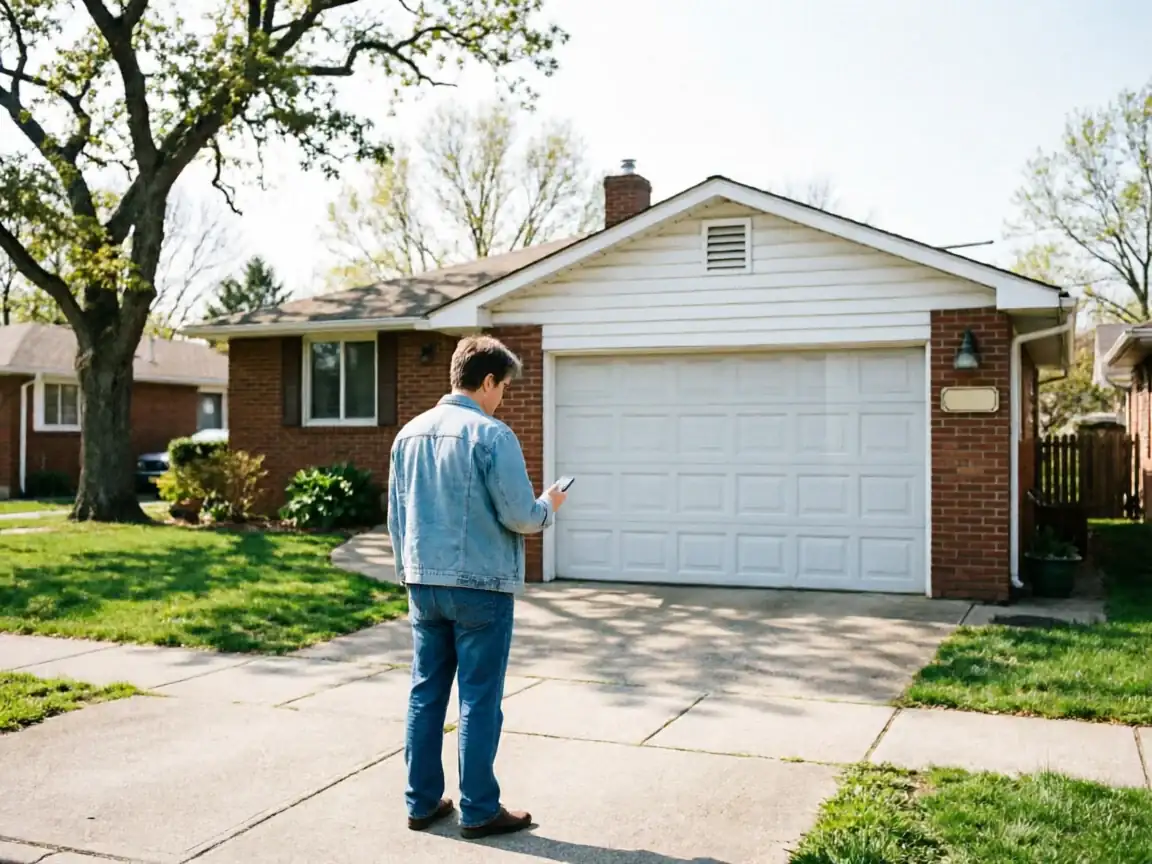
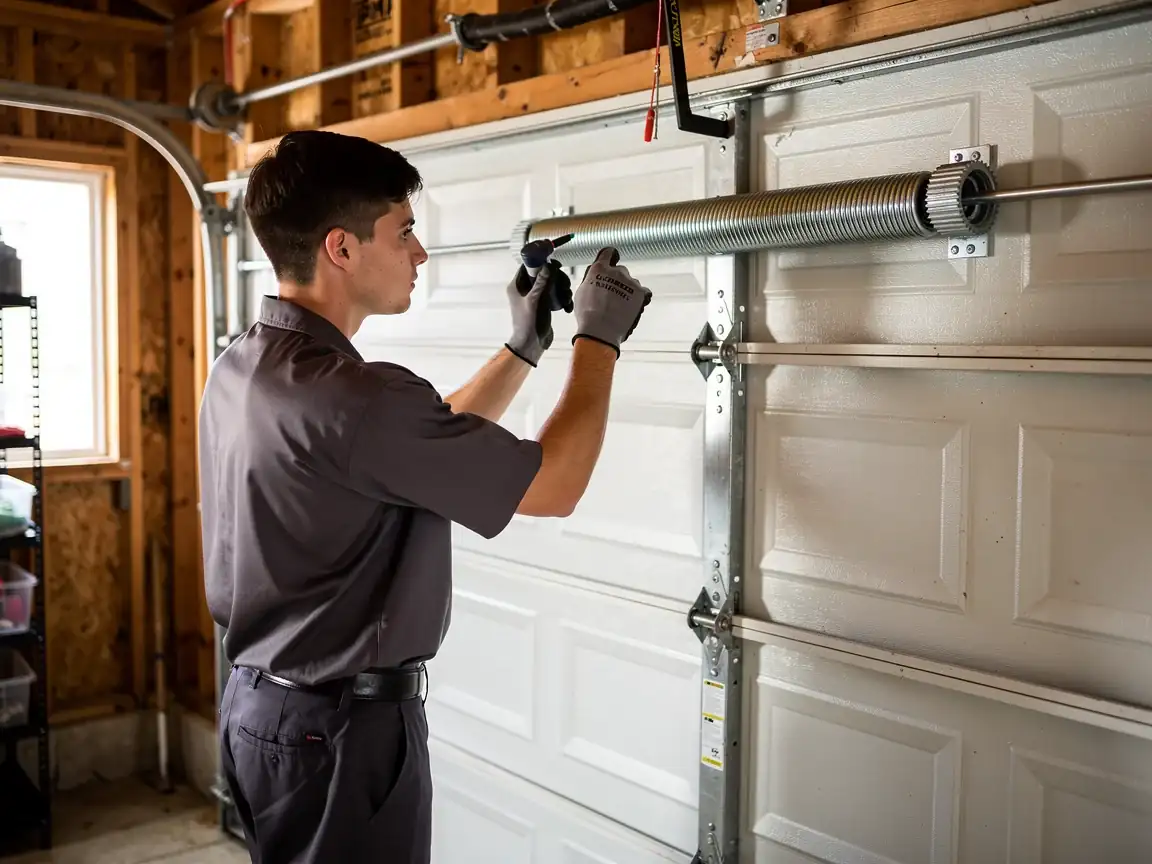
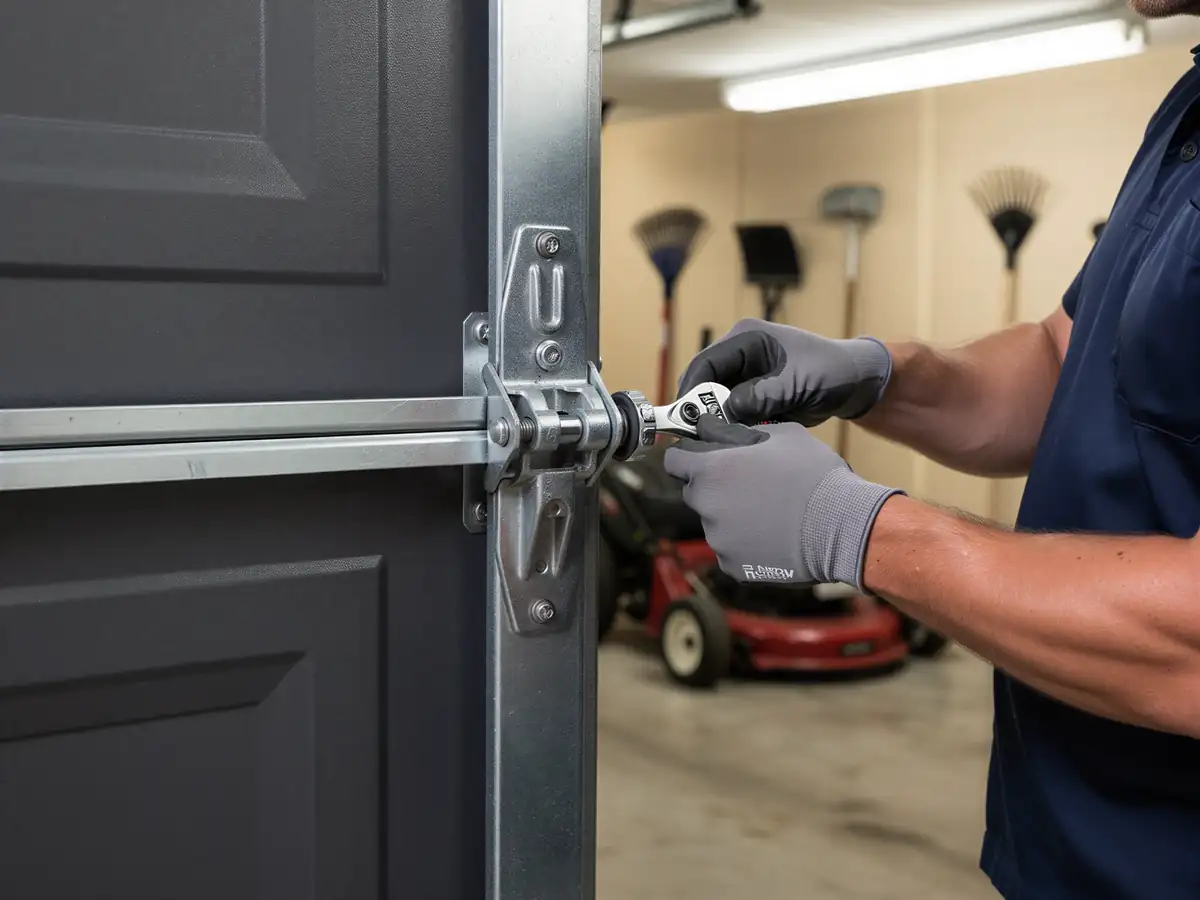
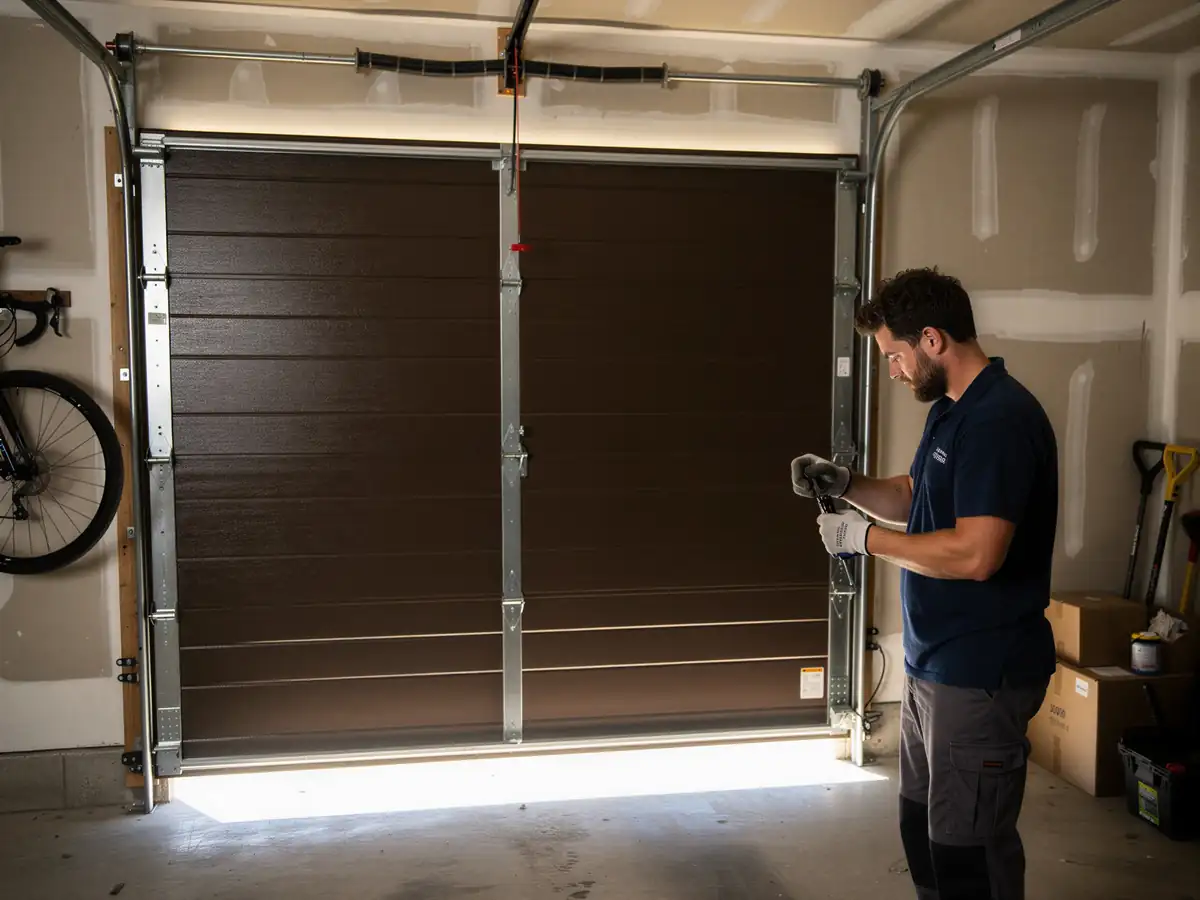
Deerfield sits in a cold-moderate climate band, and that matters more to a garage door than most homeowners realize. Steel torsion springs lose tension faster in repeated freeze-thaw cycles, and the grease in an original opener chain drive thickens up when the garage sits below freezing for days at a stretch. The first thing we check on any call here is spring wind - not because every spring is bad, but because a spring that's fine in July can bind or snap in January once the steel contracts. Housing in this service area was built between 1938 and 2009, with the median year sitting at 1977, so a large share of the doors we see are still running on hardware sized for a house built during that mid-century run. That hardware wasn't engineered for 50 years of cold-cycle stress, and it shows up first in the spring and the bottom bracket, not the panel itself. We also look at the track alignment, since older slab foundations in this area have settled enough over decades to throw a track out of plumb by a few degrees - enough to make an opener work harder than it should.
When to Get Help
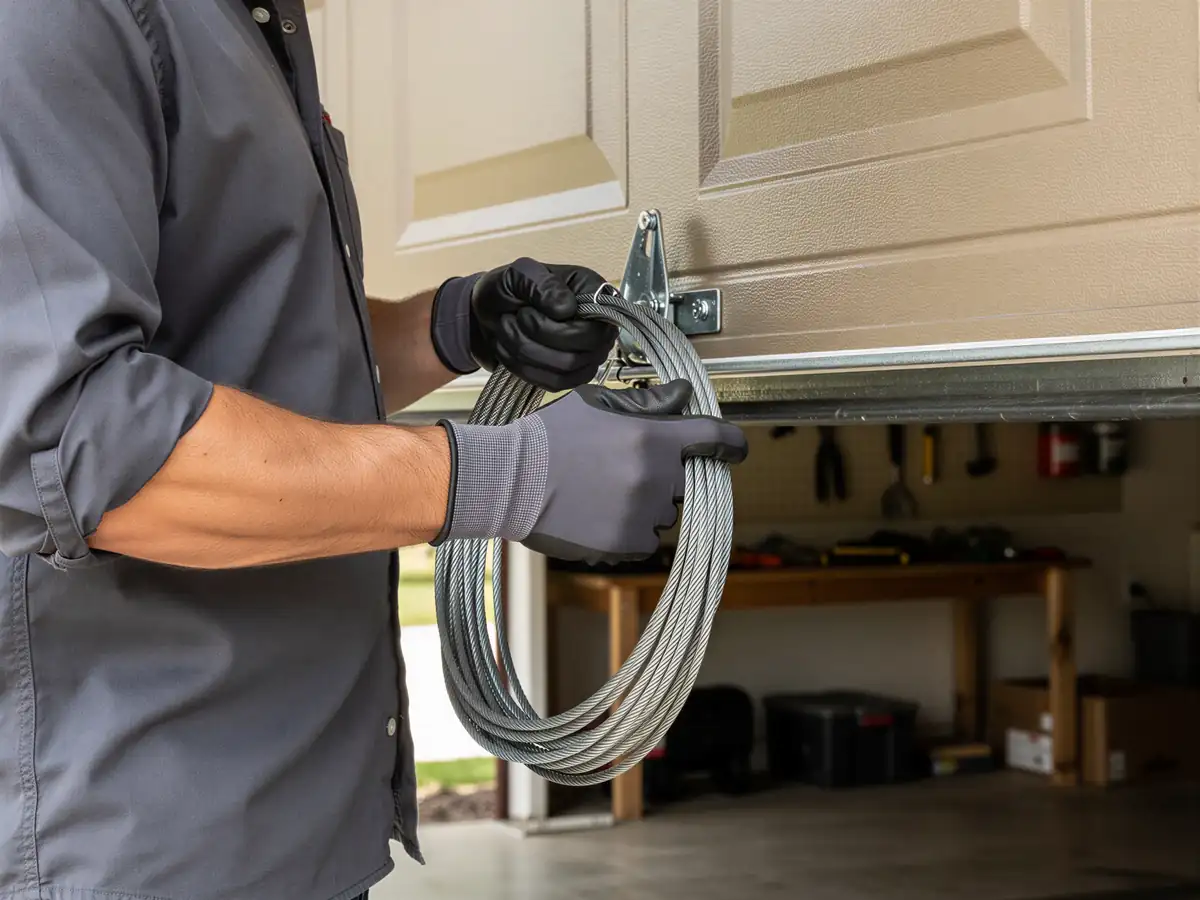
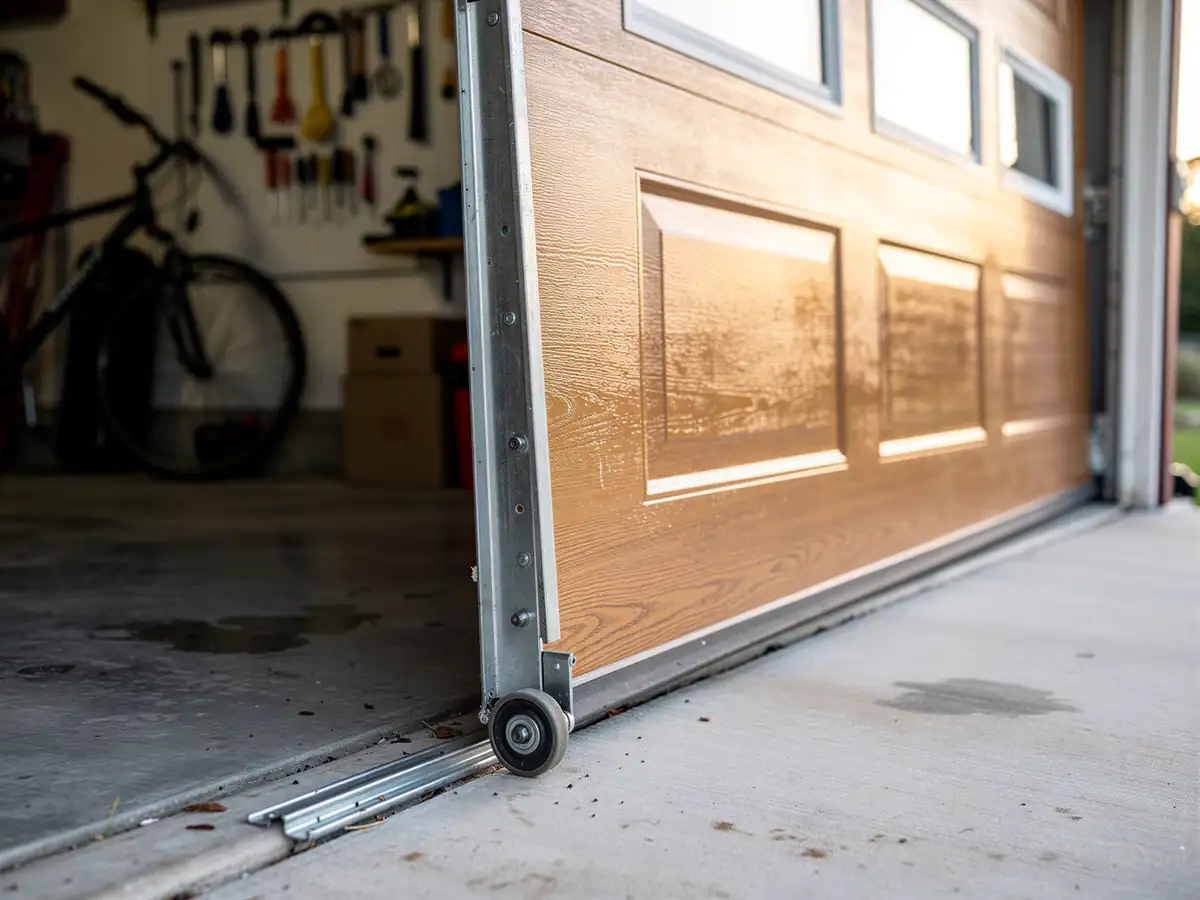
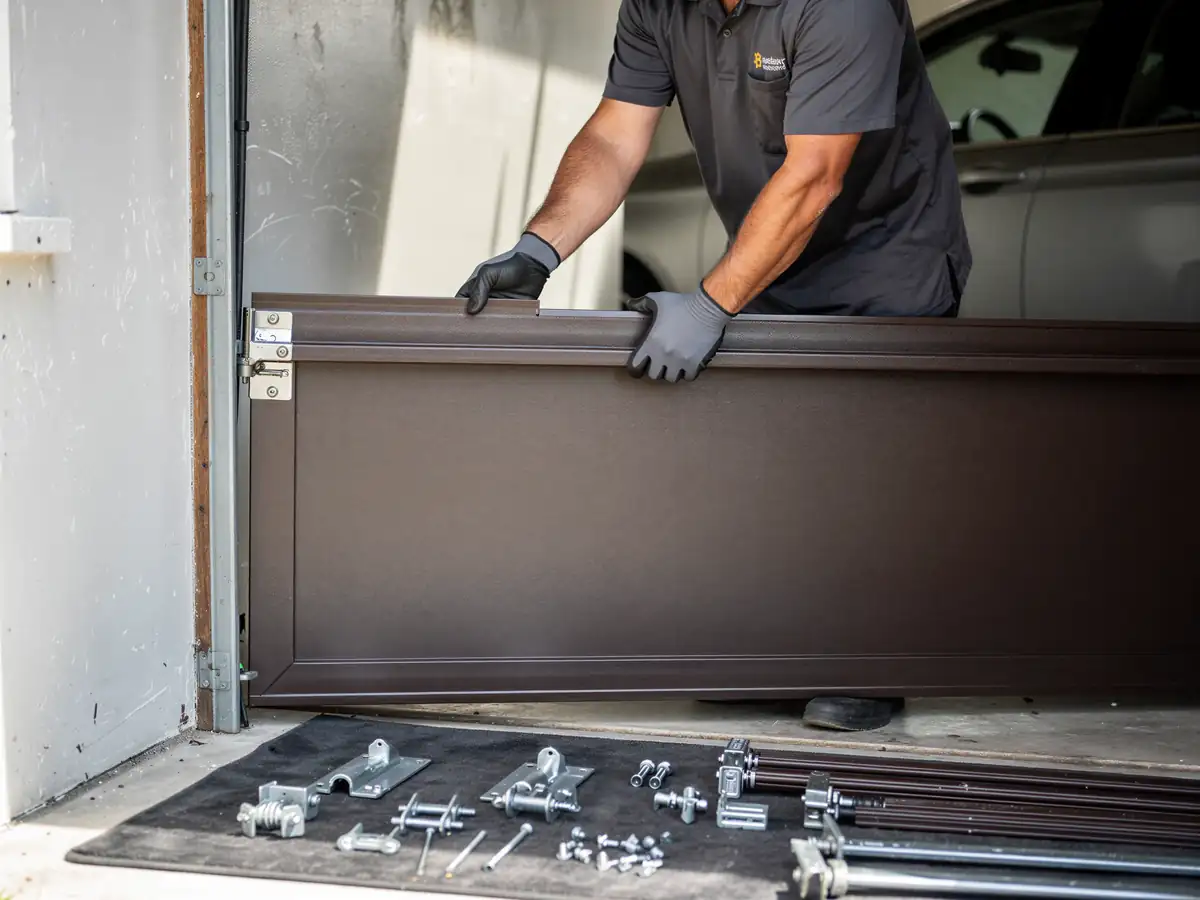
Call before the door fails completely, not after. A door that groans on the way up, or one where the opener strains and then reverses partway, is telling you the spring is close to the end of its wind - and a spring that lets go on a cold morning can bend the bottom bracket or crack a panel on the way down. If your house falls into the 1960s-70s stock that makes up most of this area, and you haven't had the spring looked at, that's reason enough on its own. We also want a call if the door has started dropping unevenly, a few inches faster on one side, since that's usually a cable or a roller giving out, not something that fixes itself. One thing we won't do is talk you into a same-day panel swap when the fix is a ten-minute cable adjustment - if the door still tracks straight and the panel's intact, there's no reason to replace it.
The Common Mistake
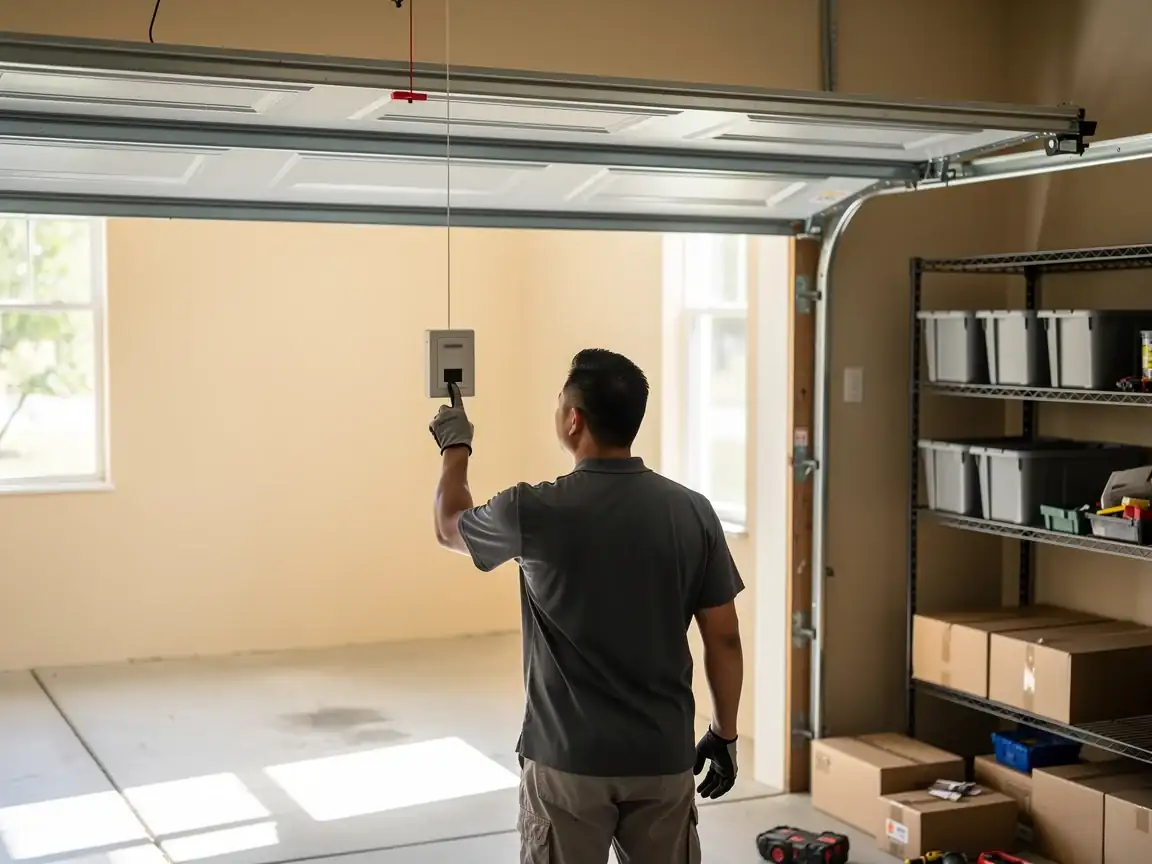
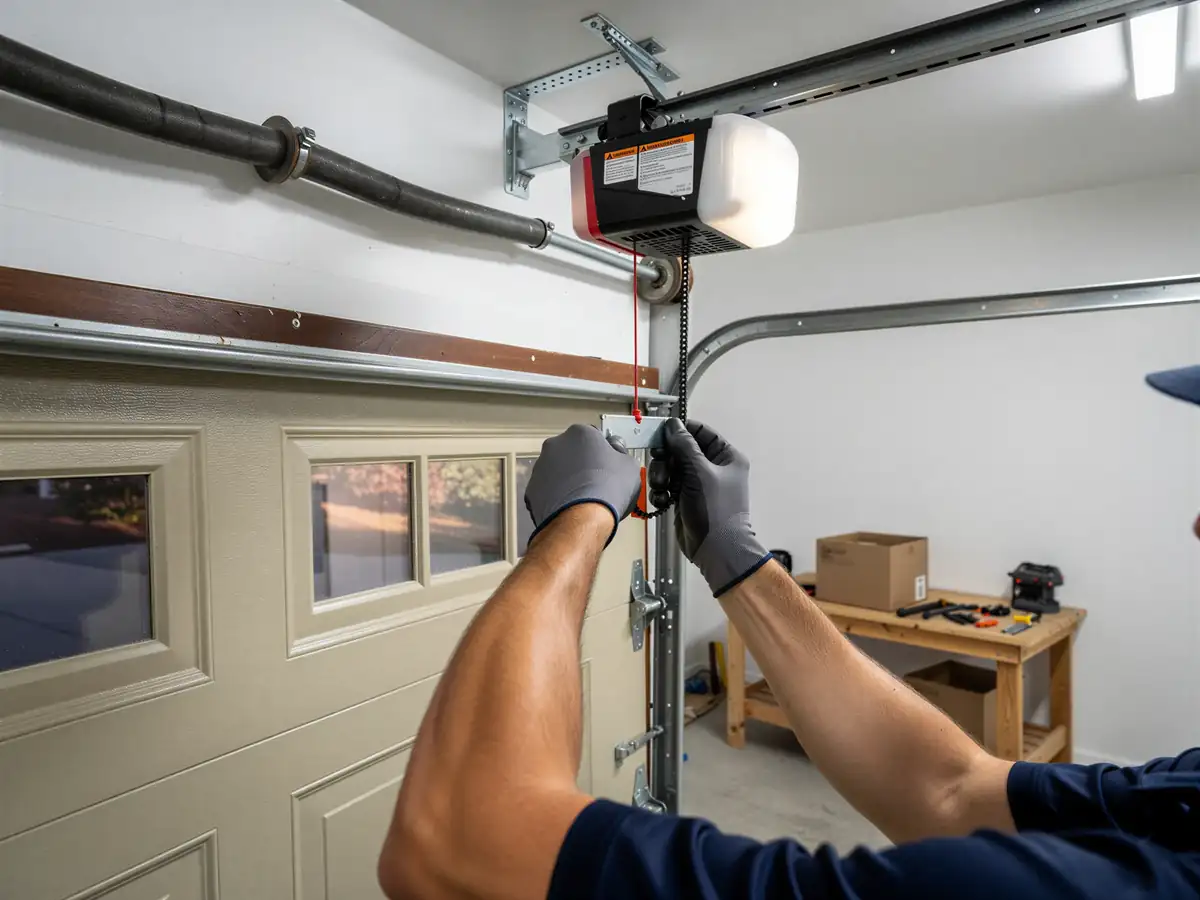
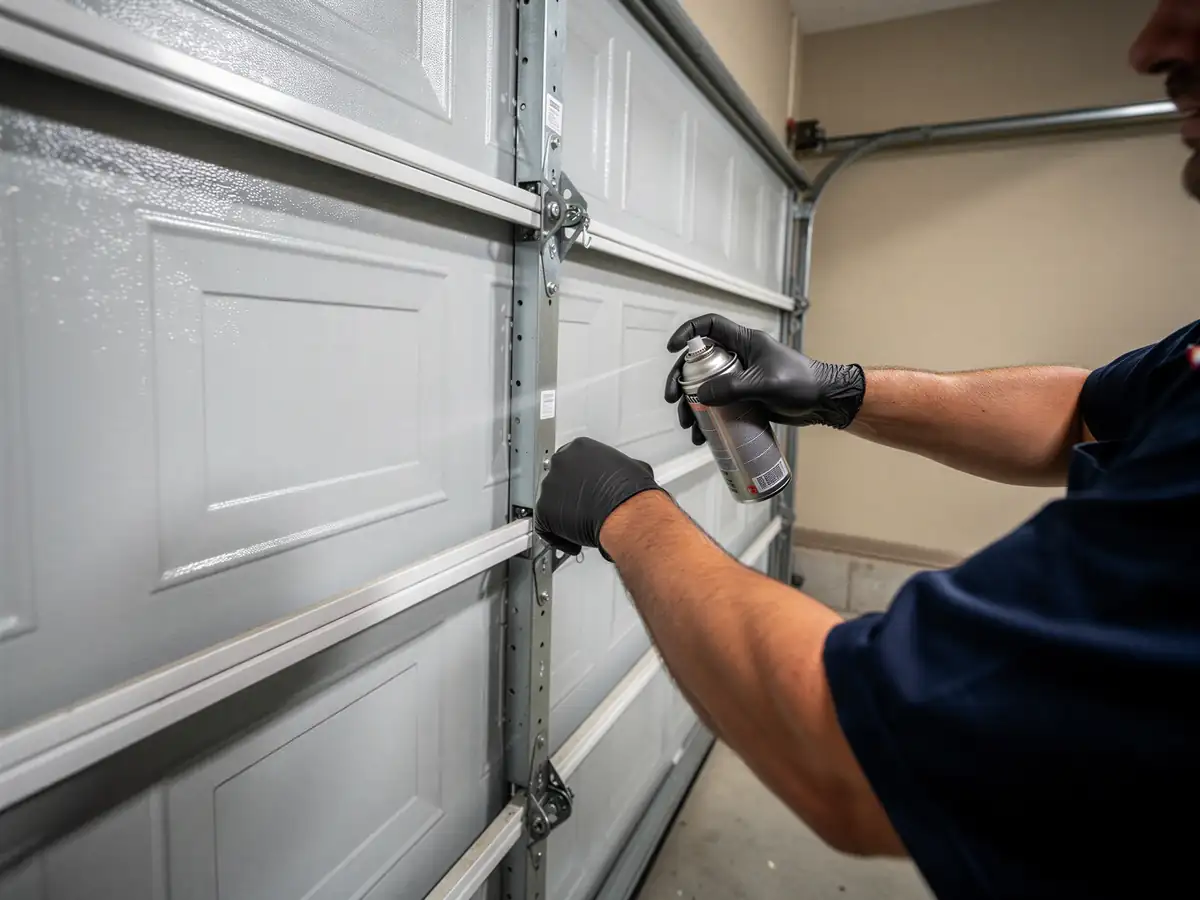
The mistake we see most is treating a noisy door as a lubrication problem when it's actually a wear problem. Spraying oil on a roller that's already flat-spotted quiets it down for a week and masks the fact that the roller needs replacing. On houses from the 1938-2009 build range that make up this area, we also see owners assume a stuck door means the opener motor is dying, when nine times out of ten it's the spring doing less of the lifting than it used to, so the motor is straining to cover the gap. Replacing the opener fixes nothing if the spring underneath is the real issue. We'll be honest that we don't carry every obsolete hardware size on the truck - some of the original bracket and track parts from houses built in the 60s and 70s are long out of production, and matching them can mean a short wait on a special order rather than a same-day fix.