Why This Fails Locally
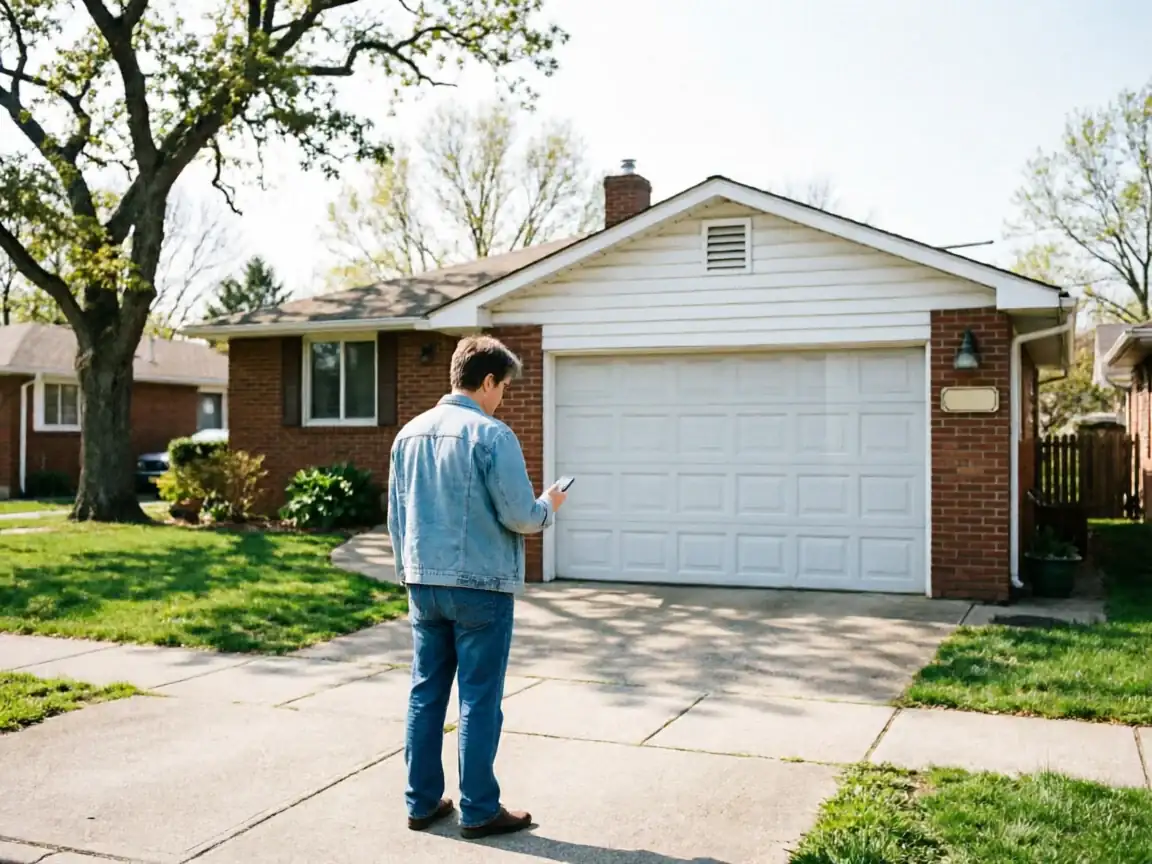
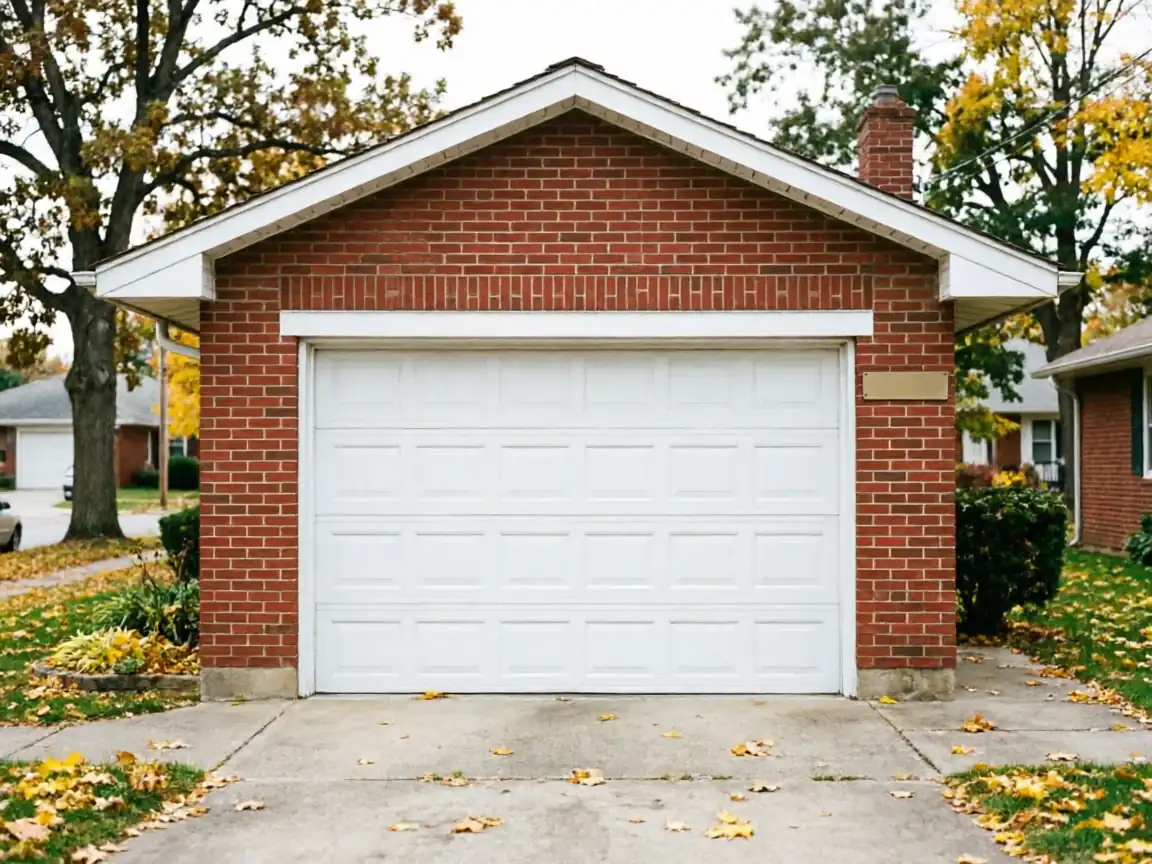
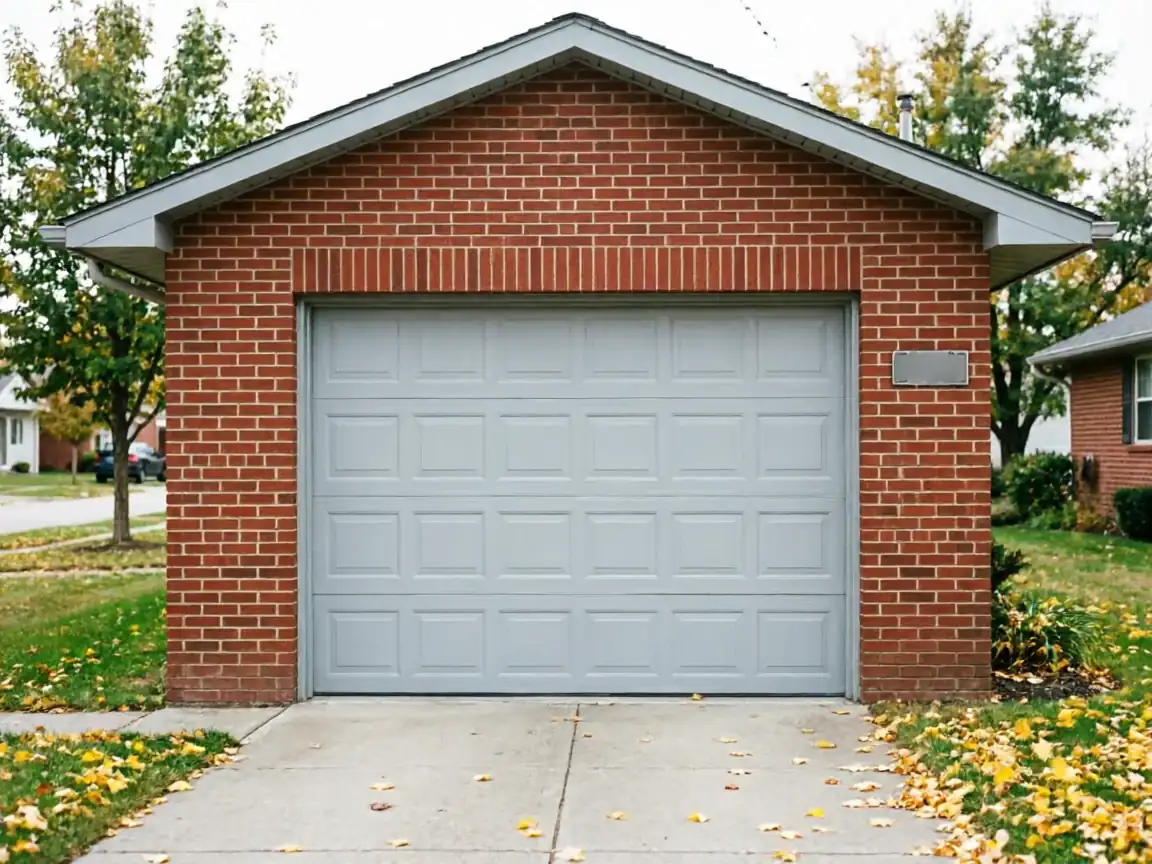
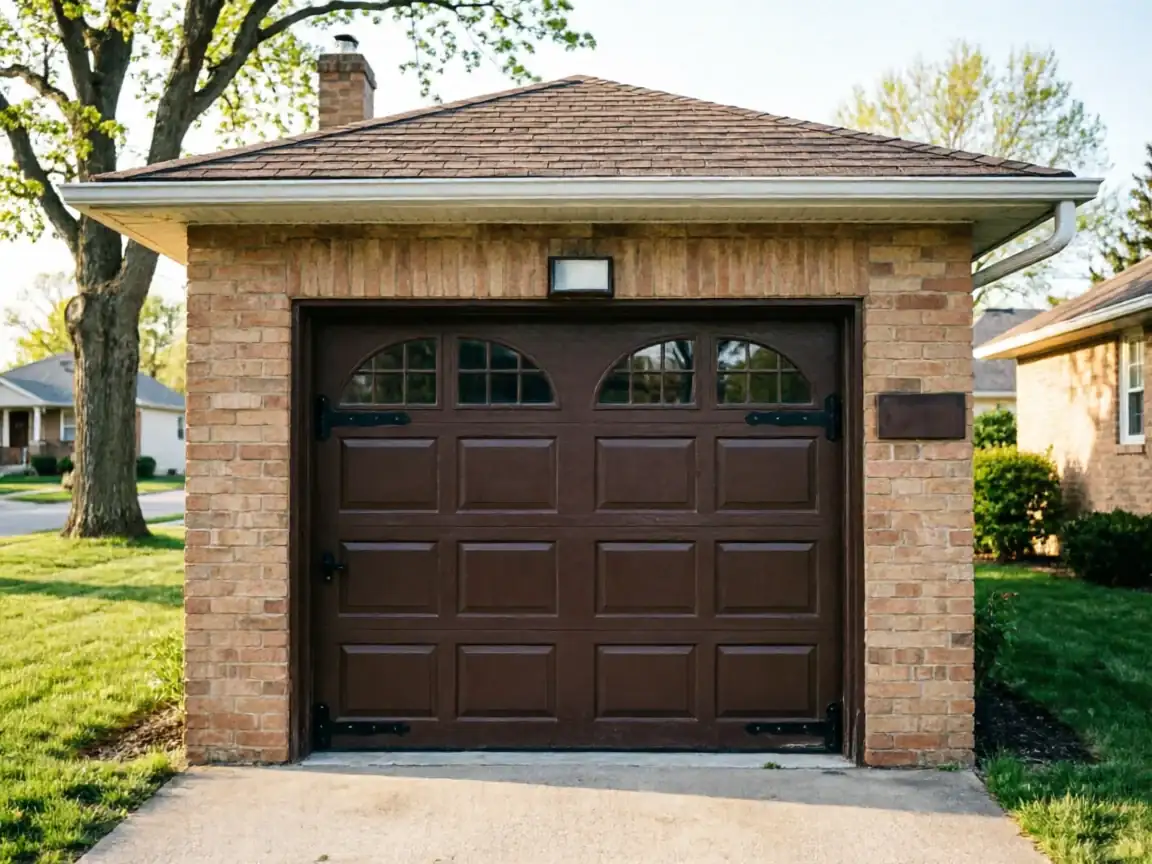
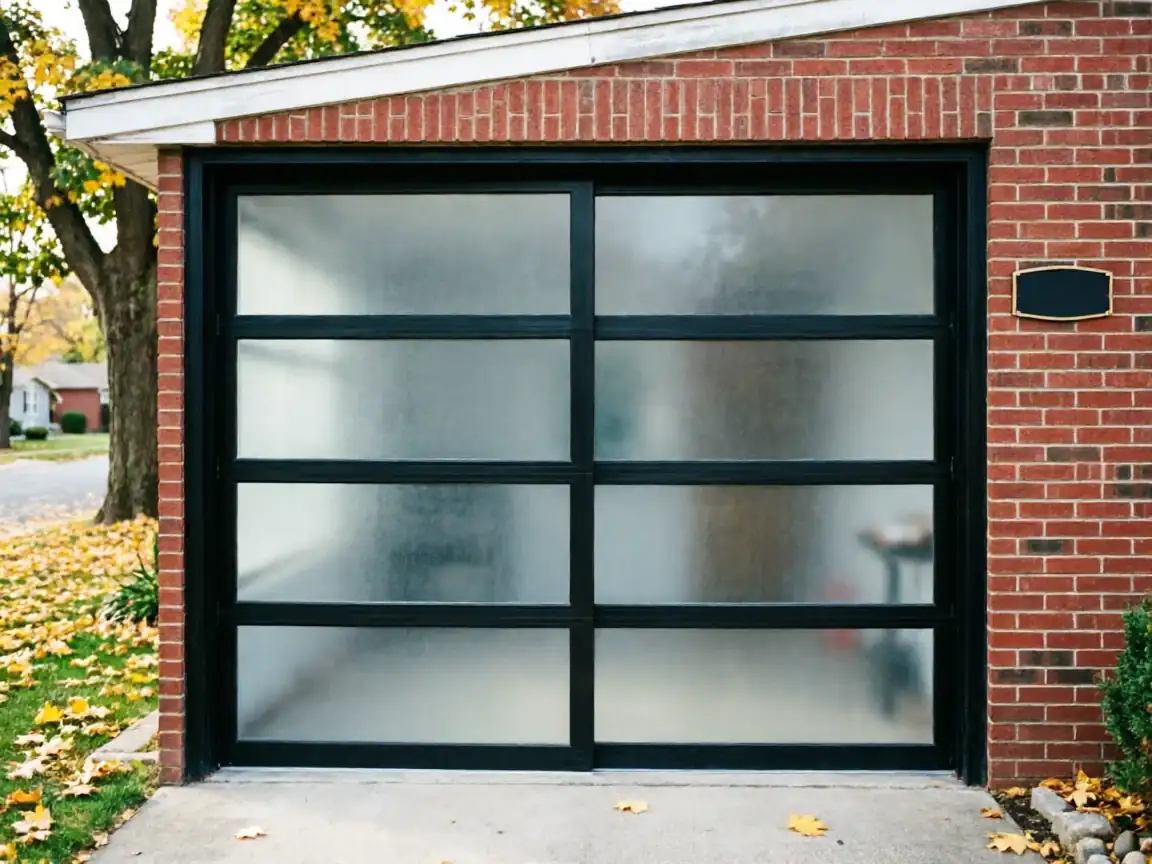
Most of the housing stock we work on dates from 1938 to 2009, with the median build year sitting around 1977, and a lot of what's actually on the ground is 1960s and 70s construction spread across the 53 named areas we cover. That matters for cables specifically: doors from that era were built with lighter-gauge lift cables and drum systems that weren't designed to last 50 years of daily cycling. The galvanized coating on a cable that age has usually worn thin, and once it starts to rust from the inside out, it frays long before anyone notices a problem.
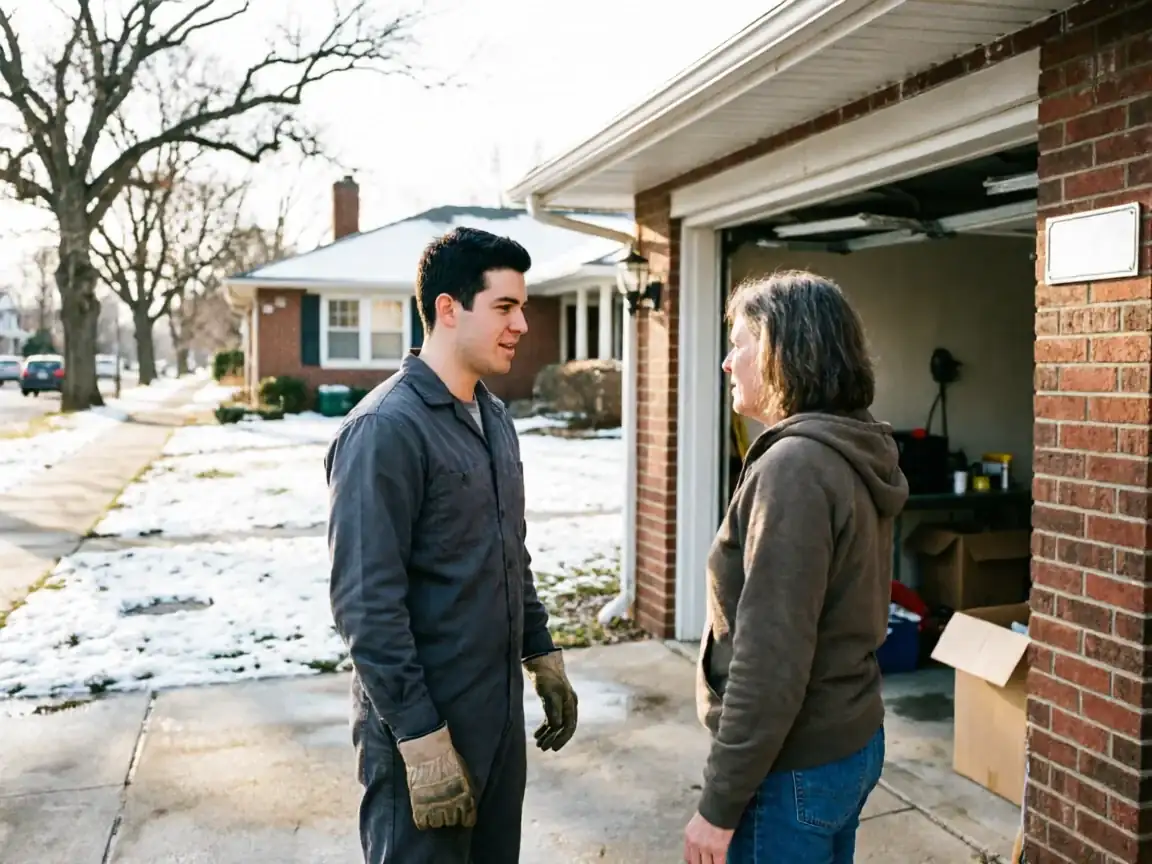
On top of the age issue, this is a cold-climate service area. Winter cold makes steel cable brittle, and the freeze-thaw swing through late winter and early spring puts extra stress on a cable that's already fatigued. We see a lot of cable failures right after a hard cold stretch, not because the cold snapped the cable outright, but because it was the last cycle a worn cable had left in it. A door that's been running fine all fall can fail on the first really cold morning.
If your door is original to a house built in that 1960s-70s window and nobody's touched the cables since, the cable is probably original too. That's not a guess about your specific house - it's the pattern across the housing stock we work in.
What the Fix Involves
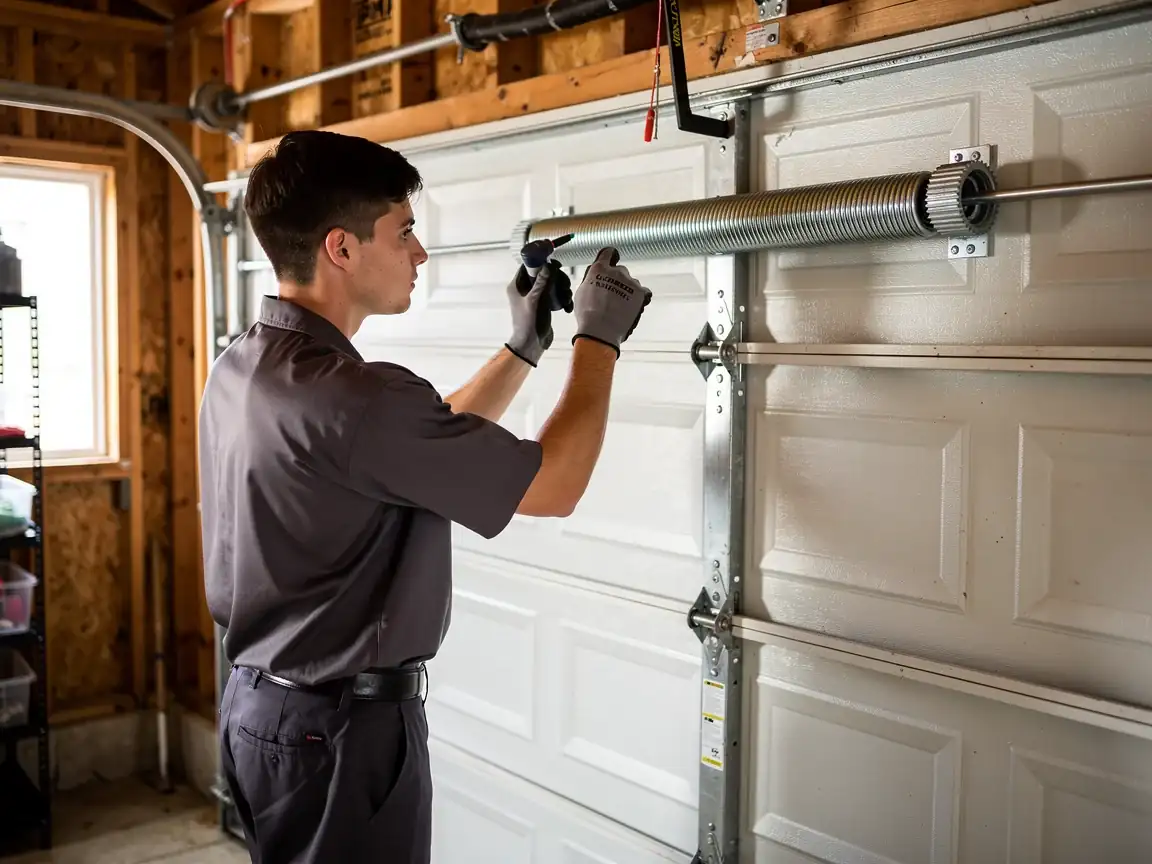
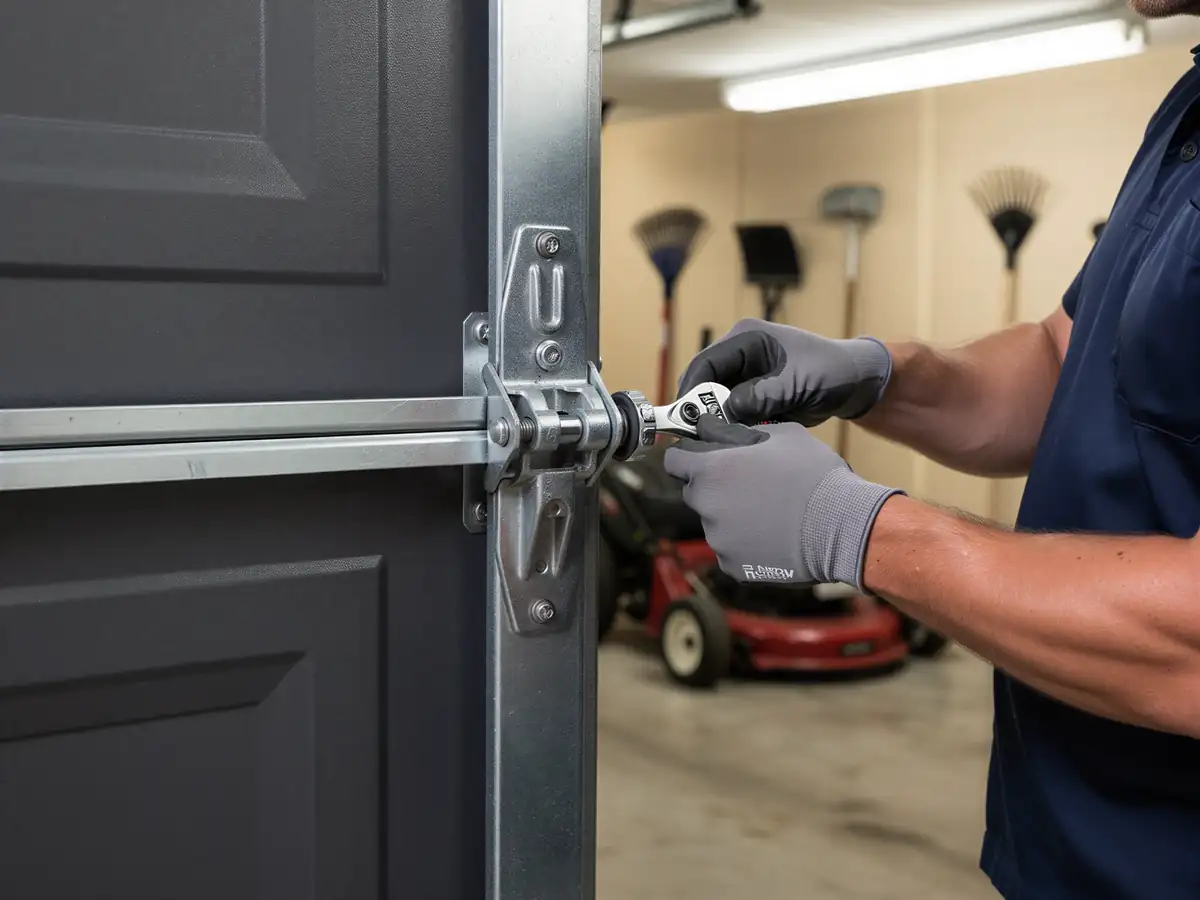
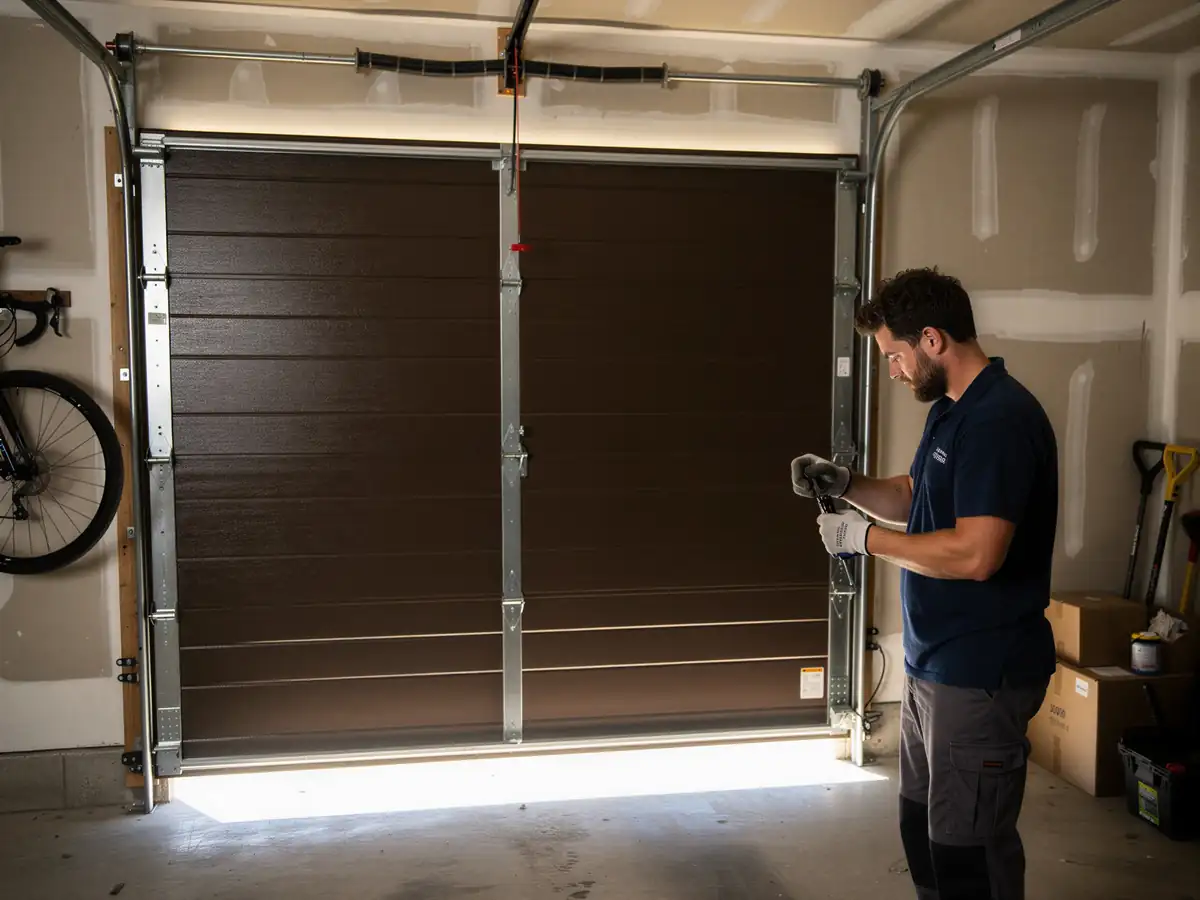
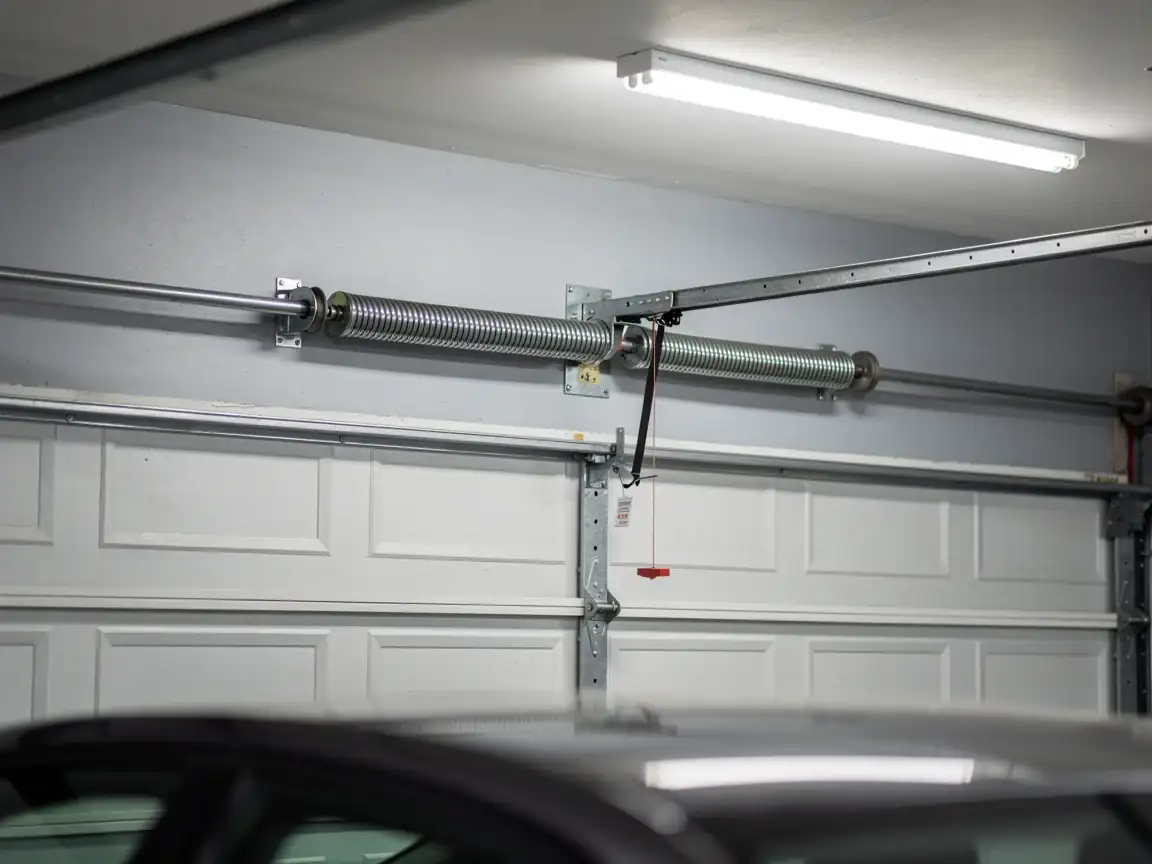
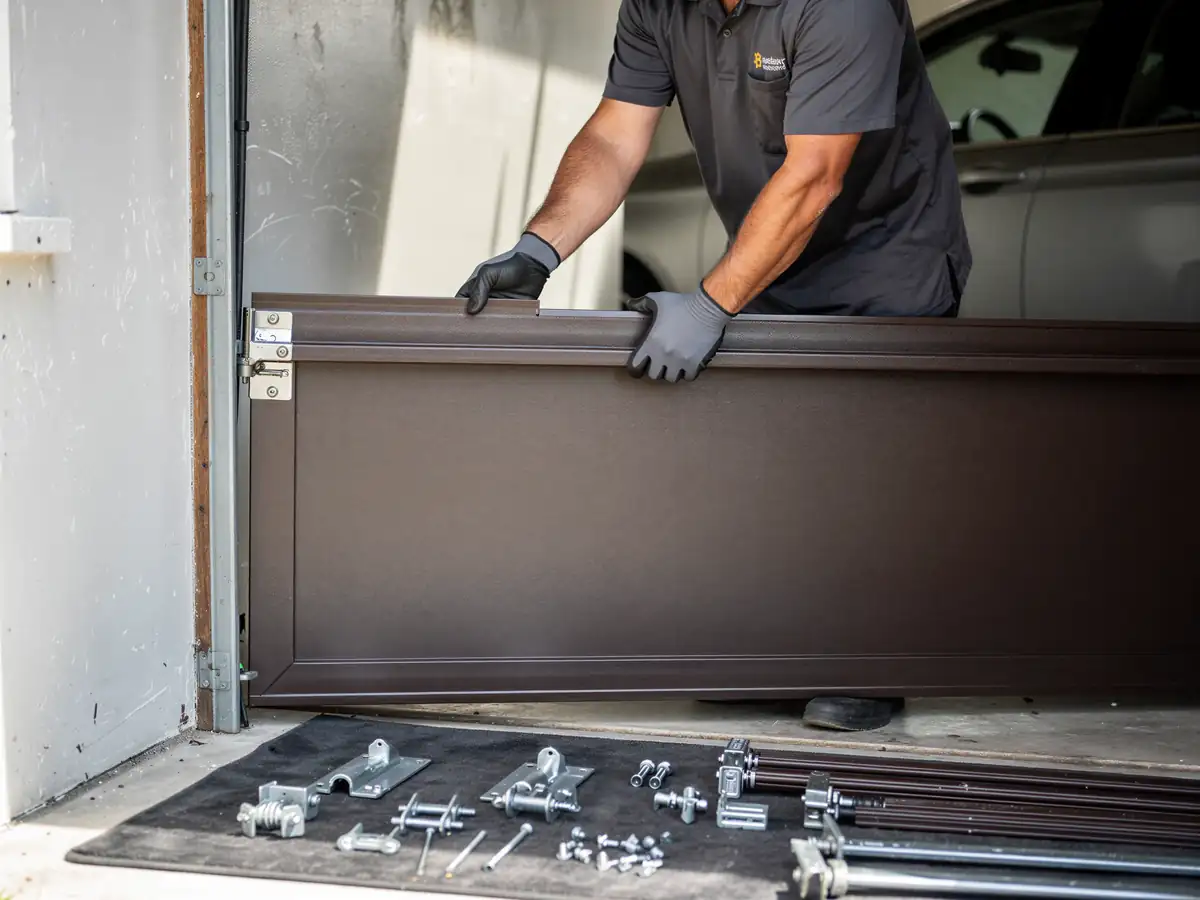
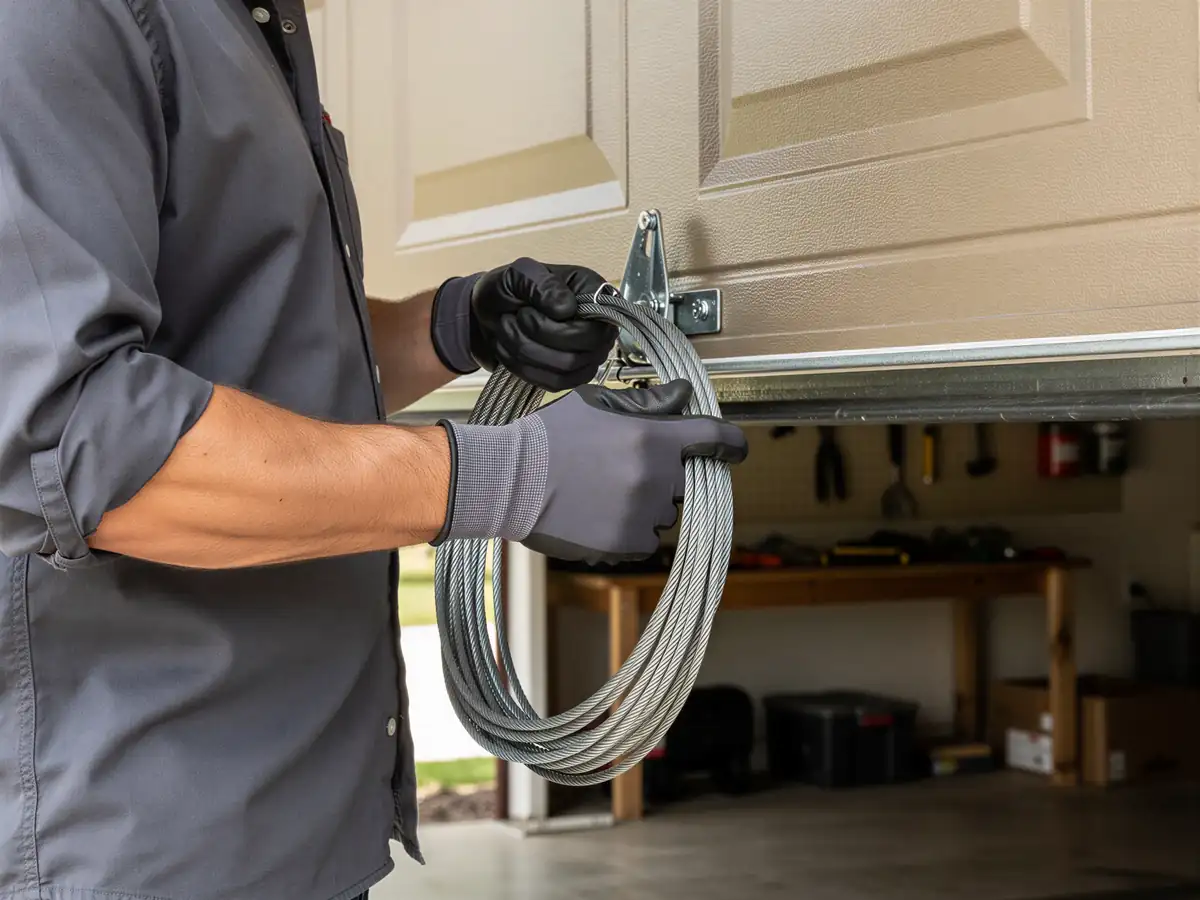
A cable repair starts with releasing tension safely - that means clamping or unwinding the opposing torsion spring before anyone touches the cable itself, because a loaded spring under a snapped cable is the actual danger, not the cable. Once the door is secured, we pull both lift cables as a pair, even if only one has failed. A cable that frayed from age and cold almost always has a twin on the other side that's close behind it, and replacing one without the other just means a second service call in a few months.
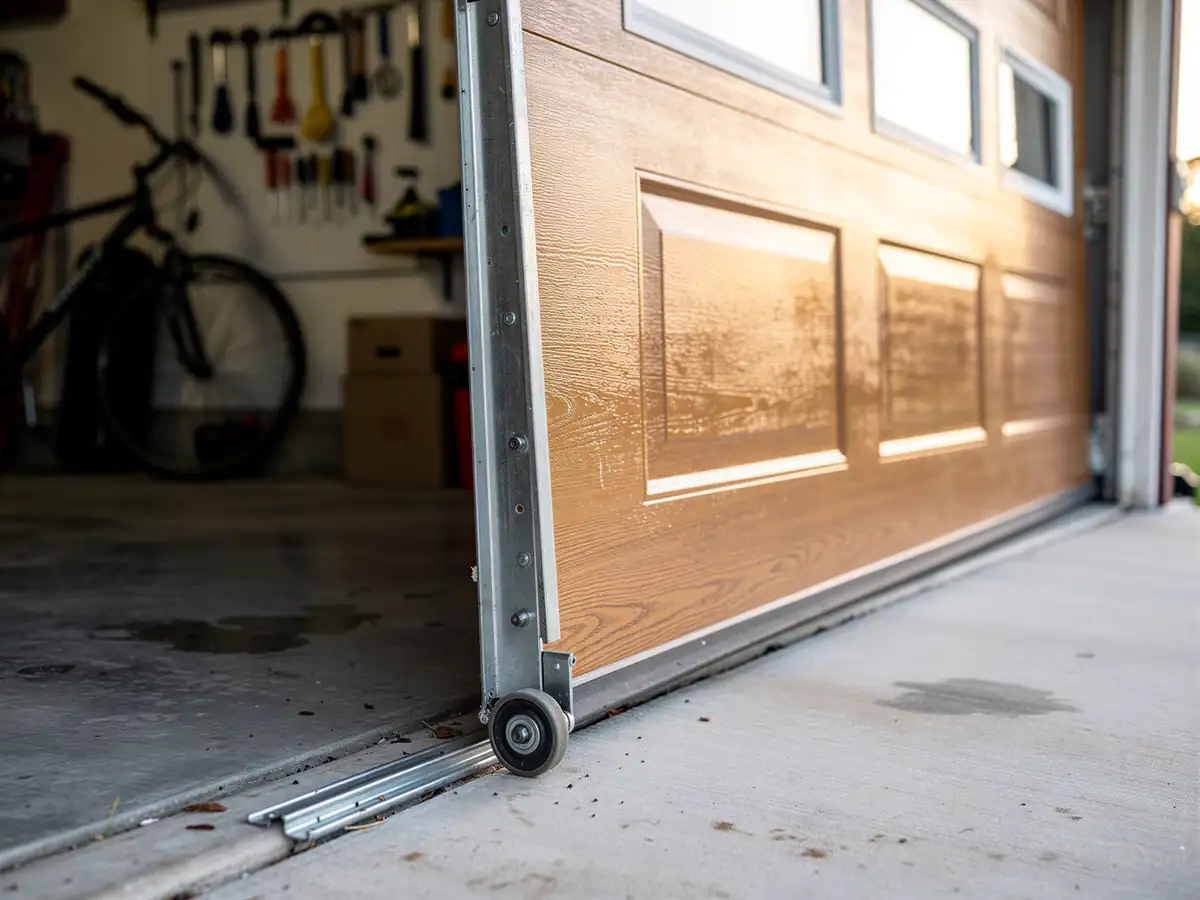
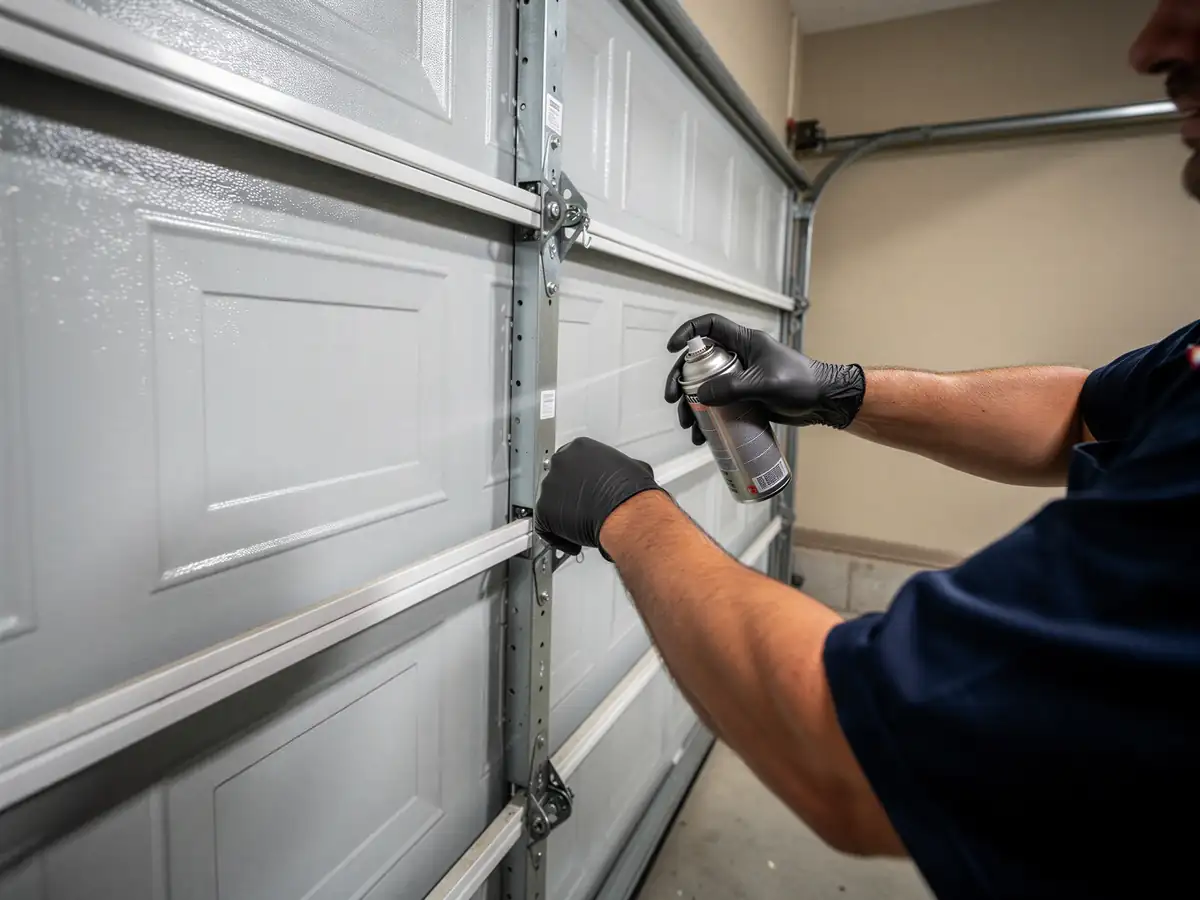
We check the drums, the bottom brackets, and the track while the door is open, since a cable rarely fails in isolation on a door this old. If the drum has a burr or the bottom bracket has worked loose, that's what shortened the cable's life in the first place, and leaving it means the new cable wears the same way. We reset spring tension, run the door through a full cycle under load, and check balance before we call it done.
One limitation worth saying plainly: if the cable snapped while the door was open and the door came down hard, there can be damage to the track or a panel that a cable swap doesn't fix. We'll tell you straight if that's the case rather than replace a cable on a door that needs more than that.
What You Are Seeing
A cable on its way out rarely fails without warning signs
The most common one is a door that looks crooked going up or down - one side lifts a beat before the other, because one cable has stretched or started to unwind from the drum. Another is a loud bang or pop followed by the door refusing to move at all; that's usually the cable letting go completely, and the door is now resting on whatever caught it, which might just be the track.
Some owners notice fraying before total failure
A visible kink, a few broken strands near the bottom bracket, or rust streaks running down the cable itself. If you can see any of that, don't run the door again. A cable under tension that's already frayed can snap mid-cycle, and a door coming down uncontrolled is a real hazard, especially on a double door with the extra weight.
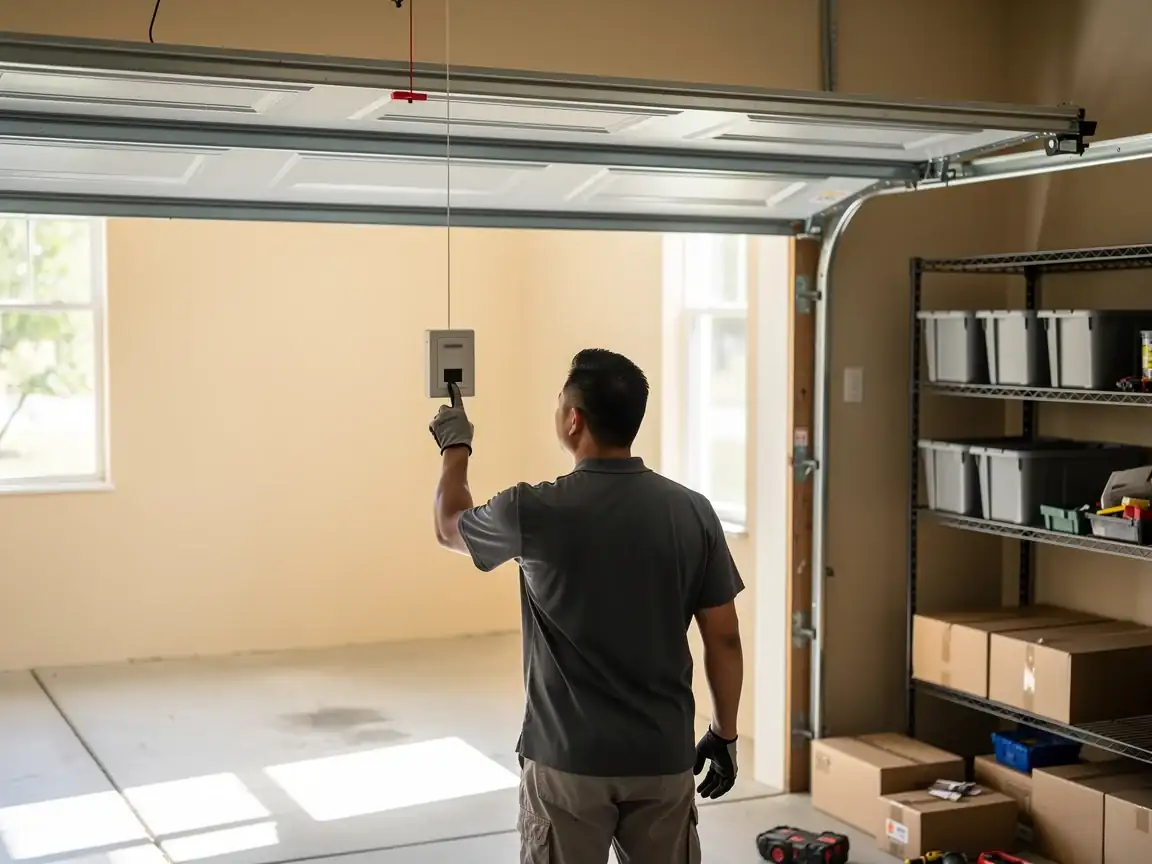
If the door won't budge and you hear nothing when you pull the emergency release
That's consistent with a snapped cable rather than an opener problem. Worth checking before you call: whether the door is stuck up, stuck down, or hanging at an angle, since that changes how we approach the release.
How Long It Takes
A straight cable replacement on a residential door, done as a pair, is typically a same-visit job once we're on site - most of the time goes into safely releasing spring tension and rebalancing after, not the cable swap itself. If the drums or bottom brackets also need attention, or if the door dropped hard and bent a track, that adds time on the same visit rather than a return trip in most cases.
The variable that actually slows things down is parts. Cable gauge and length vary by door width and drum size, and on older doors the original hardware sometimes isn't a stock size anymore. We carry common sizes on the truck, but if your drums are an older or less common fit, that can mean a short wait on a part rather than a one-visit fix. We'll tell you at the door, before any work starts, whether your job is a standard same-visit repair or one that needs a part ordered in.