How Local Conditions Play In
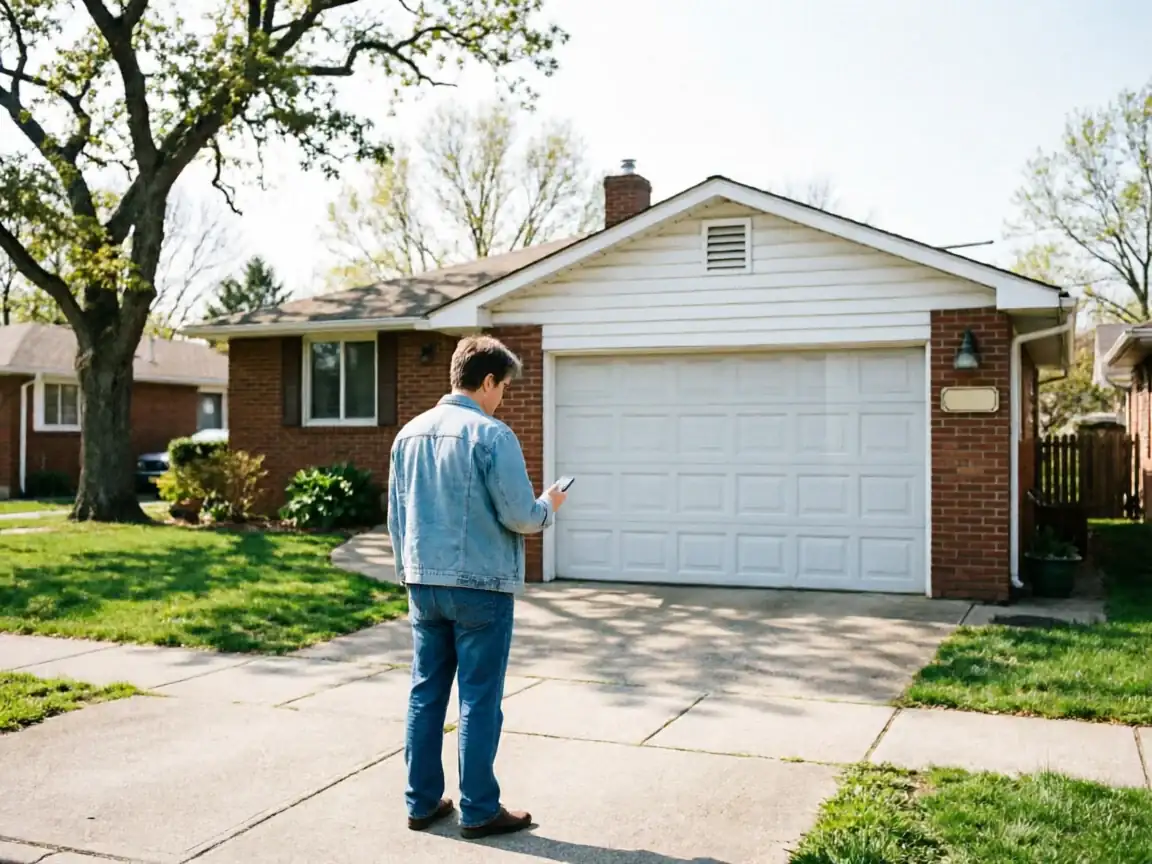
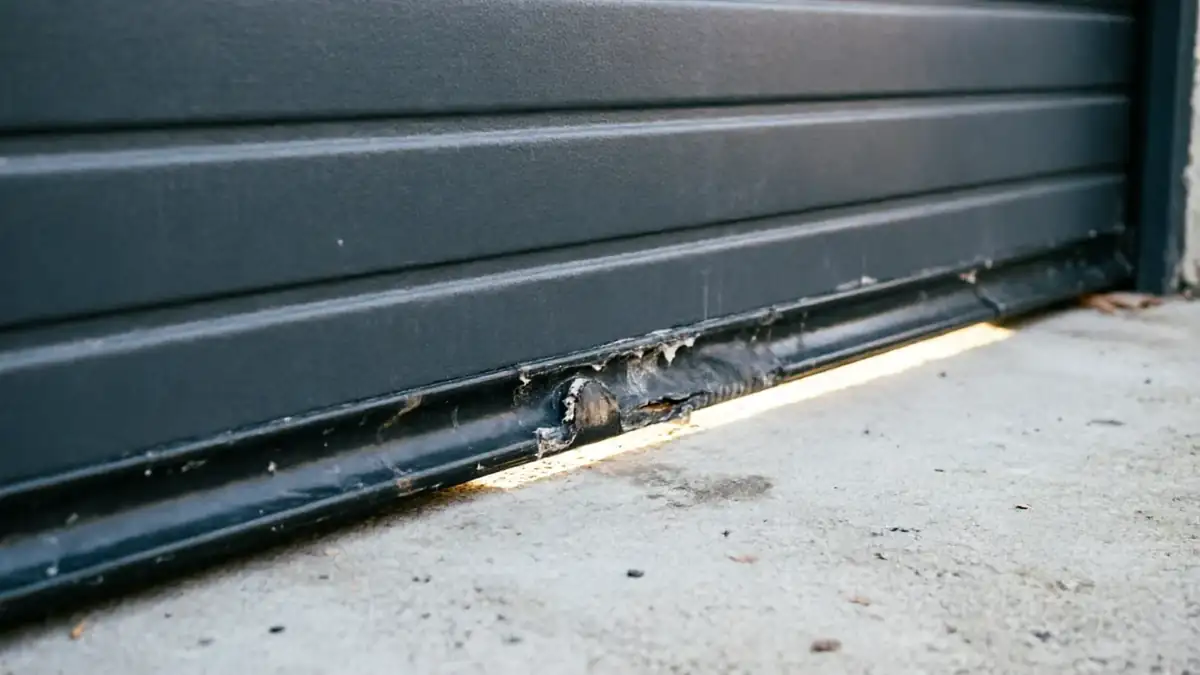
Most of the garage doors we look at around here sit in houses built between 1938 and 2009, with the bulk of that stock going up in the 1960s and 70s. That matters for seals more than almost anything else on the door. A bottom seal from that era was never built for the freeze-thaw cycling a cold-moderate climate band puts it through winter after winter. The rubber hardens, cracks at the corners, and pulls away from the aluminum retainer, and once that happens, air finds the gap every time the wind pushes against the door face.
The seal isn't the only place draughts come from. Side stops and the top seal on a door from a 1960s or 70s build often used thinner weatherstripping than what gets installed today, and over fifty-plus years of seasonal swelling and shrinking, the wood jamb behind it can warp just enough to open a sliver along the whole run. You won't always see daylight through it. You'll feel it as a cold strip along the garage floor near the door, or notice frost forming on the inside of the panel on the coldest mornings.
None of this is a defect in the door. It's just what happens to weatherstripping after decades of this climate doing what it does.
When to Get Help
Call if you can see daylight along the bottom edge when the door is closed, if the garage floor near the door stays noticeably colder than the rest of the slab, or if you've started keeping a towel wedged under the door to stop a draught. Those are all seal problems, not opener or spring problems, and they're usually a straightforward fix.
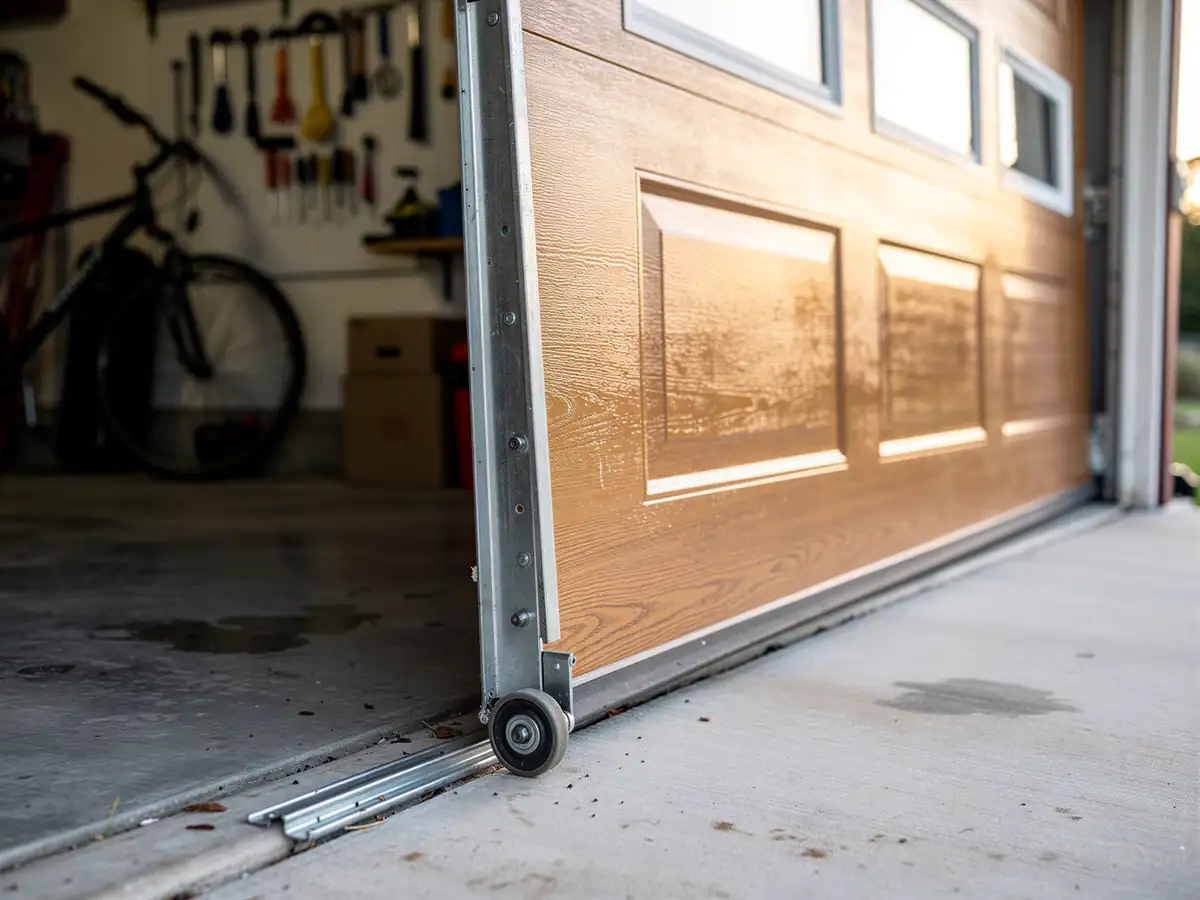
Get someone out sooner if the draught comes with ice buildup at the bottom corners or if the door has started dragging at the bottom when it closes. Ice means water is getting in and freezing against the seal or the slab, which can pull the seal loose or crack the bottom panel section on an older steel door. A door that drags on a worn or frozen seal is also harder on the opener than people realize, since the motor is fighting resistance it wasn't sized for.
If the household runs the garage as a workspace or keeps anything temperature-sensitive out there, don't wait on this. A bad seal on a 1970s-era door in this climate band can mean a genuinely cold garage by January, not just a slightly drafty one.
The Situation
With 88,612 owner-occupied houses across the wider service area and a housing stock whose median build year lands around 1977
A lot of the doors we see have had at least one seal replacement already, sometimes two. The original seal track and the replacement seal don't always match well if whoever did the earlier job used a generic size instead of matching the retainer channel on an older frame, and that mismatch itself becomes a draught source.
- 88,612 owner-occupied
Household income in the area runs well above the national median
And we see that reflected in how people treat this: most owners replace a failing seal as soon as they notice it rather than letting it ride for a few winters. That's the right call. A seal replacement is inexpensive compared to almost anything else that can go wrong with a garage door, and it's the single best return on money for anyone dealing with cold air in an attached garage.
We also hear from folks near Bannockburn and Riverwoods, both just a couple miles out
With the same complaint on similarly aged houses, which tells us this isn't a one-off, it's a pattern tied to the age of construction in this corner of the county.
The Common Mistake
The mistake we see most is treating the draught as an insulation problem and ignoring the seal itself. People add foam board to the garage walls or weatherstrip the service door, and the garage door - the biggest gap in the envelope by far - keeps leaking air right past all of it.
The other common one: buying a universal bottom seal without checking the retainer channel size first. Doors from the 1960s and 70s era common in this area often used a channel width that doesn't match what's sold as standard today, so the new seal sits loose and still lets air through, just a little less of it. It looks fixed. It isn't.
Here's the honest limit on this: if the bottom section of the door itself is warped or rusted through, a new seal won't fix the draught, because the seal can only do its job against a flat, straight surface. At that point you're looking at panel replacement, not a seal swap, and we'll tell you that straight rather than sell you a seal that won't hold.