How Local Conditions Play In
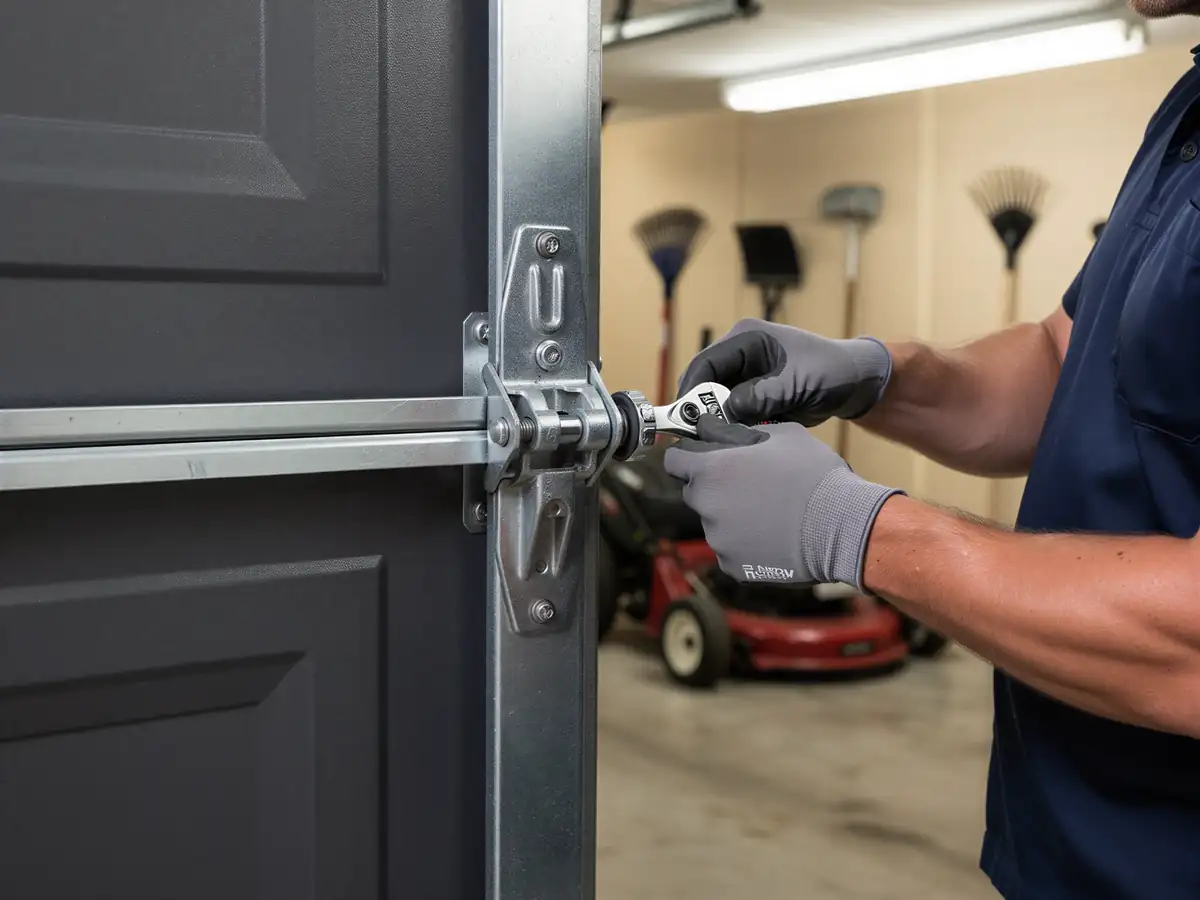
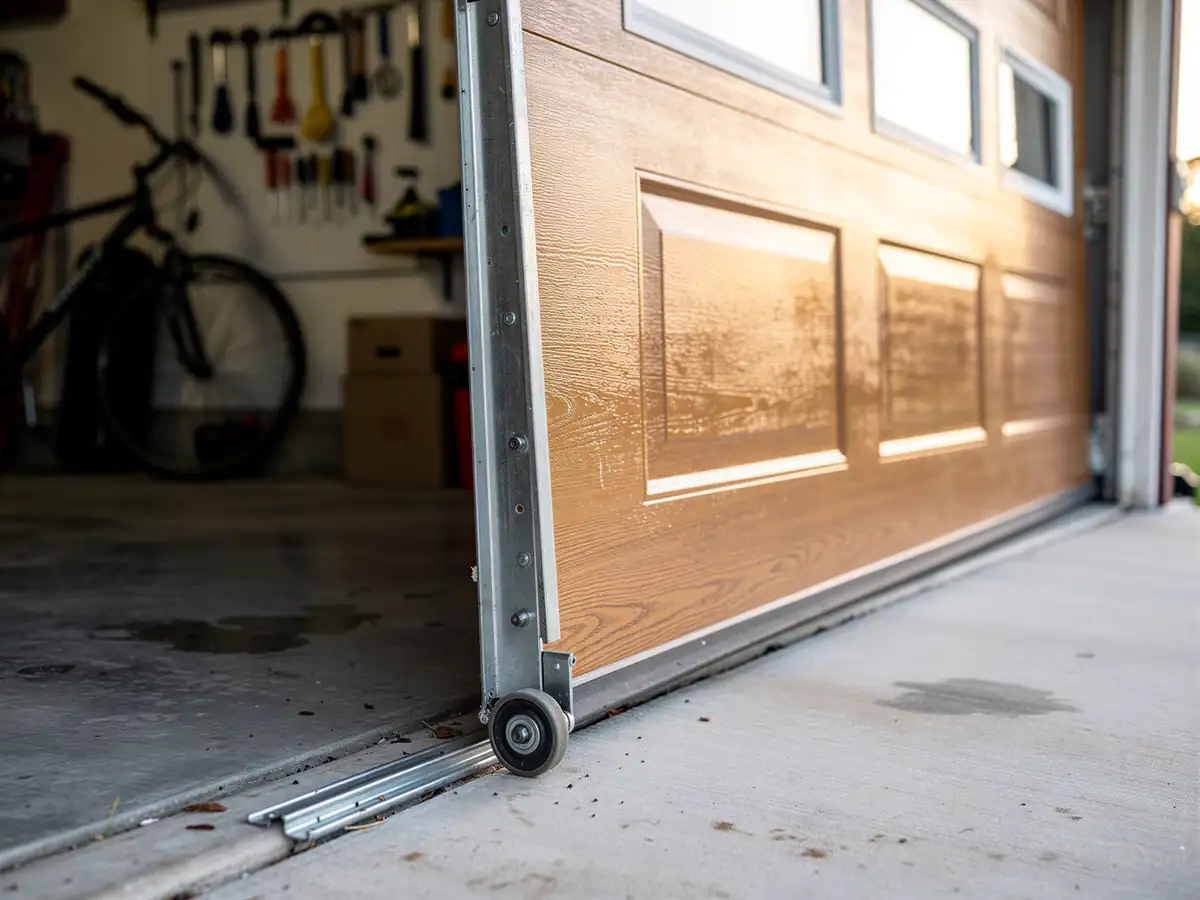
Houses in this service area were built anywhere from 1938 to 2009, but the bulk of that stock went up in the 1960s and 70s, with a median build year of 1977. That matters for noise diagnosis because a door installed in 1977 is running original torsion hardware that's now pushing fifty years old, and steel ages differently depending on what it's been through. The region sits in a cold-moderate climate band, which means winters cold enough to stiffen lubricant and contract steel, but not so brutal that parts snap outright the way they might further north. That combination shows up as specific, predictable sounds. A squeal that only happens on the coldest mornings and disappears by afternoon is almost always grease that's gone thick, not a bearing on its way out. A rattle in the track that gets louder in January and quiet in July usually means steel rollers contracting and expanding against galvanized track, which is normal wear accelerated by the freeze-thaw cycle. None of this is dramatic. It's just what fifty-year-old hardware does in a climate that swings. The mistake is treating every noise like an emergency, or ignoring all of them because none sound dramatic yet.
When to Get Help
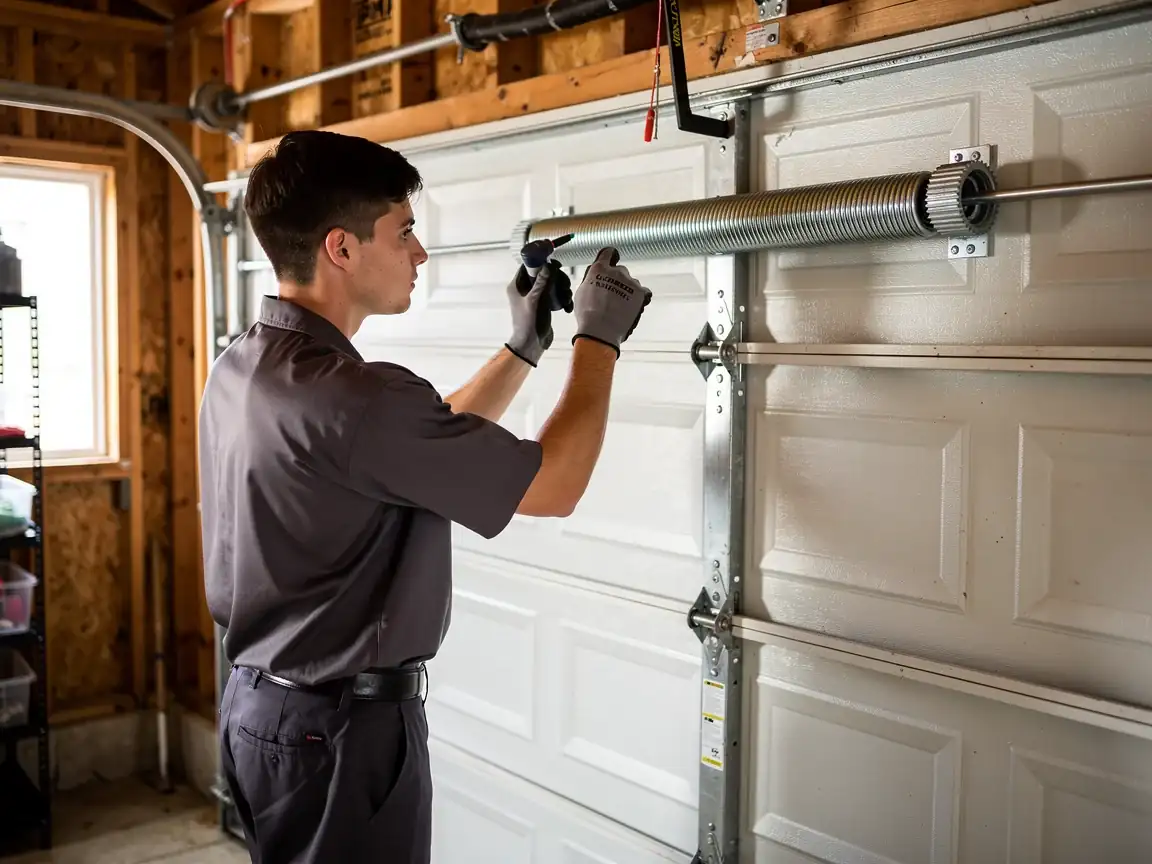
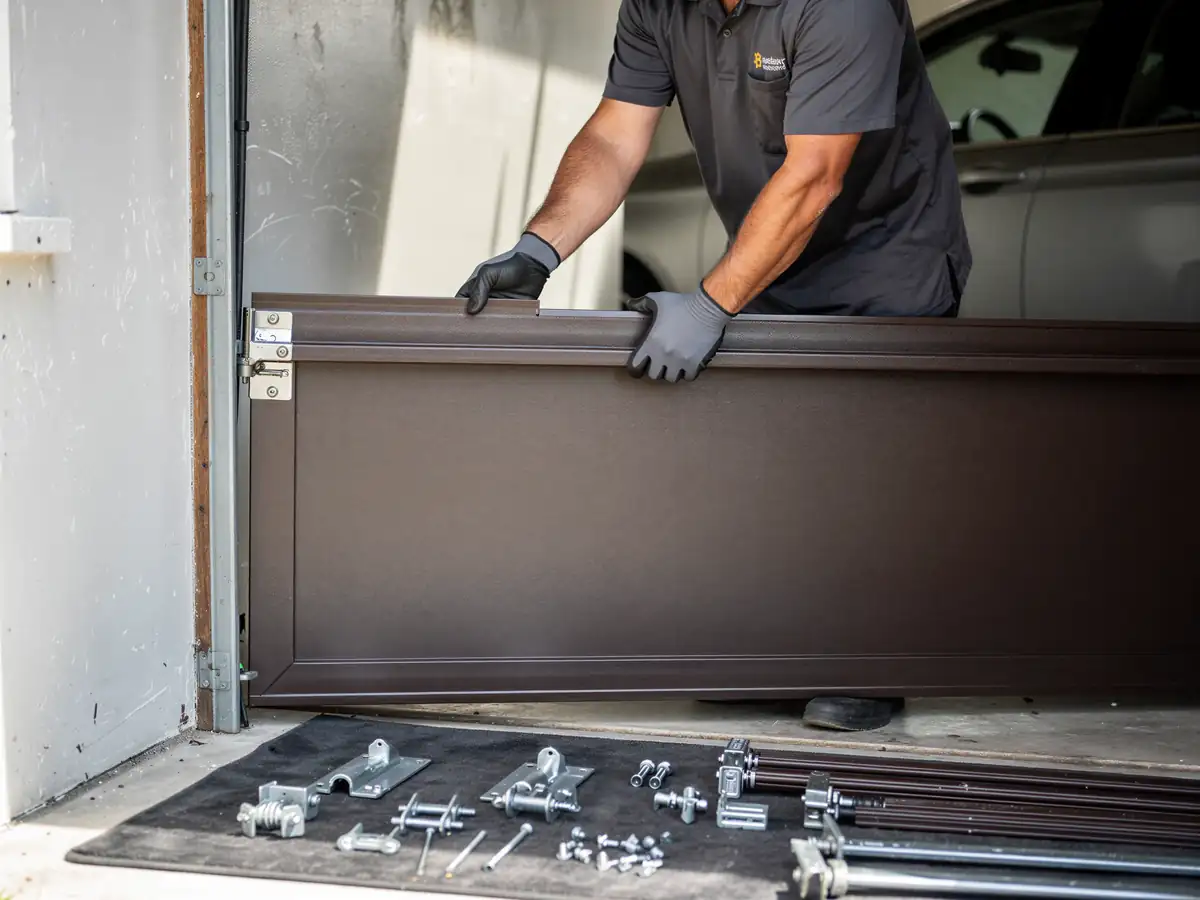
Call before the door stops working, not after. A grinding sound that's new, steady, and doesn't change with temperature is different from a seasonal squeal - that's metal-on-metal wear, often a roller or bearing that's past lubrication and needs replacing. A loud bang followed by the door refusing to open all the way is a spring failure, full stop, and that's not a DIY job; torsion springs are under enough tension to cause real injury. If a door with original 1960s or 70s hardware starts making a new noise, the honest answer is that the parts are old enough that one worn component is often a sign others nearby are close behind. We don't push replacement on a door that just needs a roller and a service call - but if you're calling about the same noise twice in one winter, that's the door telling you it's done patching.
The Common Mistake
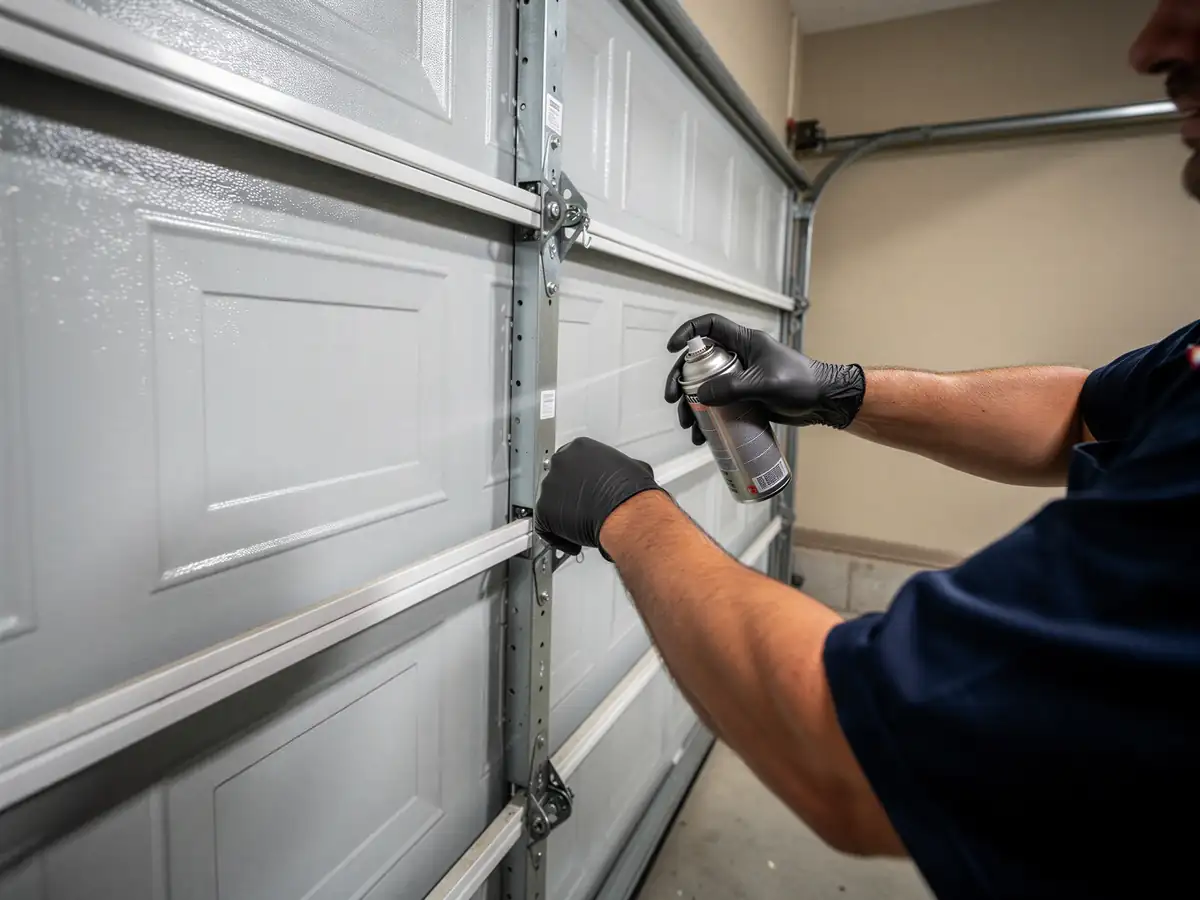
The most common mistake we see is someone hearing a noise, spraying WD-40 on everything metal, and calling it fixed. WD-40 is a solvent, not a lubricant - it strips old grease and dirt, which quiets things down for a week or two, then the noise comes back worse because the hardware is now running drier than before. On a door with original 1960s or 70s hardware, that cycle speeds up wear on parts that are already decades past their expected life. The other mistake is assuming a cold-weather squeal means something's broken, calling for an emergency visit in February, and paying for a same-day call when the fix was a five-minute lubrication job. We'll tell you straight when a noise is seasonal and harmless versus when it's a part that needs replacing - we'd rather lose a service call than have you pay for one you didn't need.