Serving Deerfield, IL & nearby
(847) 860-7319
Deerfield, IL

Garage Doors on Deerfield's Pre-Insulation Housing Stock

Deerfield homes mostly date to the 1960s-70s with a median build year of 1977, before insulation codes tightened. Here's what that means for your garage door.

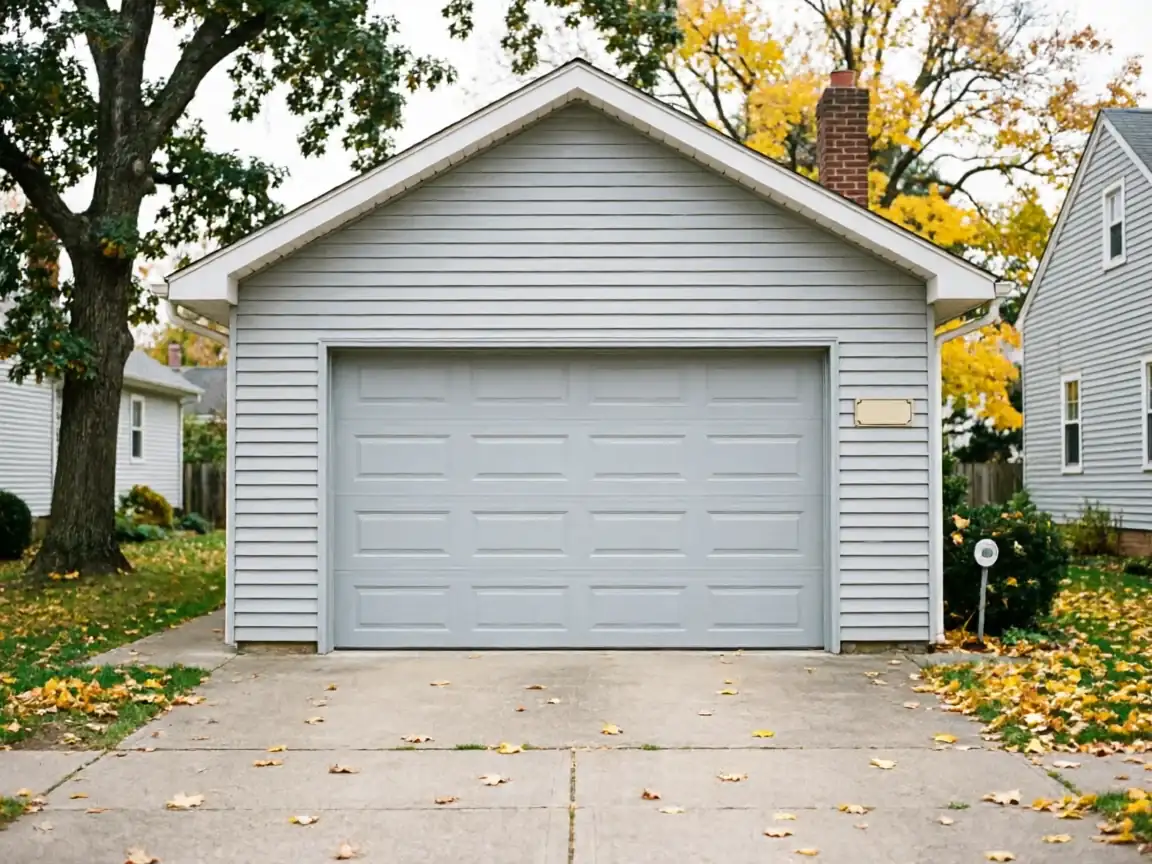
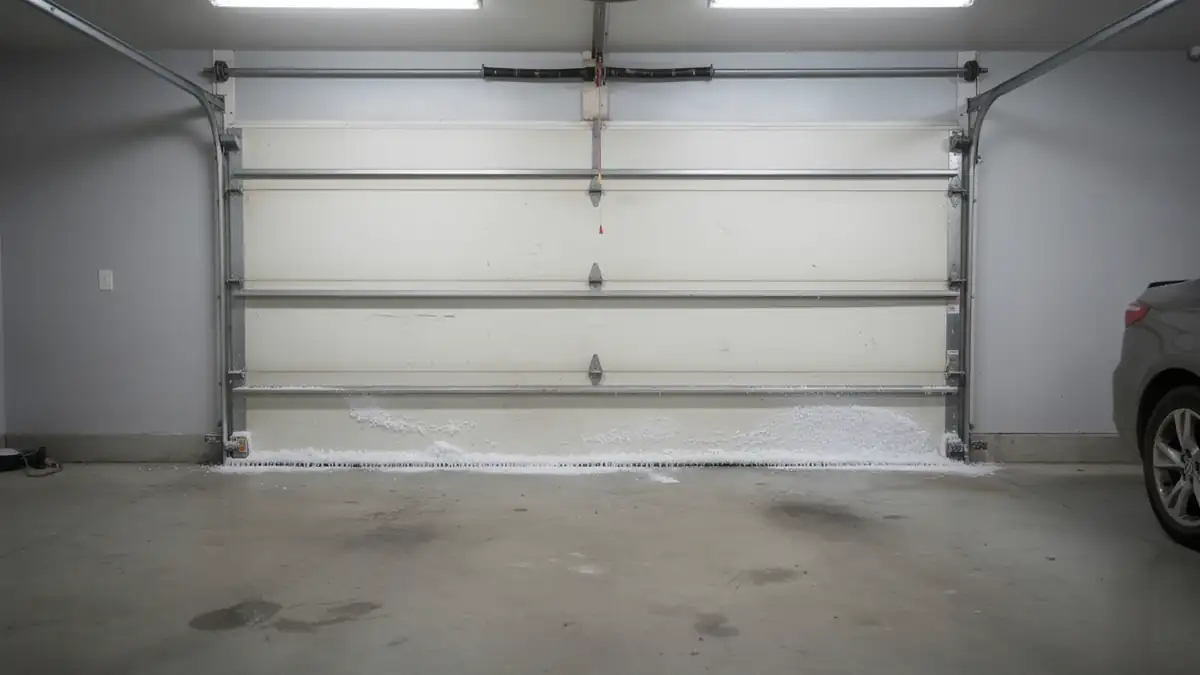
The white garage door has a line of snow and ice along its bottom.

How Local Conditions Play In

Deerfield's housing stretches from 1938 up through 2009, but the median build year sits at 1977 - squarely in the decades before federal insulation and air-sealing standards got serious about garage doors as part of the building envelope. A door built or installed in that era is almost always single-skin steel or old wood, no foam core, no thermal break at the track. That matters more here than it would somewhere warm, because Deerfield sits in a COLD moderate climate band. The freeze-thaw cycle each winter works on bare steel panels, stiffens old nylon rollers, and makes worn weatherstripping shrink right when you need it sealed tight. If your garage shares a wall with living space or the laundry room, an uninsulated door from that build era is doing almost nothing to stop the cold from moving through. It's not a flaw in the house - it's just what doors looked like when most of this stock went up, and nobody thought about it twice until heating bills did.

When to Get Help

Call before the door fails outright, not after. If the bottom panel sweats or frosts on the inside during a cold snap, that's condensation forming on bare steel with no vapor barrier behind it - a sign the door has no insulation value at all, not just a sign of a bad seal. If the door feels noticeably heavier to lift by hand in winter than summer, cold is stiffening the torsion spring and the steel itself is contracting at the track, which can bind rollers that are already decades old. A visible gap at the bottom corners, even with new weatherstripping installed, usually means the panel itself has warped slightly over the years - common on doors from the 1960s and 70s stock that makes up most of this area. None of these are emergencies you have to handle in one afternoon, but they're the kind of signs worth a call before a cold week turns a stiff door into a stuck one.

The Situation

Across the 53 named areas that make up this part of the North Shore, the pattern repeats: mostly 1960s and 70s construction, with pockets built earlier back to 1938 and newer infill up through 2009. A door that matches the house's original build era is the norm here, not the exception - plenty of homeowners are still running the door that came with the garage. That's true whether you're two miles out in Bannockburn or Riverwoods, three miles in Highwood, or further toward Libertyville and Deer Park where some newer builds sit alongside the older stock. The age of the door tells you more than the age of the house alone - a single-skin steel door from that era has no thermal break, the track hardware is often the original steel (not galvanized the way newer tracks are), and the spring system was sized for a lighter, uninsulated panel. Swapping in a heavier insulated door later without checking the spring size is a common reason doors from this period start binding or slamming.

The Common Mistake

The mistake we see most is treating a cold, drafty door as a weatherstripping problem when the real issue is the panel. New bottom seal and new side seals help, but they can't compensate for a single-skin steel door with no insulation behind it - that door was never built to hold heat, and no amount of fresh rubber changes the steel skin. We don't retrofit foam into old panels; it's not a repair that holds up, and we'll tell you that straight rather than sell you a patch job. For a door from this era that's drafty, heavy, or sweating on the inside, replacement with an insulated steel or composite door is usually the honest answer, not another round of weatherstripping. With a median household income of $125,104 across the service area's 88,612 owner-occupied houses, that kind of upgrade is a repair most owners here can plan for rather than put off indefinitely.
How it works

From “it’s stuck” to “it’s fixed”

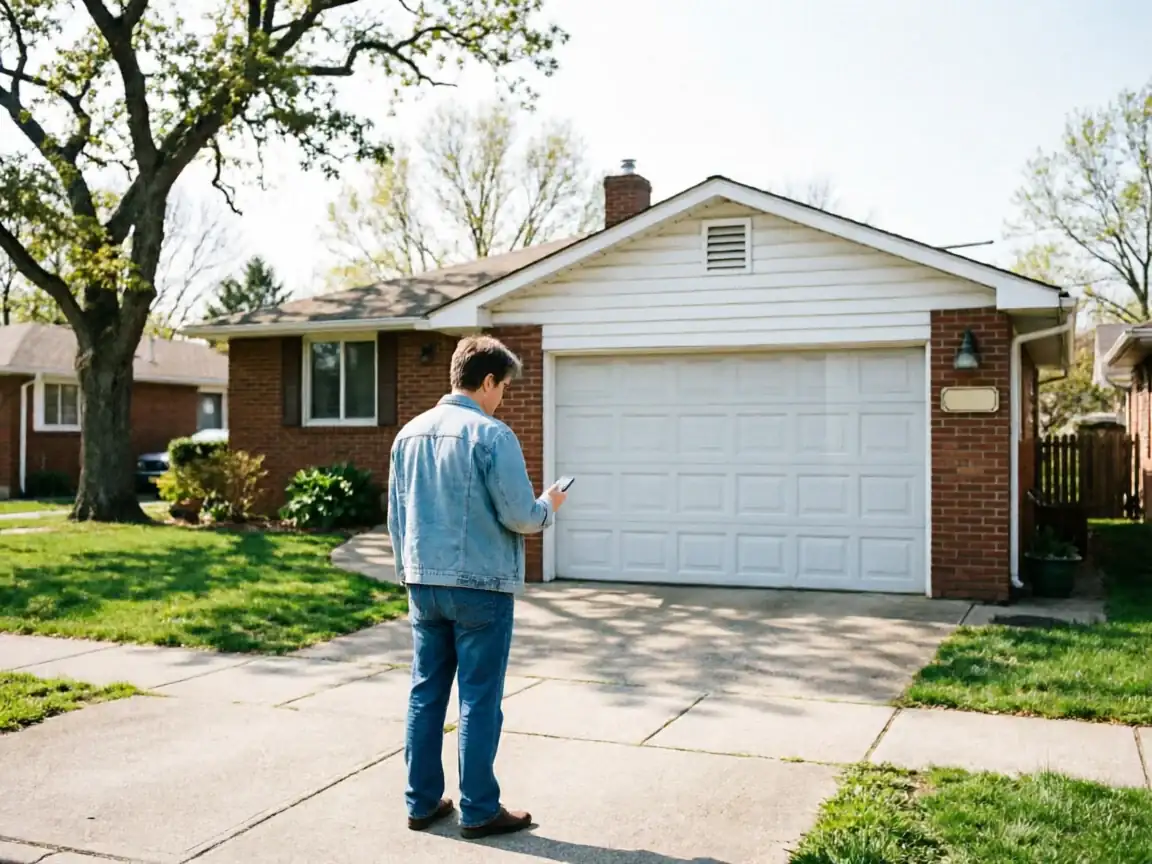
A man in a denim jacket stands in a driveway looking at his phone.

Tell us what’s wrong

Describe the symptom - won’t open, loud bang, opener runs but the door won’t move.

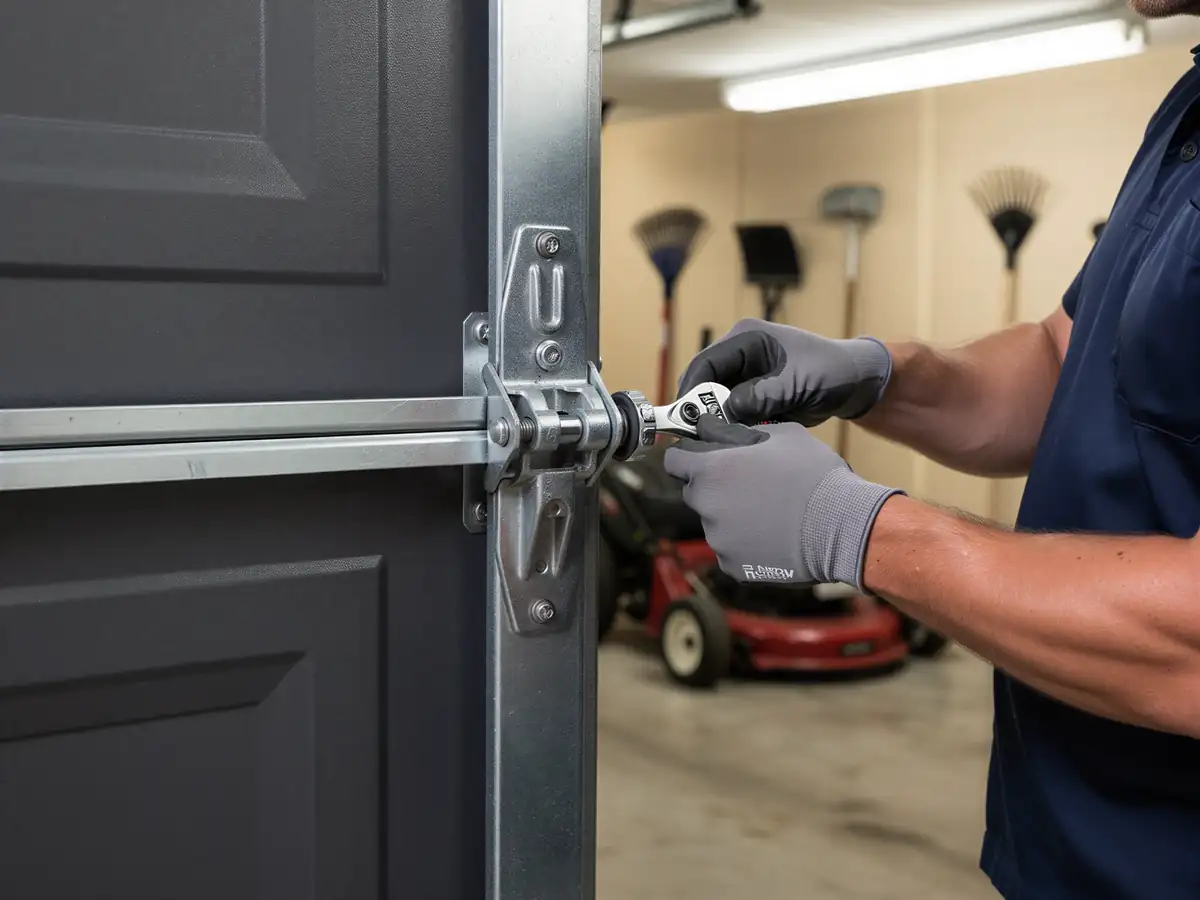
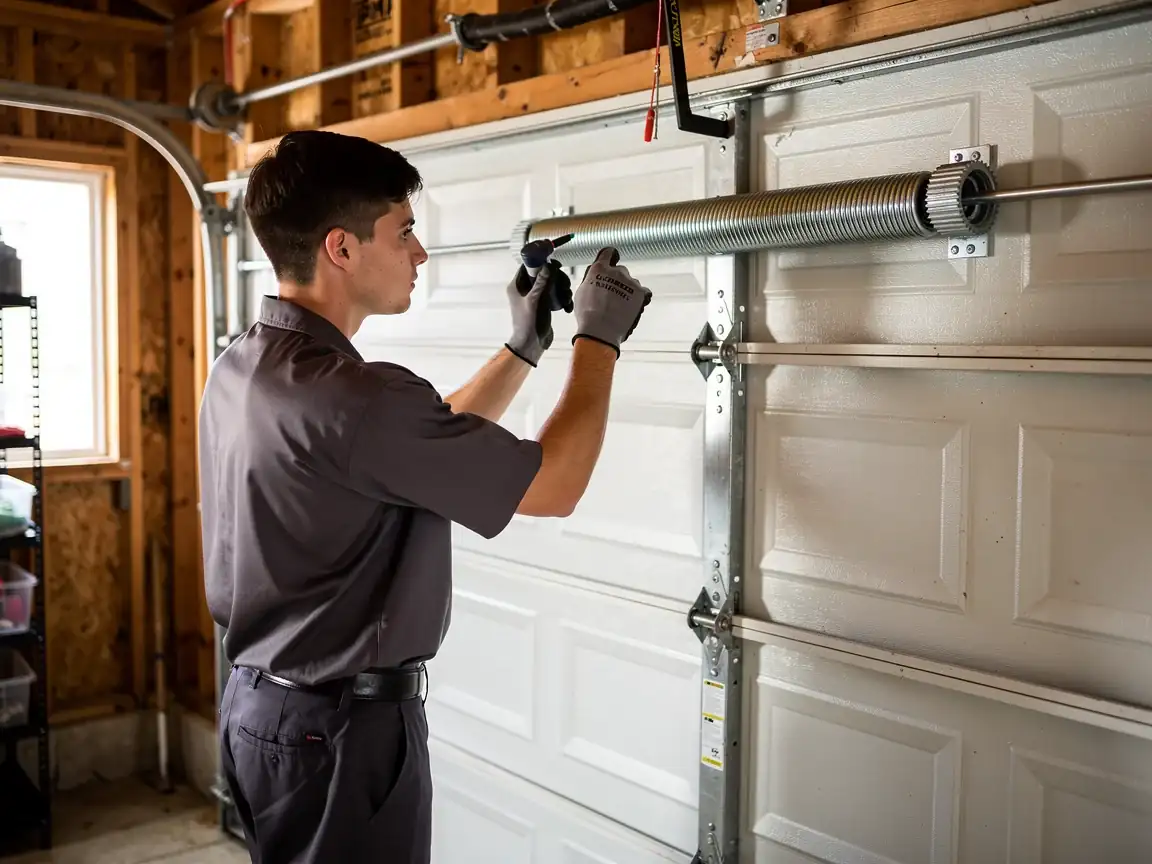
A technician in a gray uniform is adjusting a garage door torsion spring.

On-site diagnosis

A technician tests the door under power and by hand and finds what actually failed.

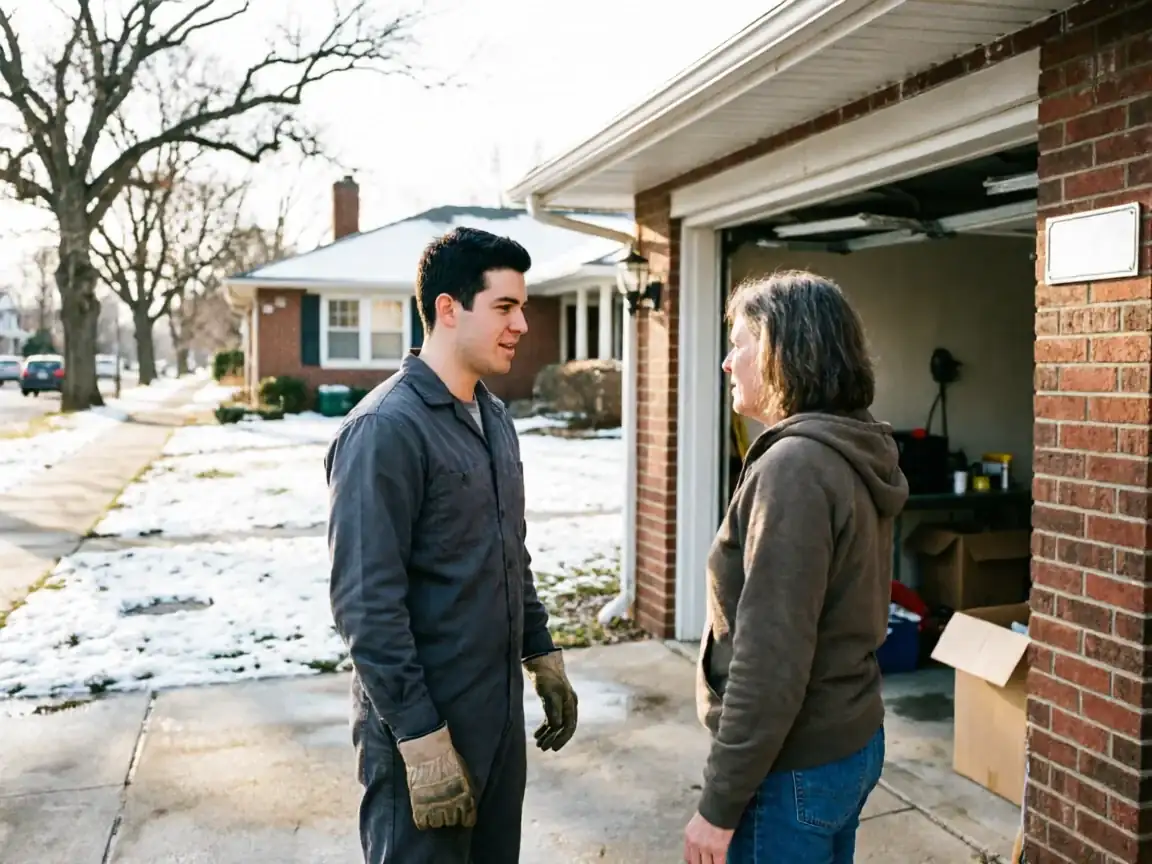
A technician in work clothes talks to a woman in front of a garage.

Clear, up-front plan

You get the fix that’s needed and what drives the cost - before any work starts.

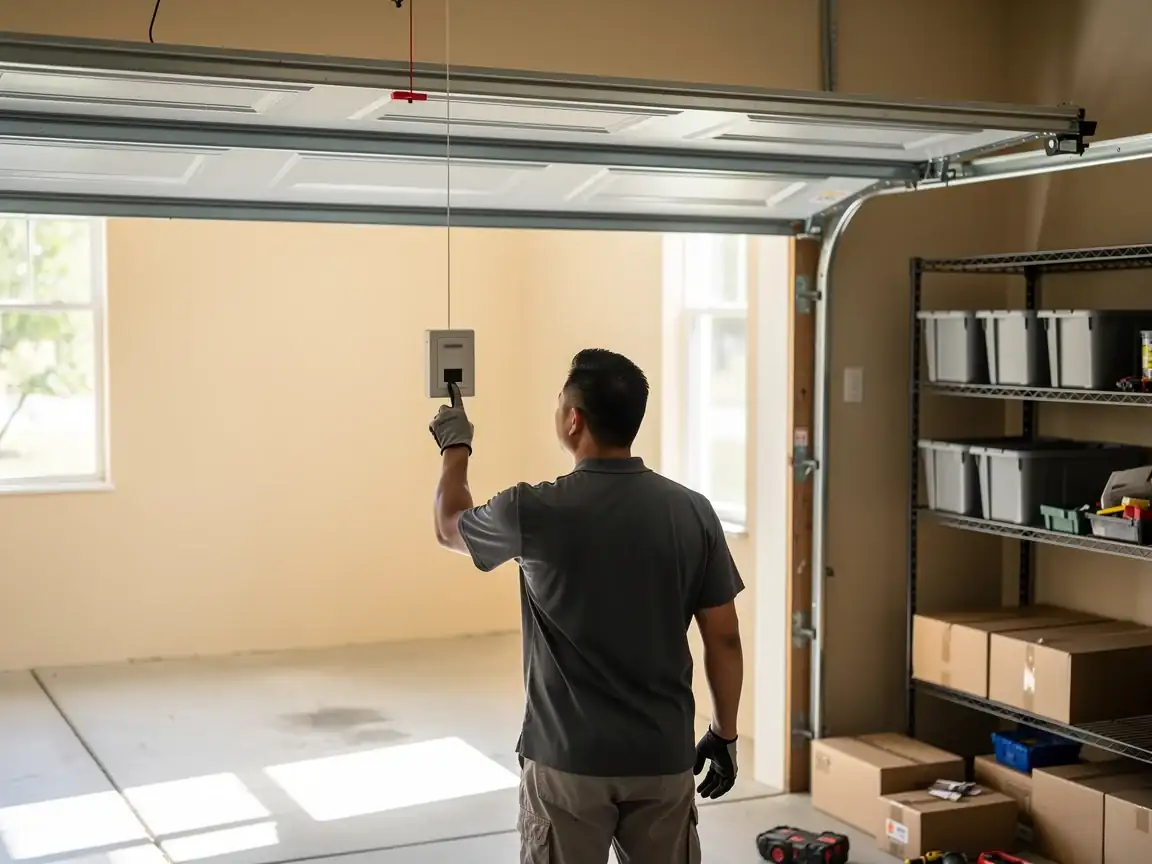
A technician presses a button on a garage door opener control panel.

Repaired & tested

The repair is done, the door is set true and tested, and the work area left clean.

Not sure which repair your door needs in Deerfield, IL? Describe what it’s doing - every job starts with a diagnosis.

How we work

What to expect

Diagnosis first

Every visit starts by finding what actually failed - not a pre-written parts list.

The right part for the door

Springs and openers matched to the door’s weight and age, so the fix holds up.

Straight answers

When a repair makes more sense than a replacement - or the reverse - you hear it plainly.

Clean, careful work

Tension released safely, hardware set true, the door tested under power before we leave.

What we do

Garage Door Services

Repair and installation work for Deerfield homes and businesses.

Questions

Frequently asked

Straight answers about garage door repair in Deerfield. Still unsure? Ask us directly.

Is my garage door too old to be worth fixing?

Depends what's wrong. A bad spring, a bent track, or worn rollers on an old door are usually worth repairing. But if the panel itself is single-skin steel from the 1960s-70s build era with no insulation and it's drafty or sweating inside, repair won't fix the real problem - the panel was never insulated to begin with.

Why does my garage door feel heavier in winter?

Cold stiffens torsion springs and can tighten steel track slightly, which adds resistance when the door moves. On an older door with original hardware, decades of wear compound that effect. It's worth having the spring tension and rollers checked before the door binds completely on a cold morning.

Do you install insulation into old garage door panels?

No. Retrofitting foam into a single-skin steel panel that wasn't built for it doesn't hold up over time. If your door dates to the pre-insulation build era and it's not holding heat, replacing the panel with an insulated door is the repair that actually works.

Does the age of my house tell you much about the door?

Often, yes. Most homes in this part of the North Shore went up in the 1960s and 70s, with some back to 1938 and some newer through 2009. A door matching that build era usually means original steel track hardware and a spring sized for a lighter, uninsulated panel - details that matter if you're planning an upgrade.

Ready to get your garage door sorted?

Tell us what it’s doing and where you are in Deerfield - we’ll take it from there.

Request a QuoteCall