Why This Fails Locally
The fault we see most in Libertyville isn't a dead opener - it's the extension spring setup that came standard on garage doors through the mid-1970s. These doors use two stretched springs riding on open pulleys above the horizontal track, instead of the enclosed torsion spring over the header that newer doors use. The open-pulley design was fine when it was new. Forty-plus years later, the cables fray where they wrap the pulley, the pulley brackets work loose from the track, and the safety cable meant to catch a snapped spring is often missing entirely, because it wasn't required when the door went in.
Libertyville's housing stock centers on 1976, which puts a large share of these doors right at the edge of that hardware generation. That's not a guess about one house - it's the median build year for the town, and it lines up with the broader pattern across this part of the service area, where most garage doors date to the 1960s and 70s rather than the newer torsion-spring builds you see in post-1990 construction. When a homeowner calls about a door that slammed down hard or won't lift past knee height, nine times out of ten the spring side is the open-pulley type, not torsion.
How Long It Takes
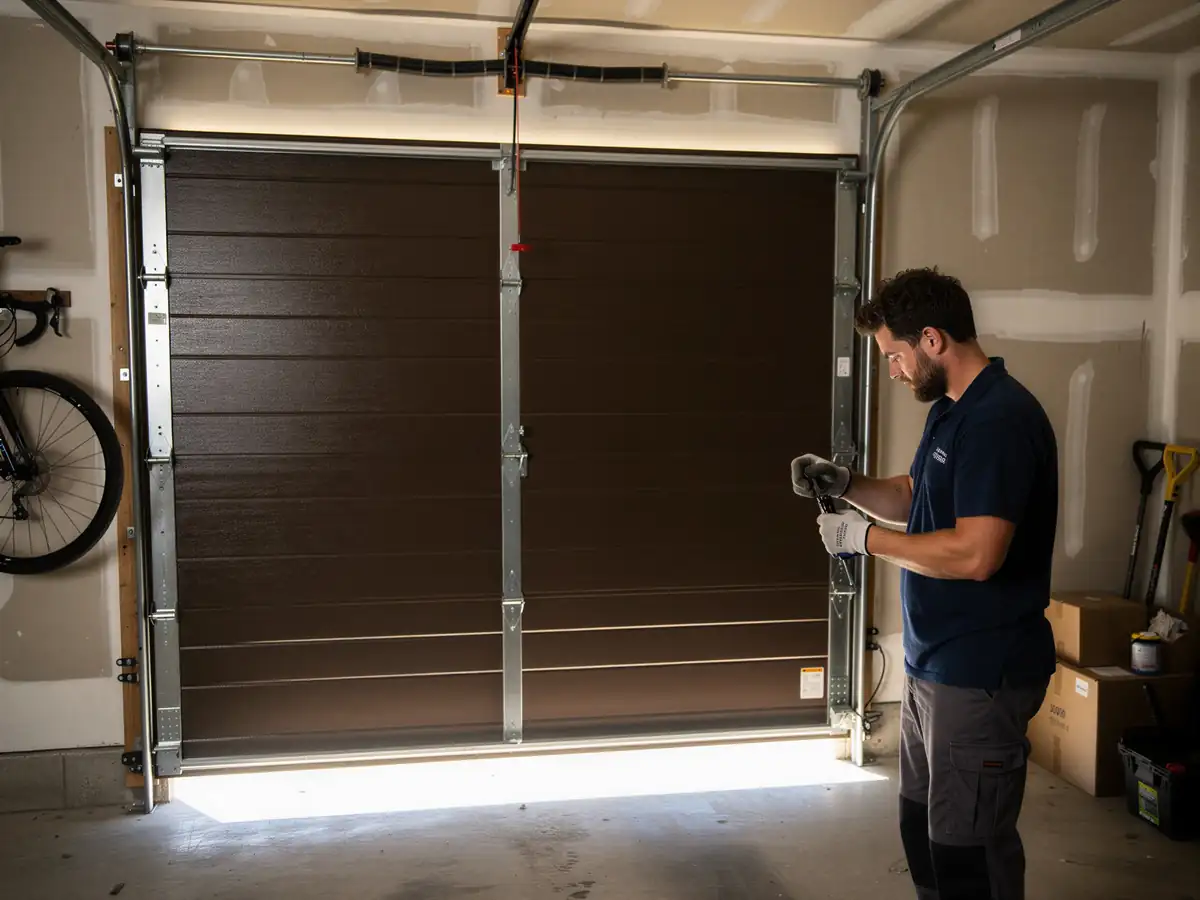
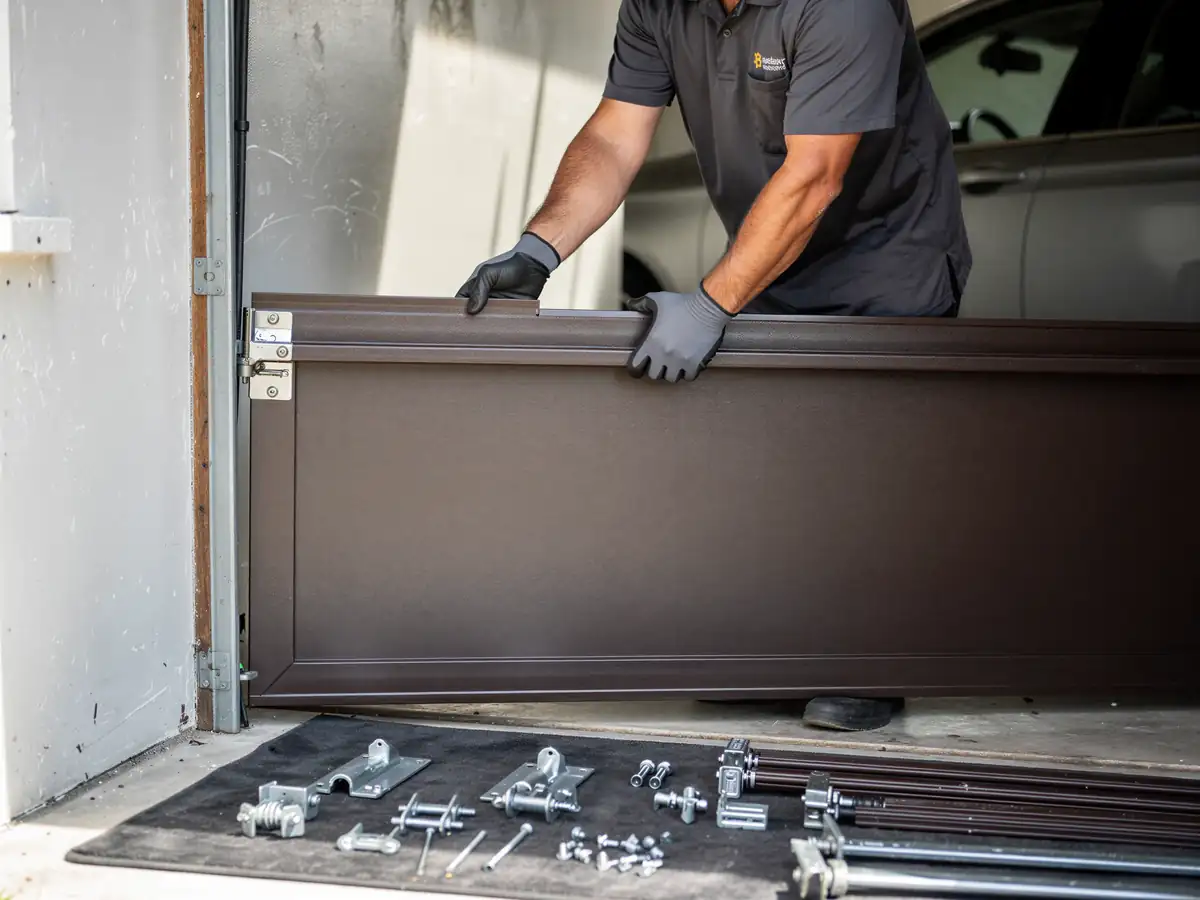
A straightforward extension spring replacement on a single door, once we're on site, runs under two hours - both springs, cable check, pulley inspection while we're in there. A full door swap, if the panels have gone soft or the track is bent beyond adjustment, is closer to half a day including haul-away of the old door.
What changes the timeline isn't the work itself, it's parts. We're coming from Deerfield, about 10 miles out, and if your door needs a panel or a part specific to a 1970s-era extension spring setup rather than a current torsion kit, we confirm what's on the truck before we commit to a same-visit fix. We'd rather tell you upfront that a part needs ordering than show up and start a job we can't finish.
Can You Do This Yourself
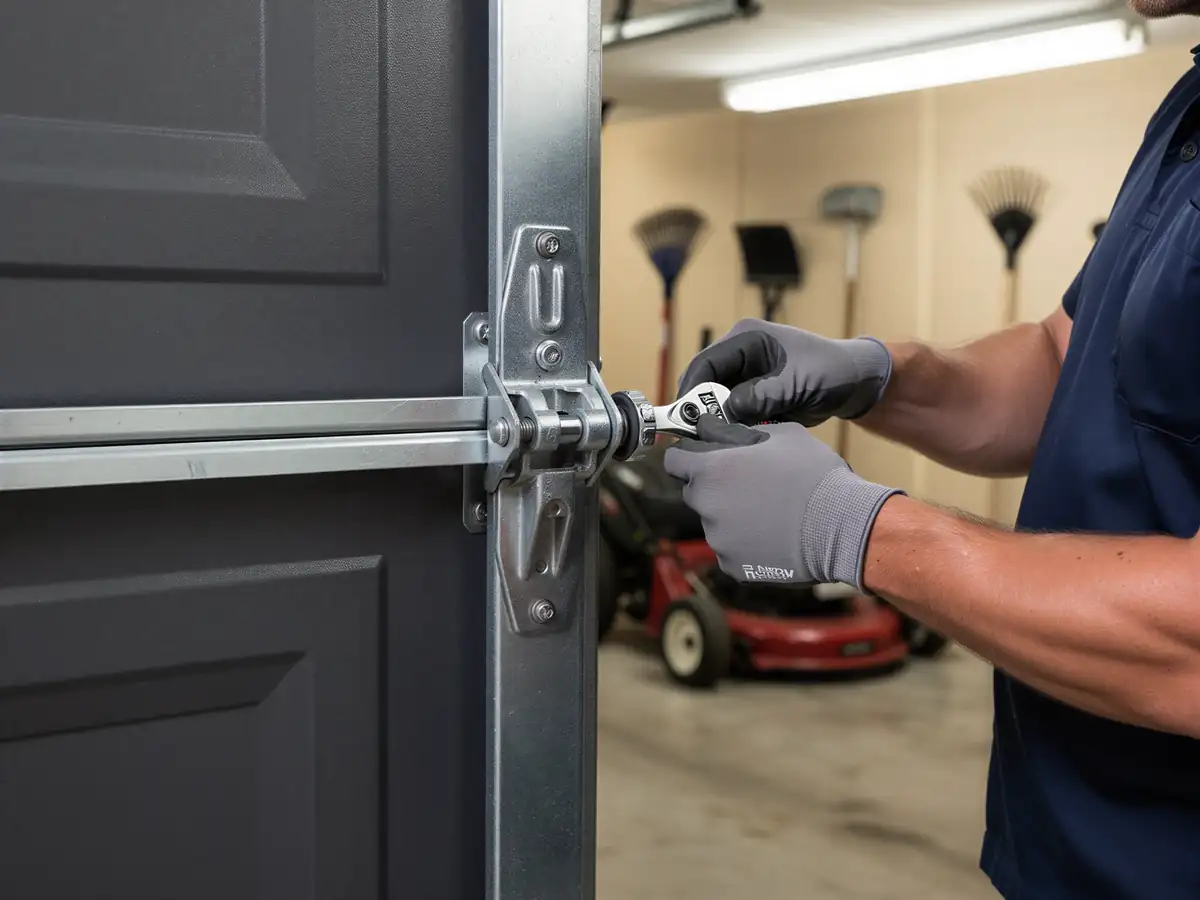
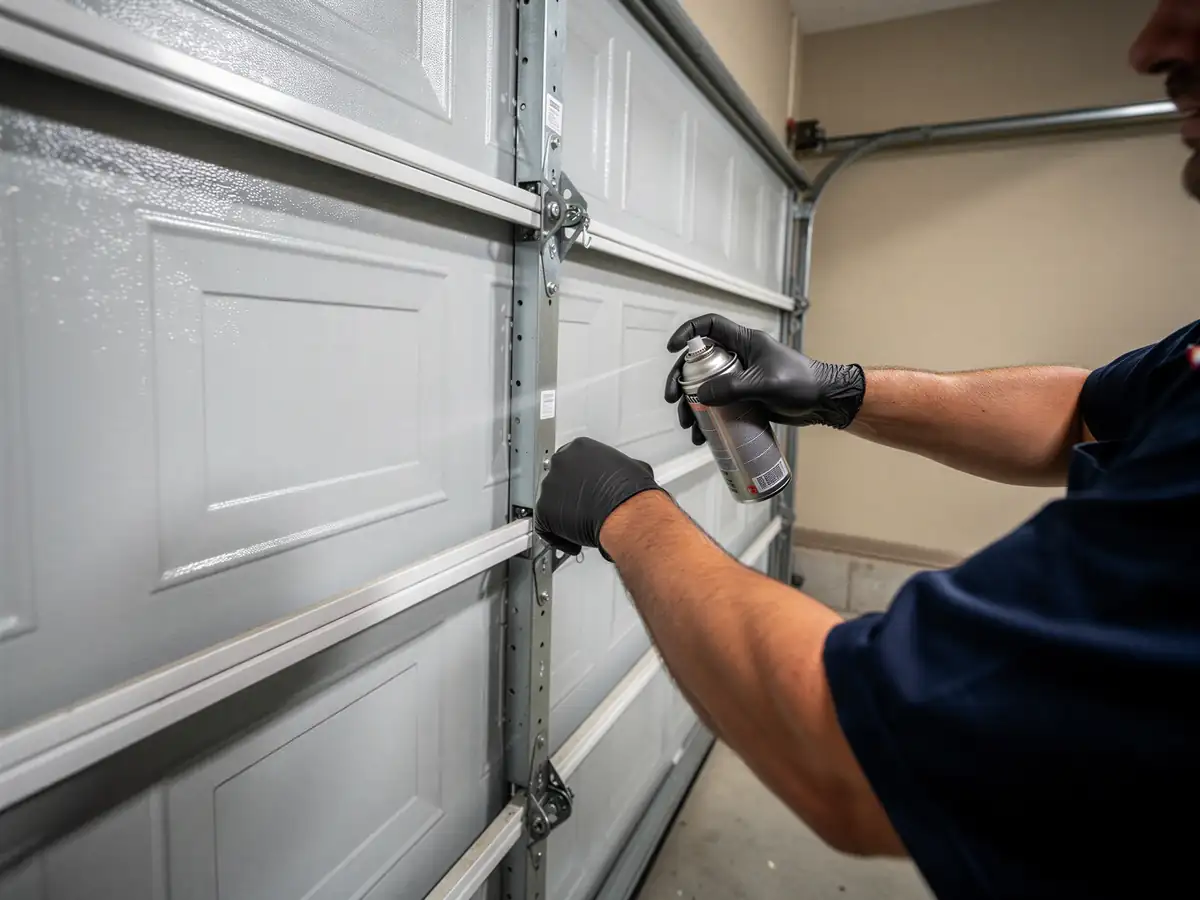
Tightening a loose pulley bracket or lubricating a track is reasonable DIY territory
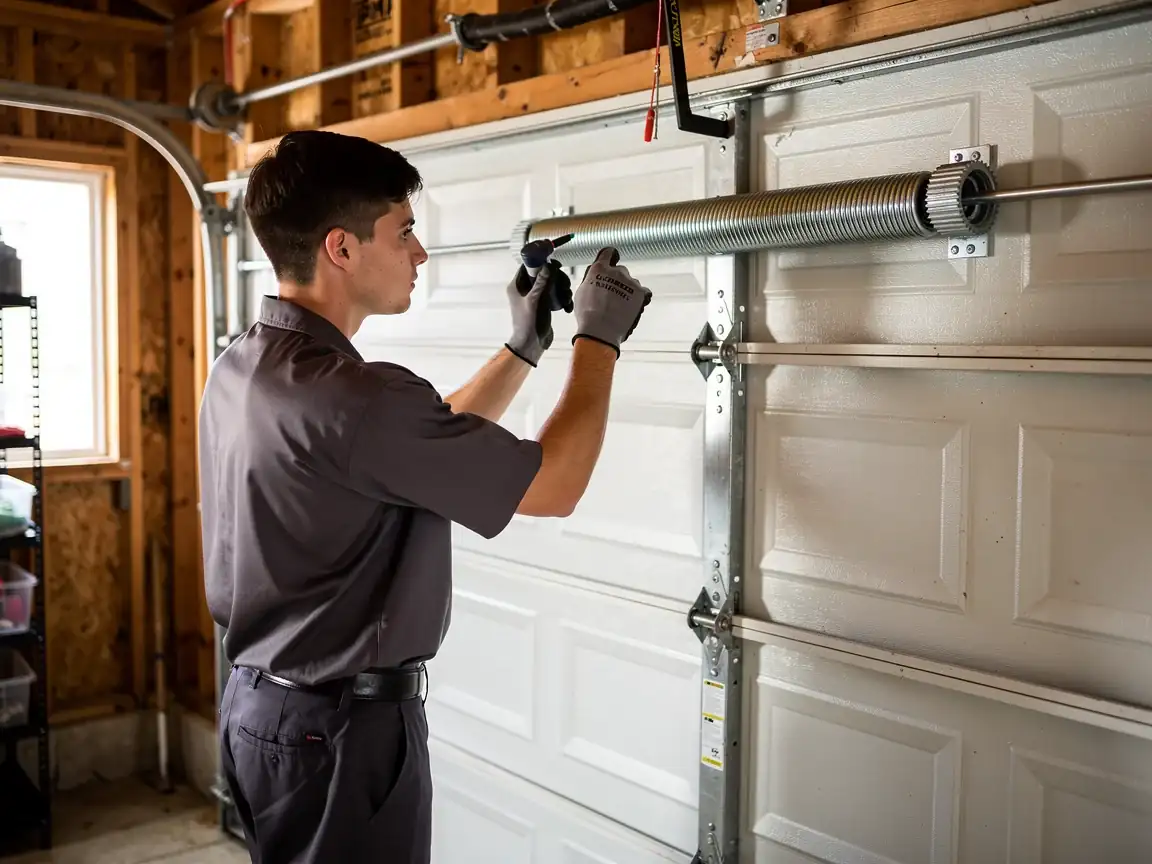
Replacing an extension spring is not, and we'll say that plainly: these springs store enough tension to break a wrist or worse if they let go while you're holding them, and without a safety cable in place, a snapped spring has nowhere to go but out.
If your door is sagging unevenly on one side
That's usually one spring stretched more than the other, not a sign you need to replace the whole set yourself. Call before you pull the ladder out for that one.
What You Are Seeing
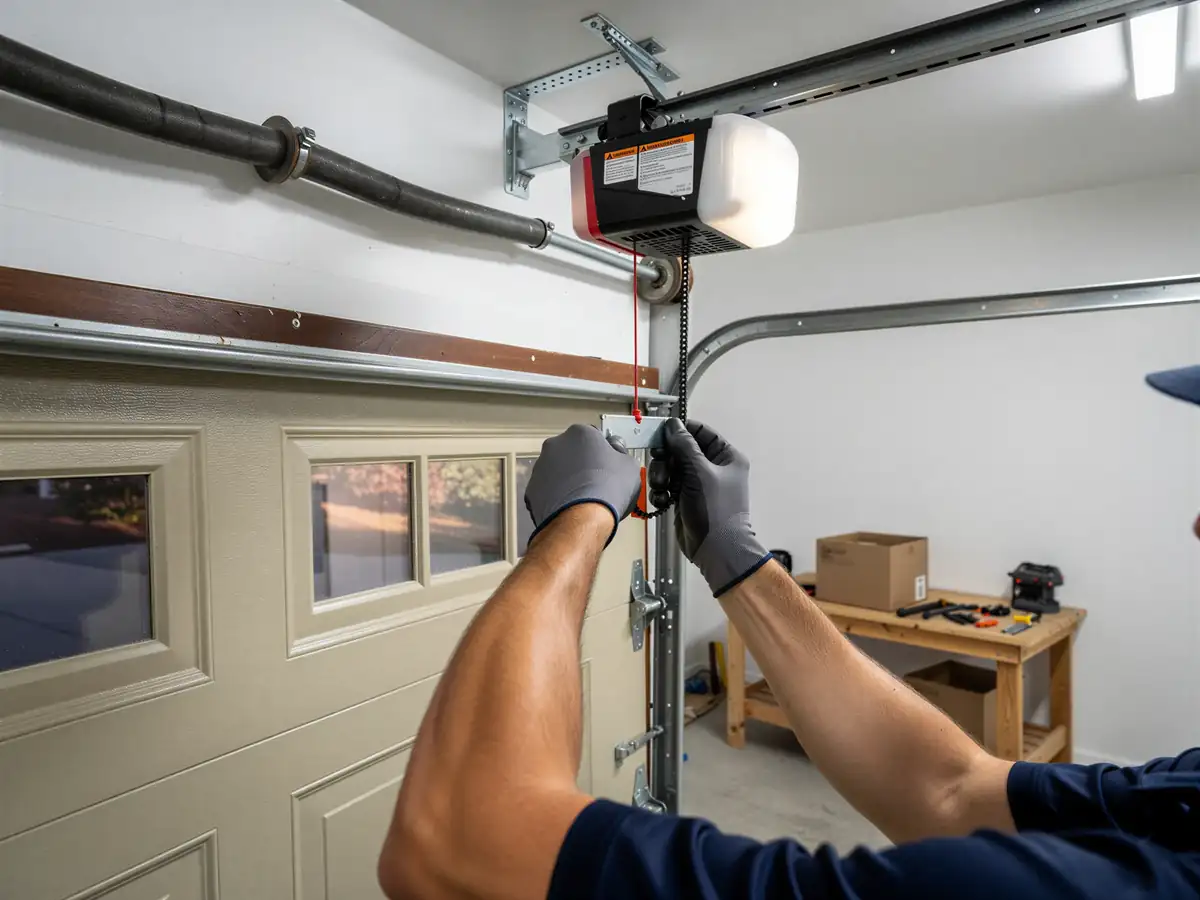
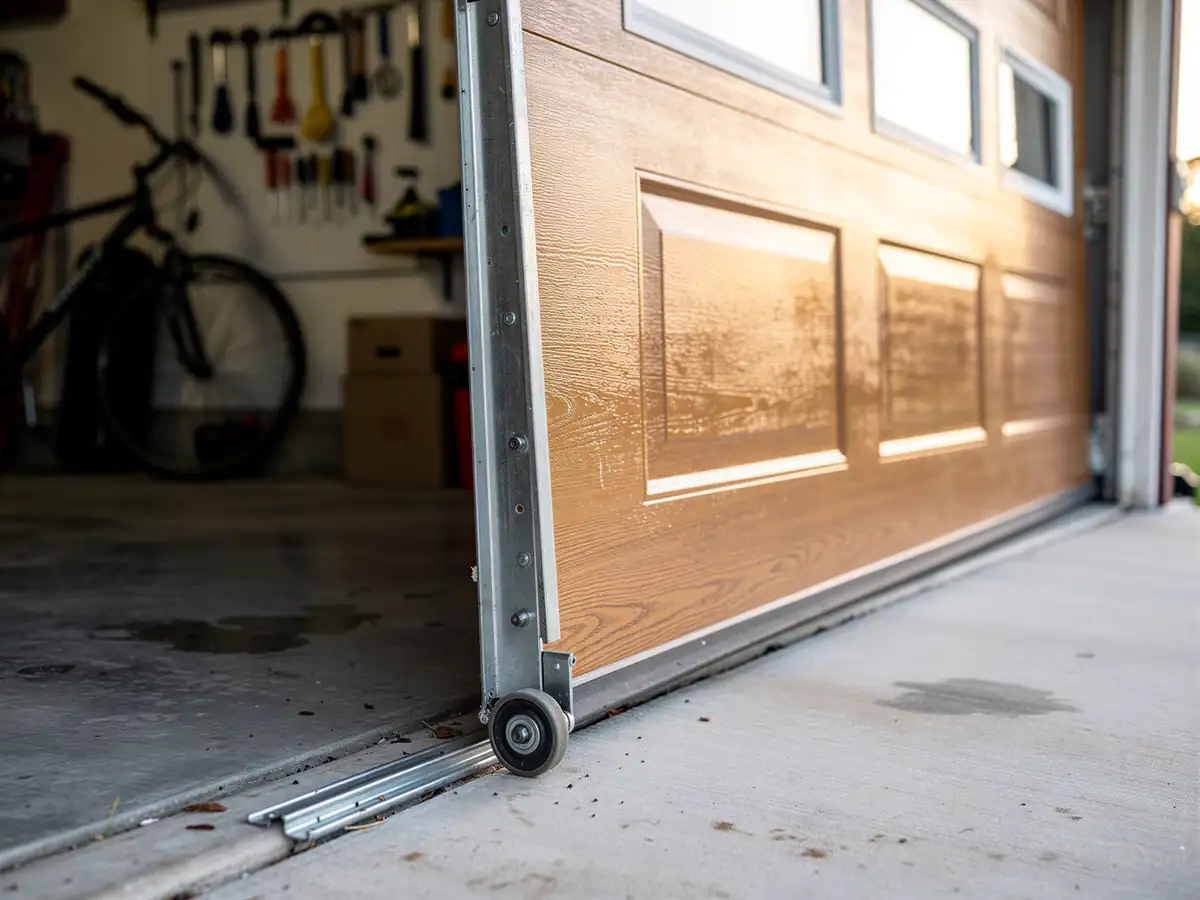
A door that drops the last foot instead of lowering smoothly, a loud bang followed by the door refusing to open, or cables that look frayed where they loop over the pulley near the top of the track - these all point to the original extension spring hardware common on Libertyville doors built around the town's 1976 median year. On a steel door from that era, the panels themselves are usually fine; it's the lift hardware that's aged out.
In the cold moderate winters this area gets, that aging accelerates - cold-stiffened springs that already have 45-plus years on them are more likely to snap on the first hard-lift morning of a cold stretch than to fail gradually.
Parts We Carry
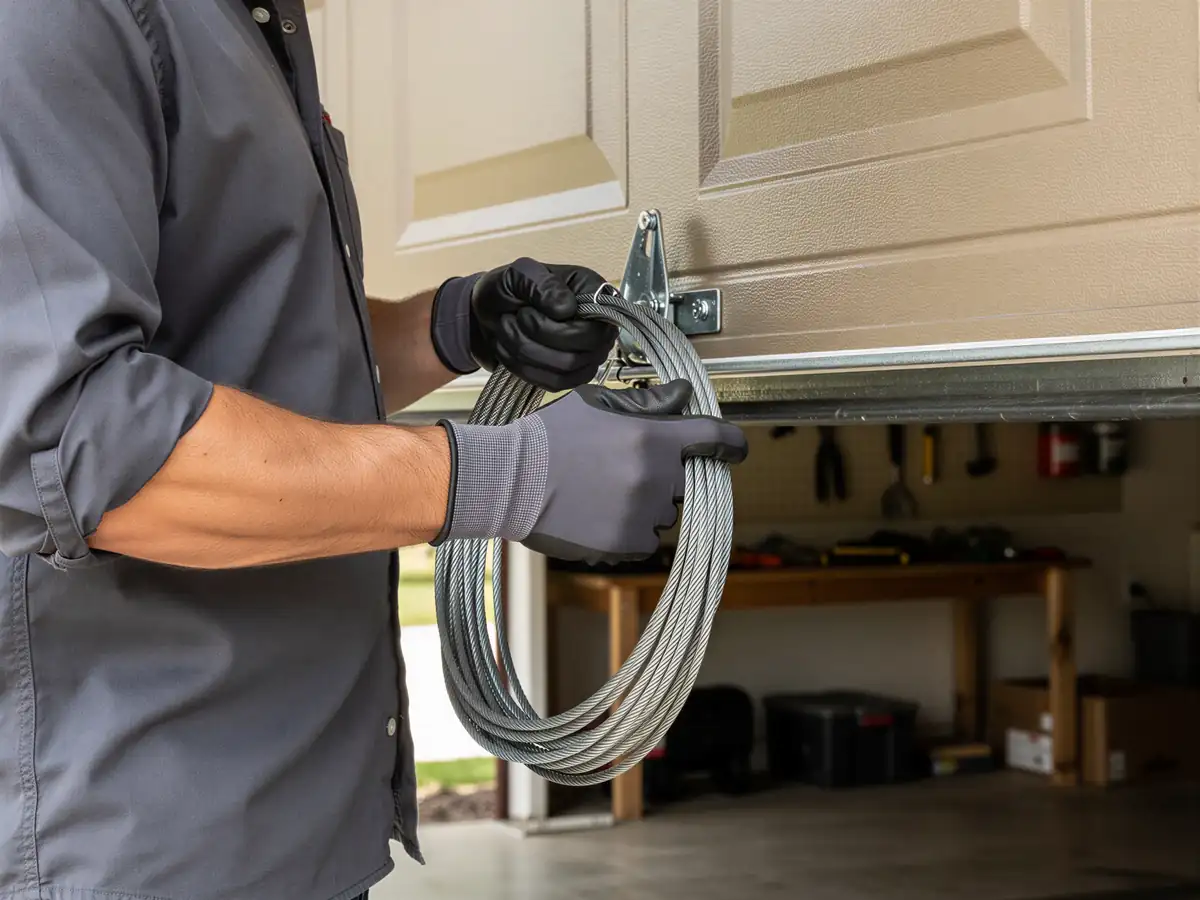
We stock extension springs and open-pulley hardware sized for the doors common to this build era, along with standard torsion kits for newer installs. Galvanized cable for the open-pulley setup is something we carry on the truck rather than special-order, since it's one of the parts that actually fails on these older doors.
One honest limit: if your door needs a panel matched to an original 1970s steel design that's since been discontinued, we may not have an exact match on hand, and we'll tell you that rather than installing something that doesn't fit right. Full replacement is often the more sensible call at that point, and we'll say so instead of pushing a patch repair.