The Complications
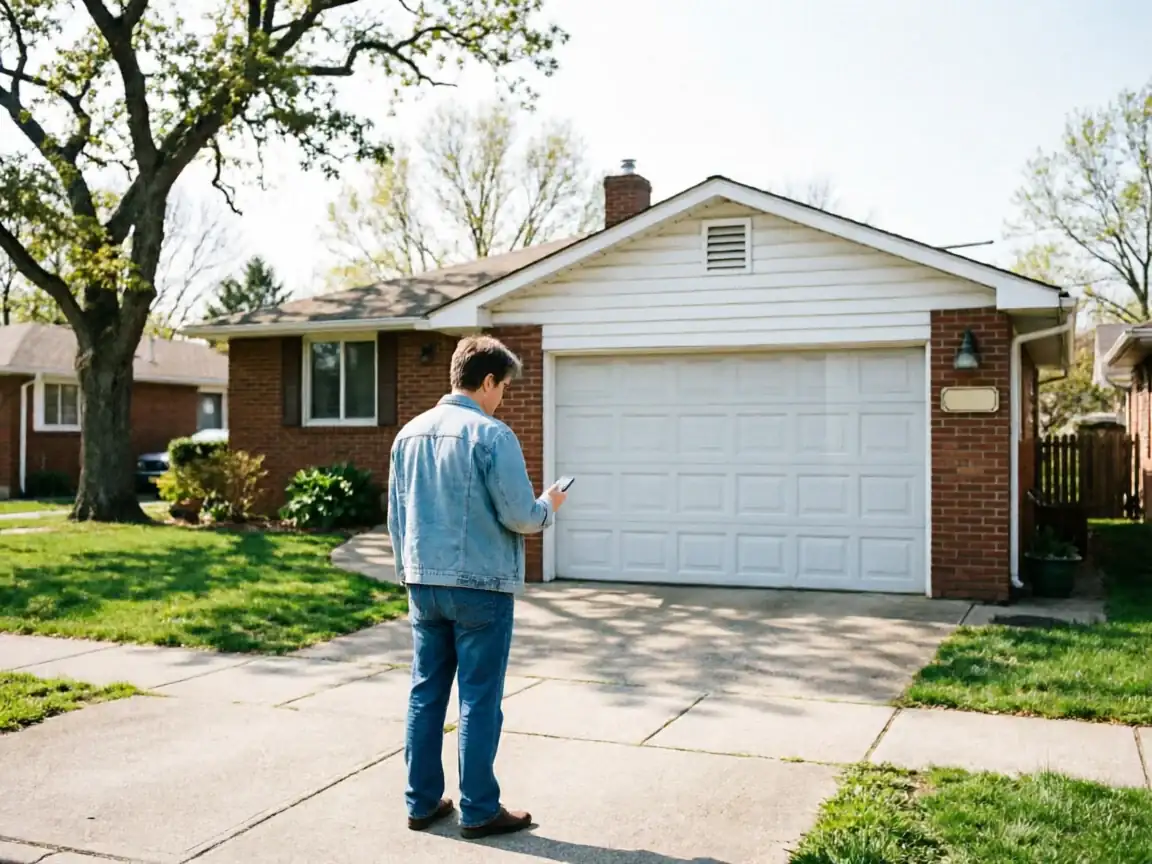
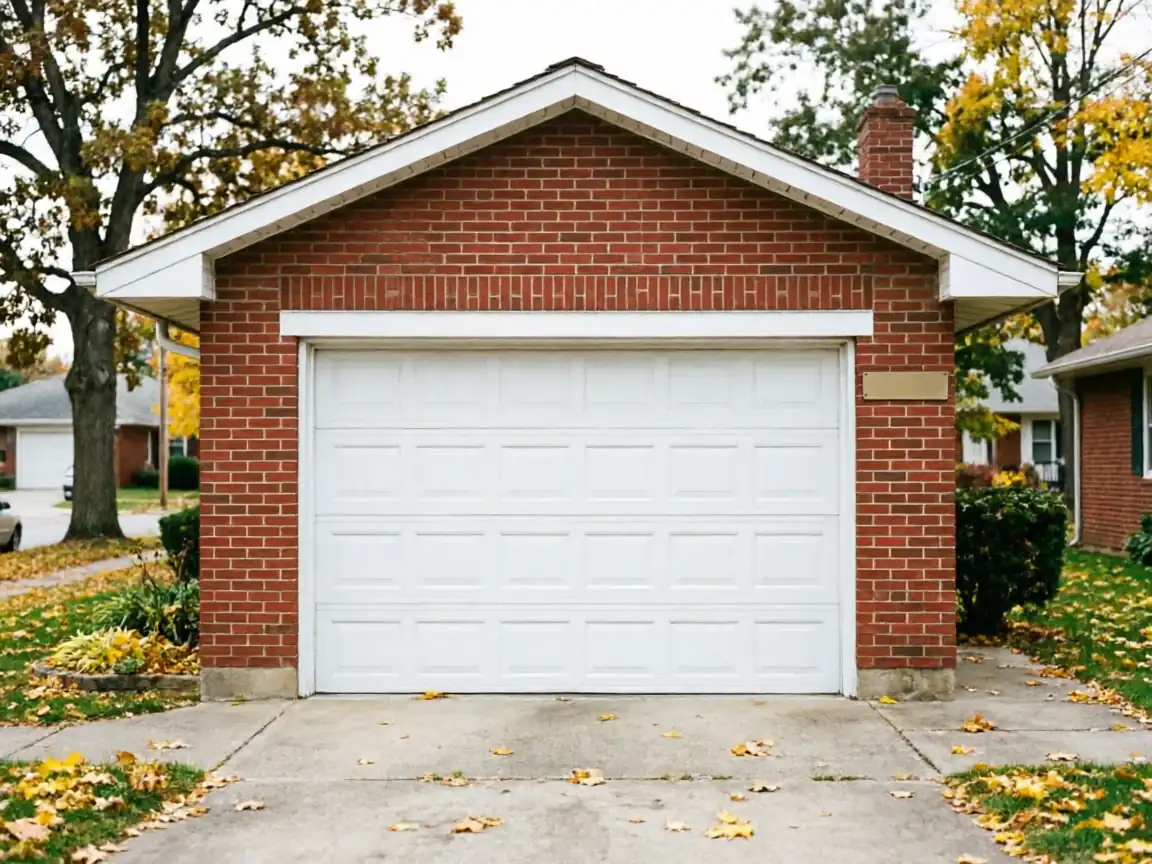
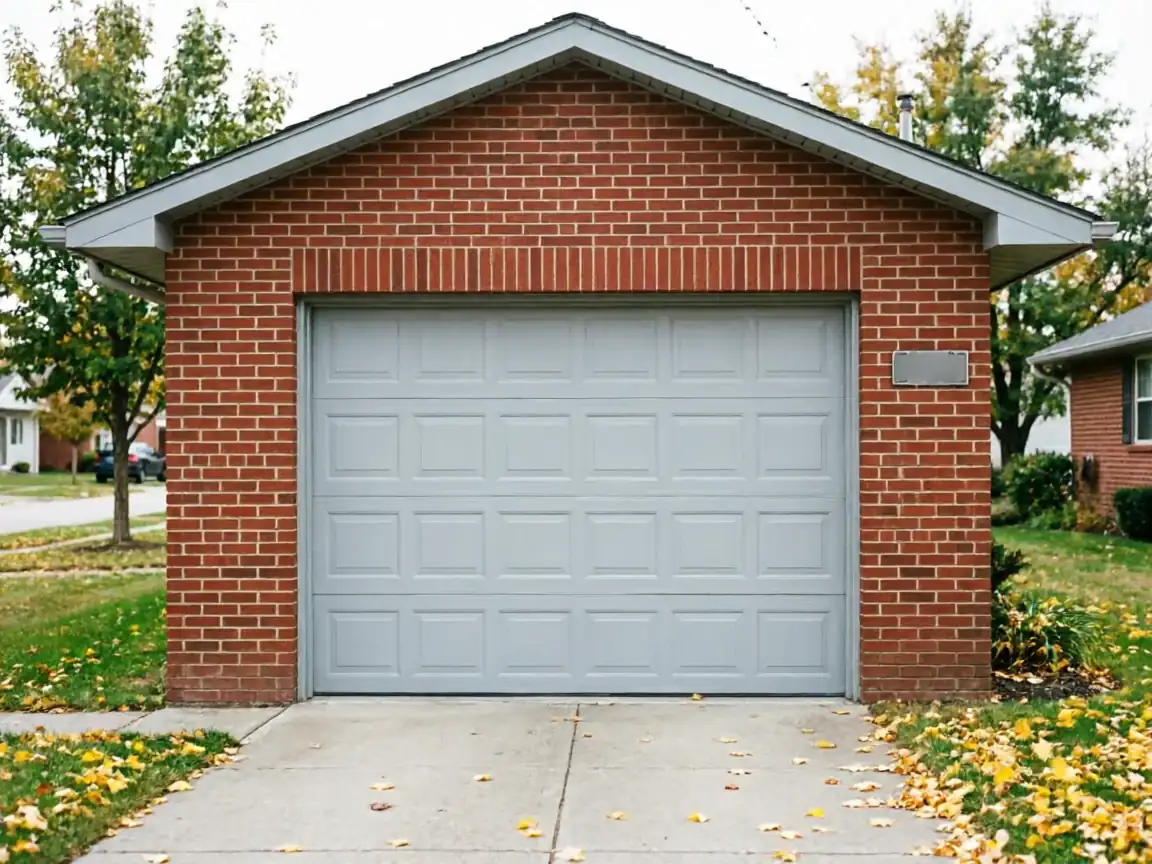
Bannockburn's homes carry a median build year of 1975, two years ahead of the wider service area's 1977 median, which puts the town right at the back edge of the 1960s-70s construction wave that produced most of the doors we see on calls across the territory. That matters because a house built in the mid-70s usually got a torsion spring sized for a lighter, uninsulated steel door, and the opener hardware from that era wasn't built around the modern safety sensors homeowners expect now.
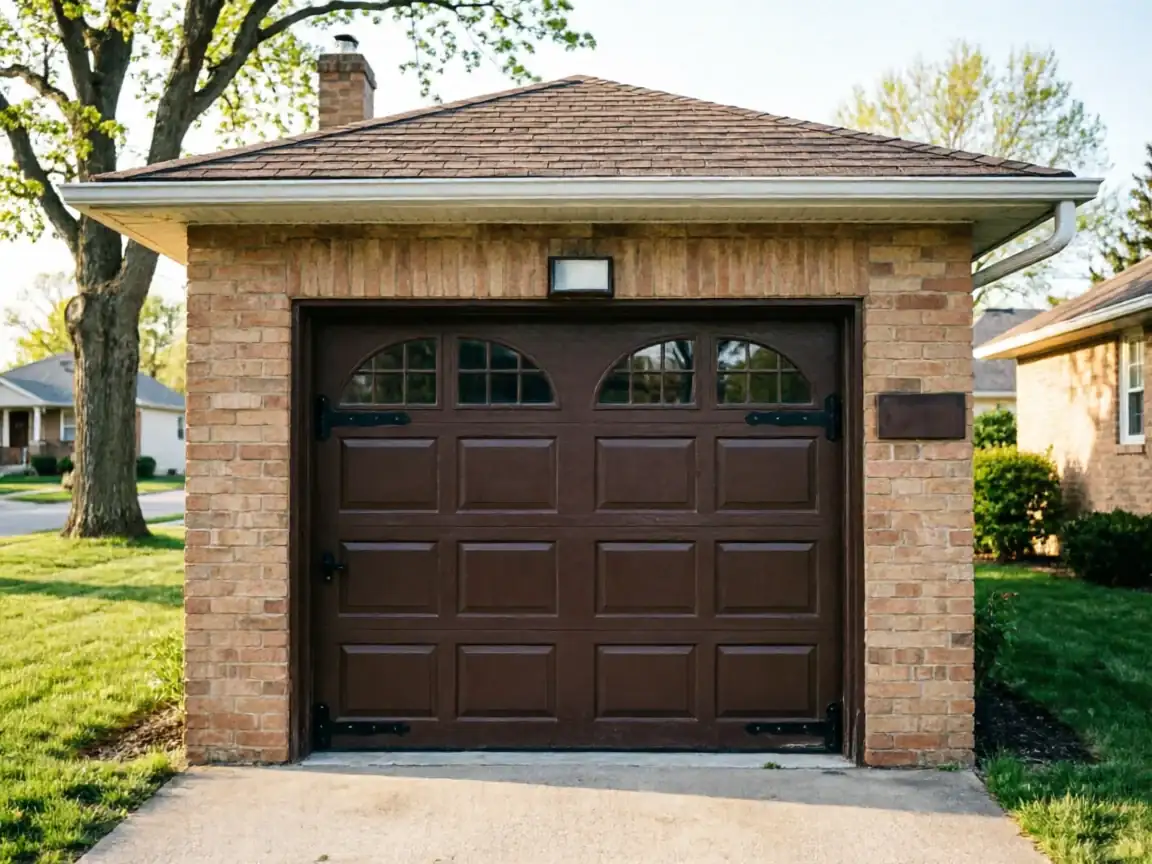
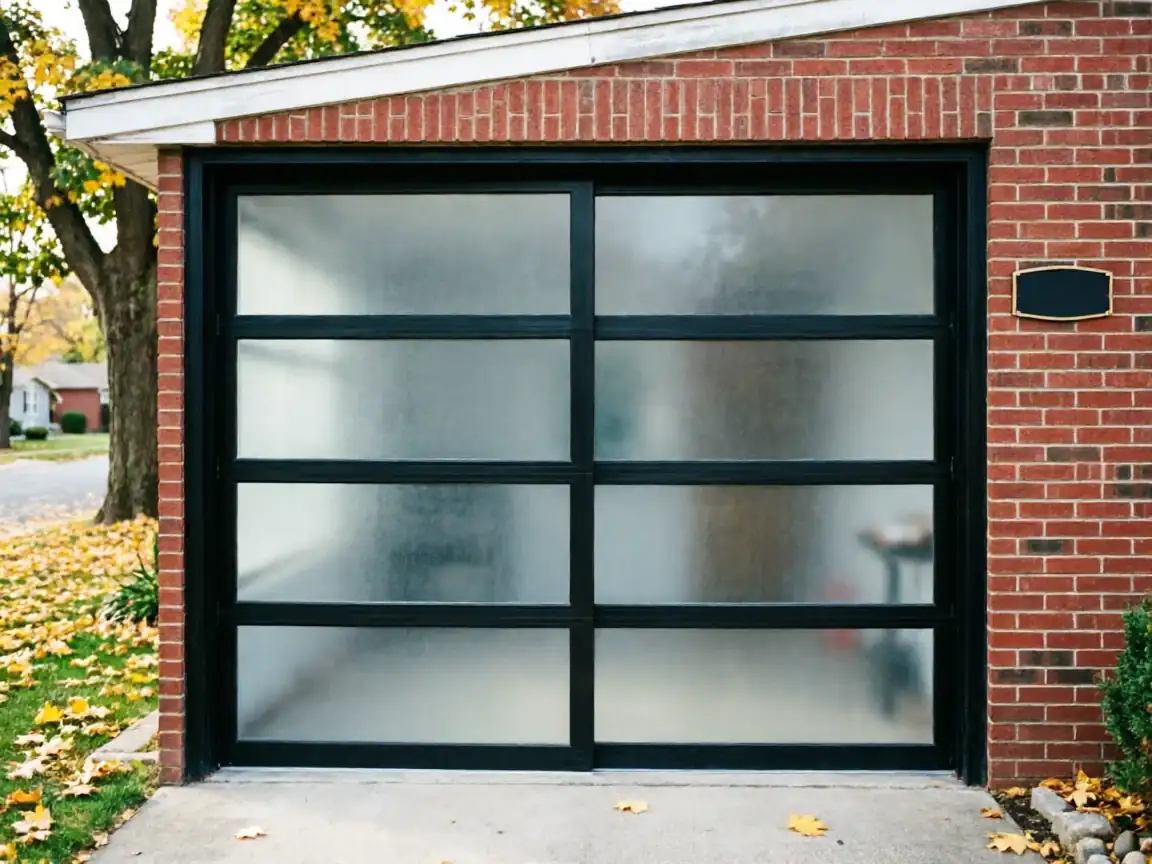
There's also a scale difference. Bannockburn has only 257 households, a fraction of the 163,436 across the full service area, so this isn't a town with dozens of door styles repeating block after block. At a median household income of $195,625, well above the area median of $125,104, the doors going in here tend to be heavier insulated steel or custom wood-look panels rather than the builder-grade doors that came standard when these houses first went up. That gap between the original hardware and what owners want today is the actual complication, not just wear and tear.
How Long It Takes
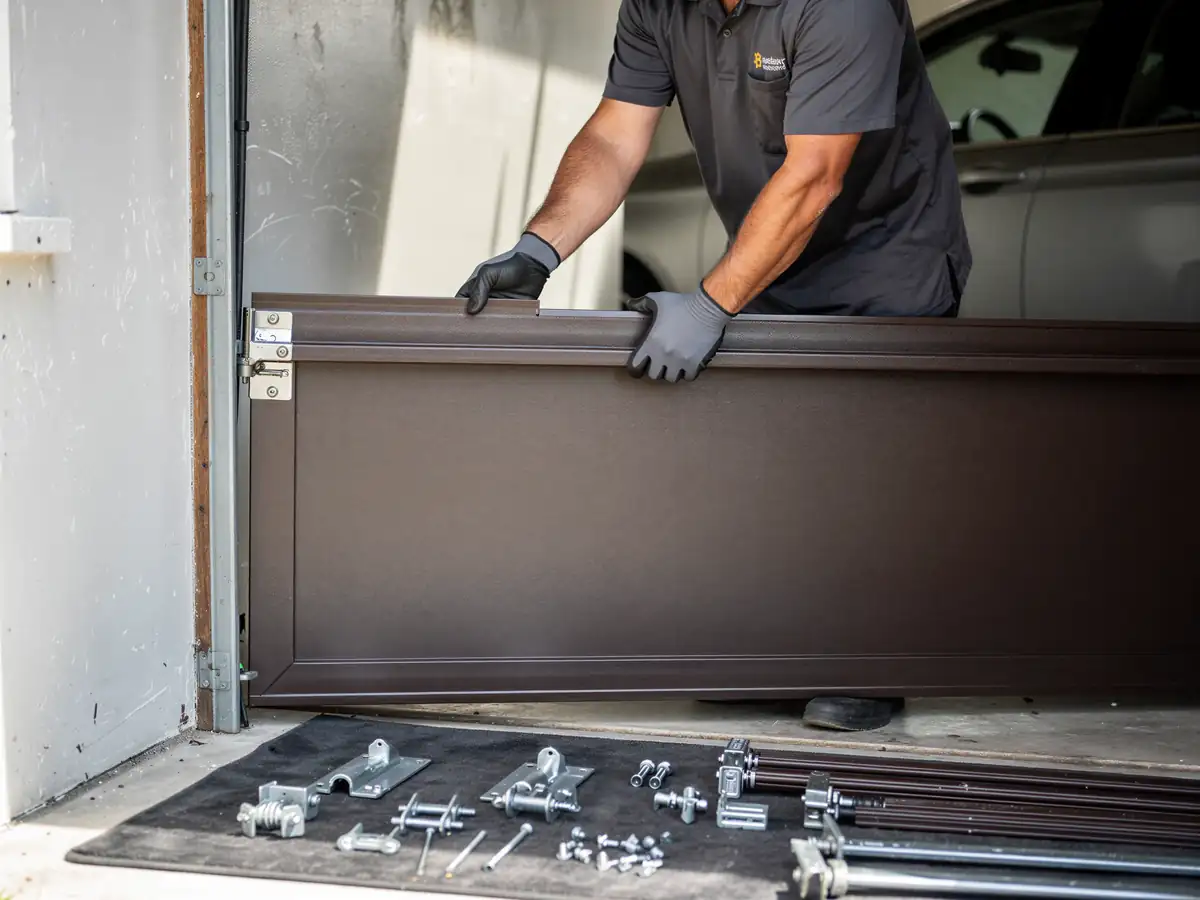
A straightforward spring or opener call is usually a same-day visit once we're on site, parts permitting. Full door replacements take longer because insulated panels and custom widths aren't something we keep stacked for every size - if the order has to come from a supplier, that adds days before install, not hours. We're honest about this upfront: a stock steel door goes fast, a heavier insulated or custom-finish door that fits a 1975-era opening sometimes doesn't.
Because Bannockburn sits about two miles from our Deerfield shop, travel time isn't the bottleneck here the way it can be on longer runs elsewhere in the territory. The bottleneck is almost always the part, not the drive. If your spring snapped on a double door and the cable's bent the track with it, that's a longer job on site regardless of how close we are - plan for a few hours of work, not a quick swap.
Can You Do This Yourself
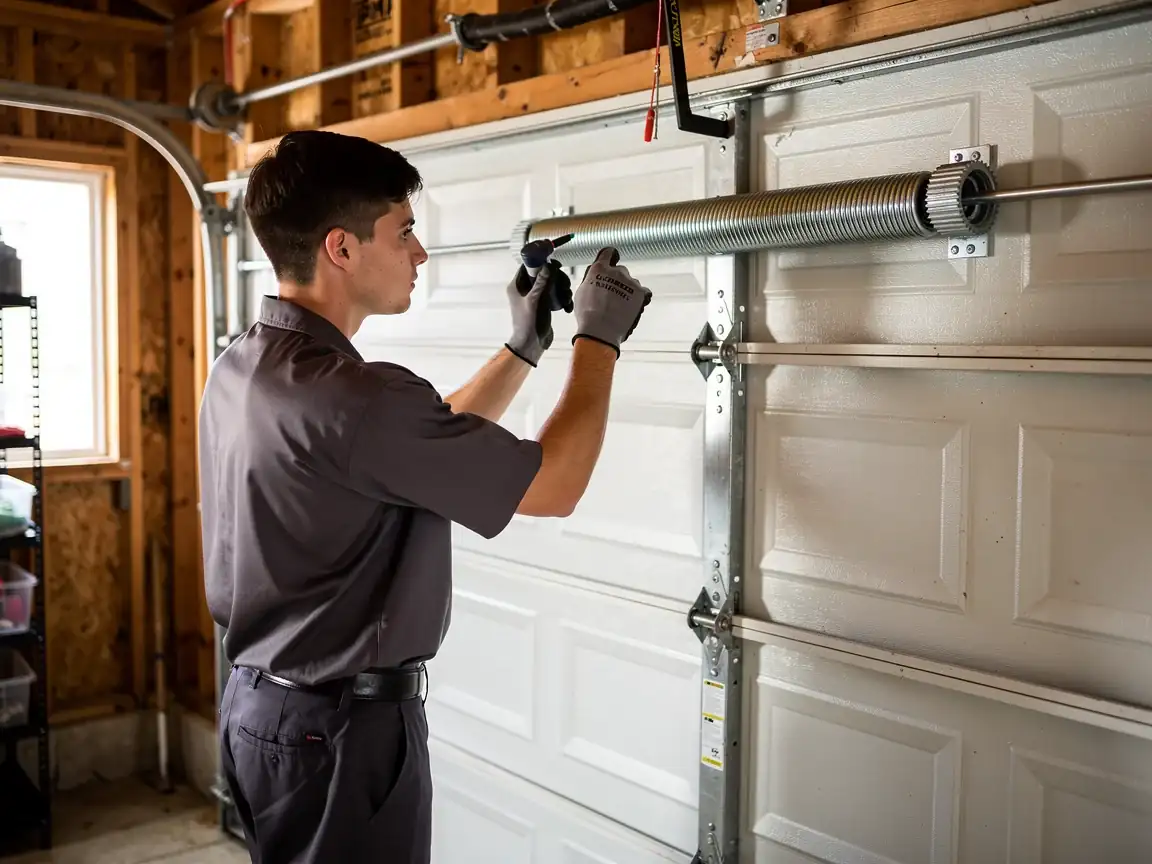
A torsion spring under full tension can put someone in the hospital
And that risk doesn't change based on how nice the house is. With 88,612 owner-occupied houses across the service area, we get plenty of calls from owners who started a repair and stopped once they saw what the spring was doing under load. If the job is a sensor alignment, a loose bracket, or lubricating hinges, that's reasonable to handle yourself.
- 88,612 owner-occupied
What we don't recommend doing yourself
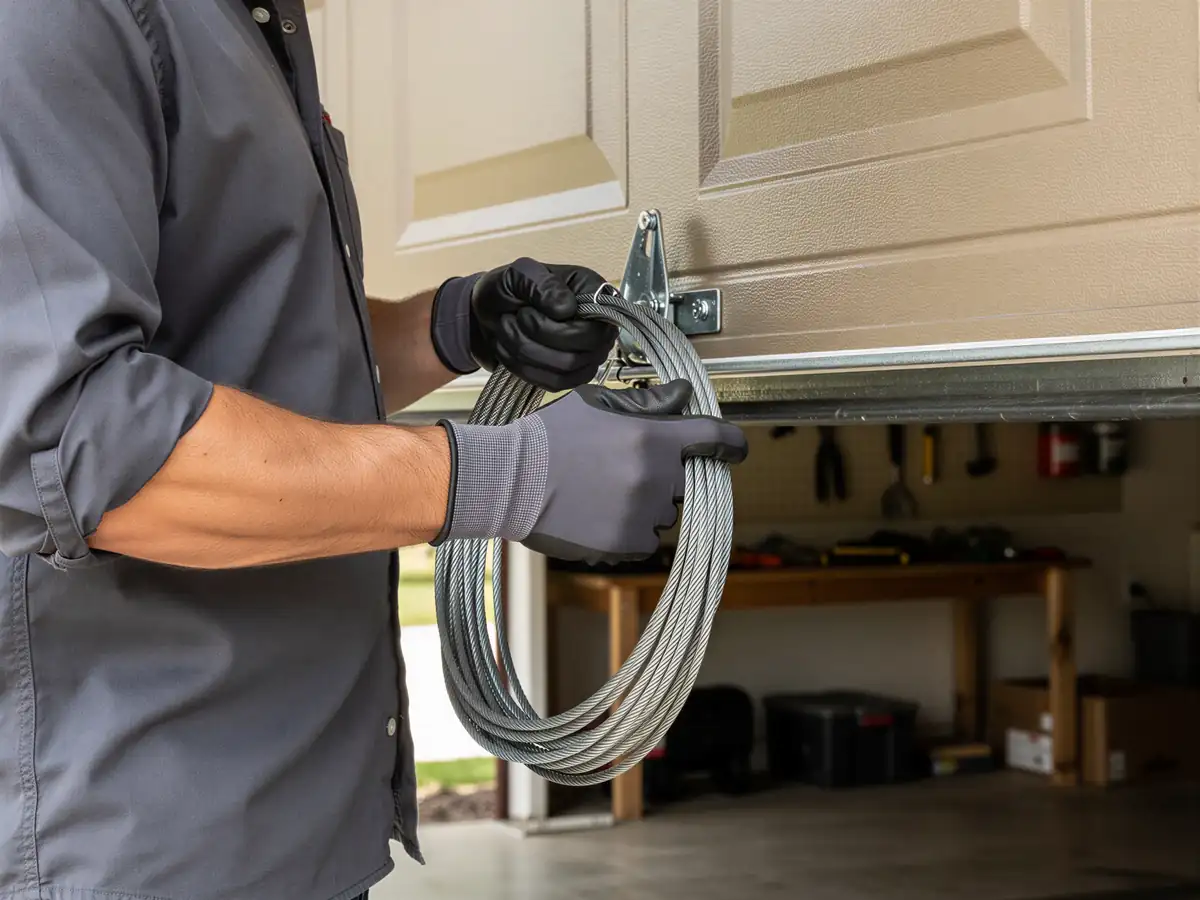
Anything involving the torsion spring, the cables, or removing a panel from a door that's still under tension. On a house with original 1975-era hardware, the spring sizing and the mounting brackets often don't match what's sold off the shelf today, which means an improvised fix can put more strain on parts that are already decades past their rated cycle count. That's not a sales pitch, it's just where the physics stop being forgiving.
What You Are Seeing
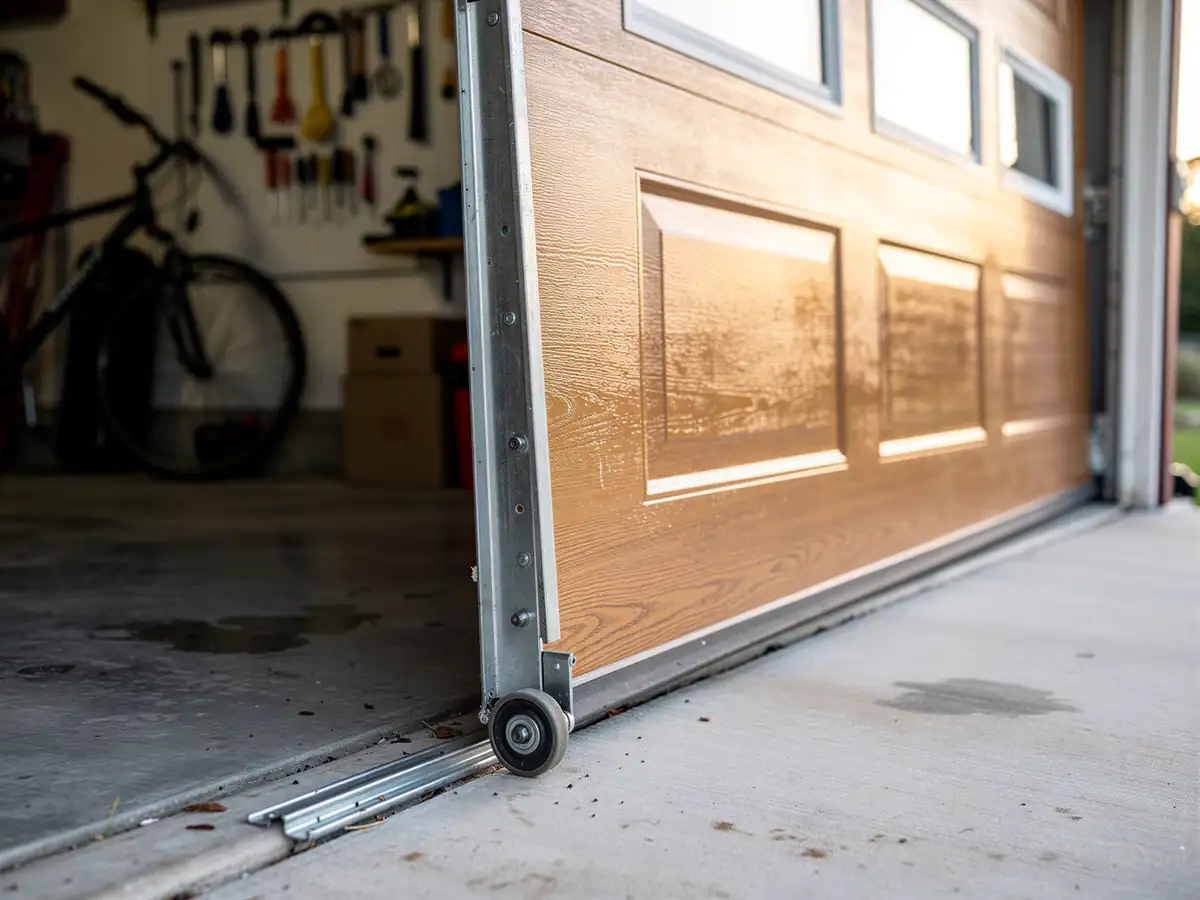
On a 1975 build, the most common complaint is a door that's gotten noticeably heavier to lift by hand, which usually means the torsion spring has lost tension over the decades rather than failed outright. Rollers that grind instead of roll, a track that's pulled slightly away from the frame, or an opener that hums but doesn't lift - these show up together more often than separately on houses this age.
The climate plays a role too. This area sits in a cold, moderate climate band, and steel contracts in winter the way it expands in summer; on original hardware, that cycle loosens bolts and brackets faster than it would on a newer, better-sealed door. If you're noticing a gap at the bottom seal that wasn't there last winter, or a door that sticks only when it's cold out, that's the hardware telling you it's working harder than it should.
What the Fix Involves
For a spring replacement on an older door, we size the new torsion spring to the door's actual weight now, not the weight it was built to carry in 1975 - insulated retrofits and added panels change that number, and using the original spec undersizes the spring. We also check the track alignment and the mounting brackets at the same time, since on houses this age the fasteners are often original and worth replacing while the door's apart anyway.
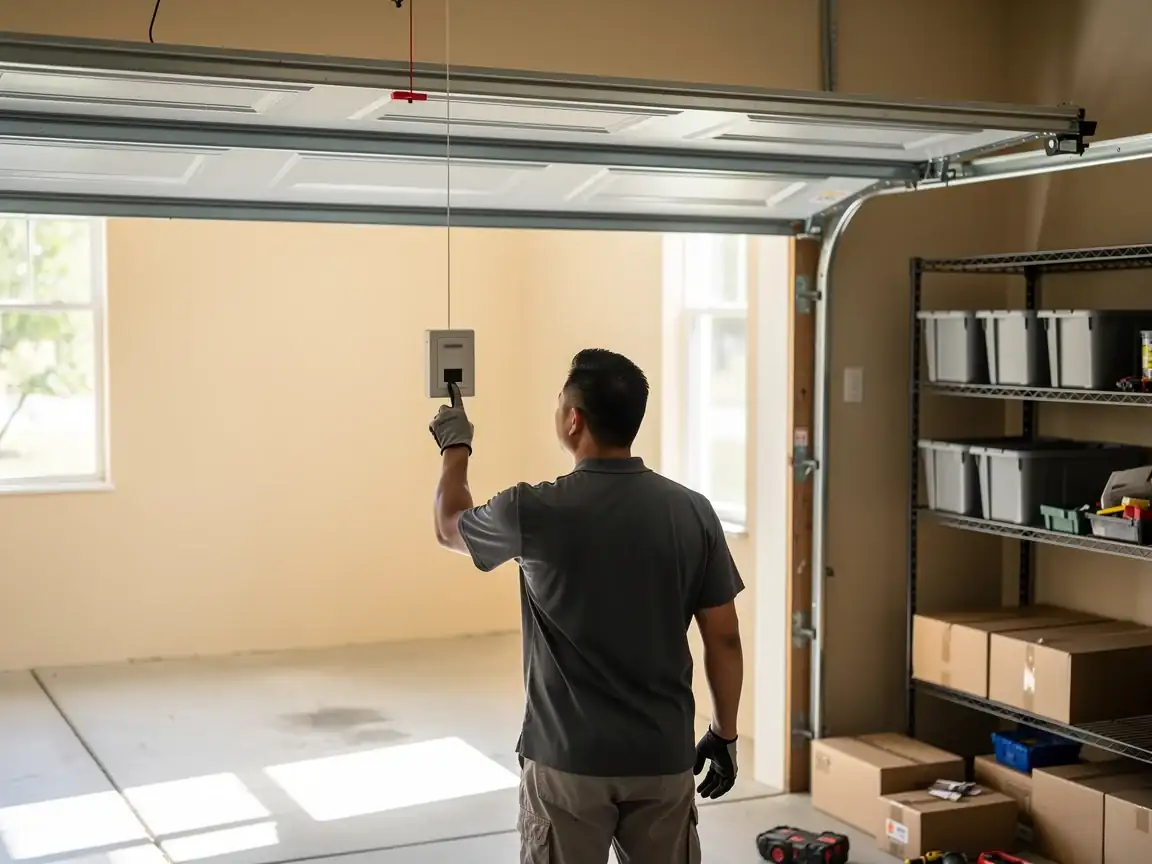
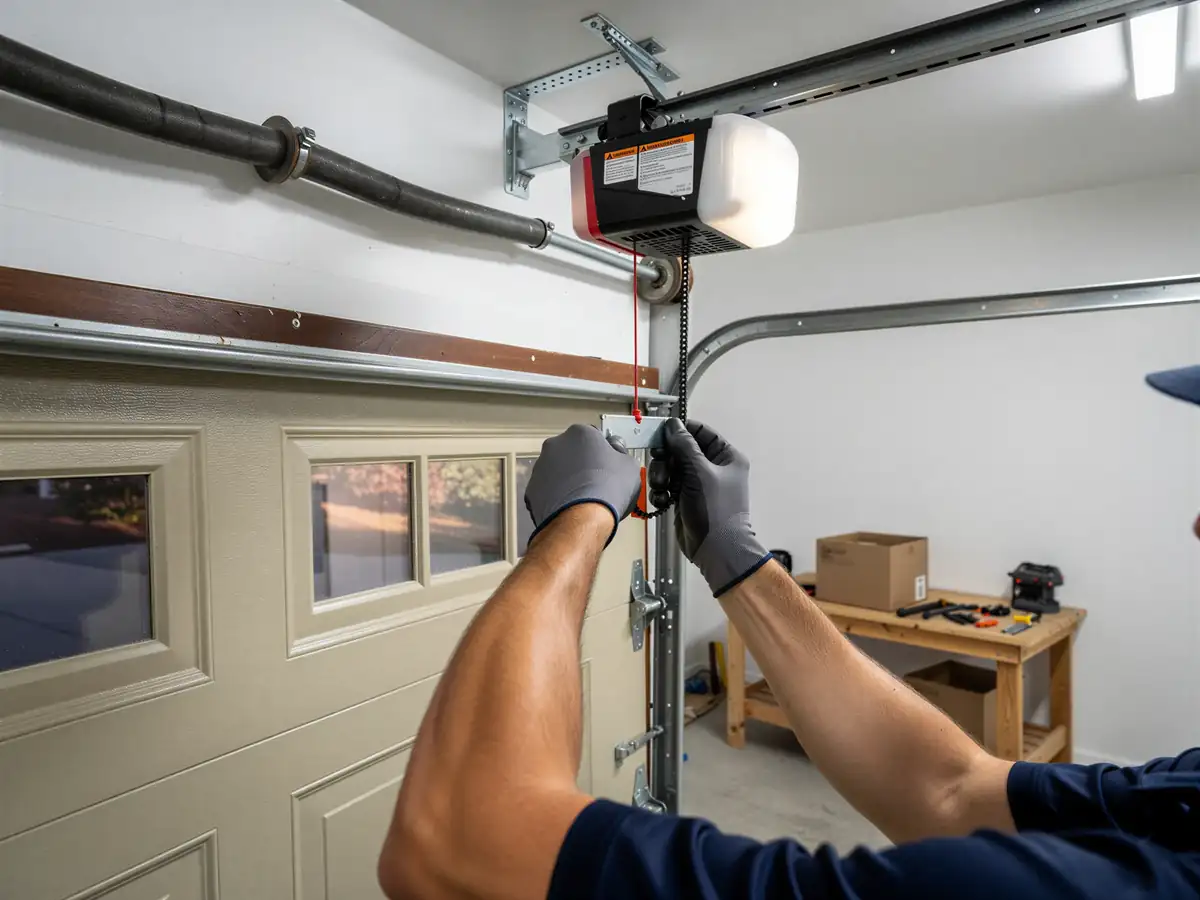
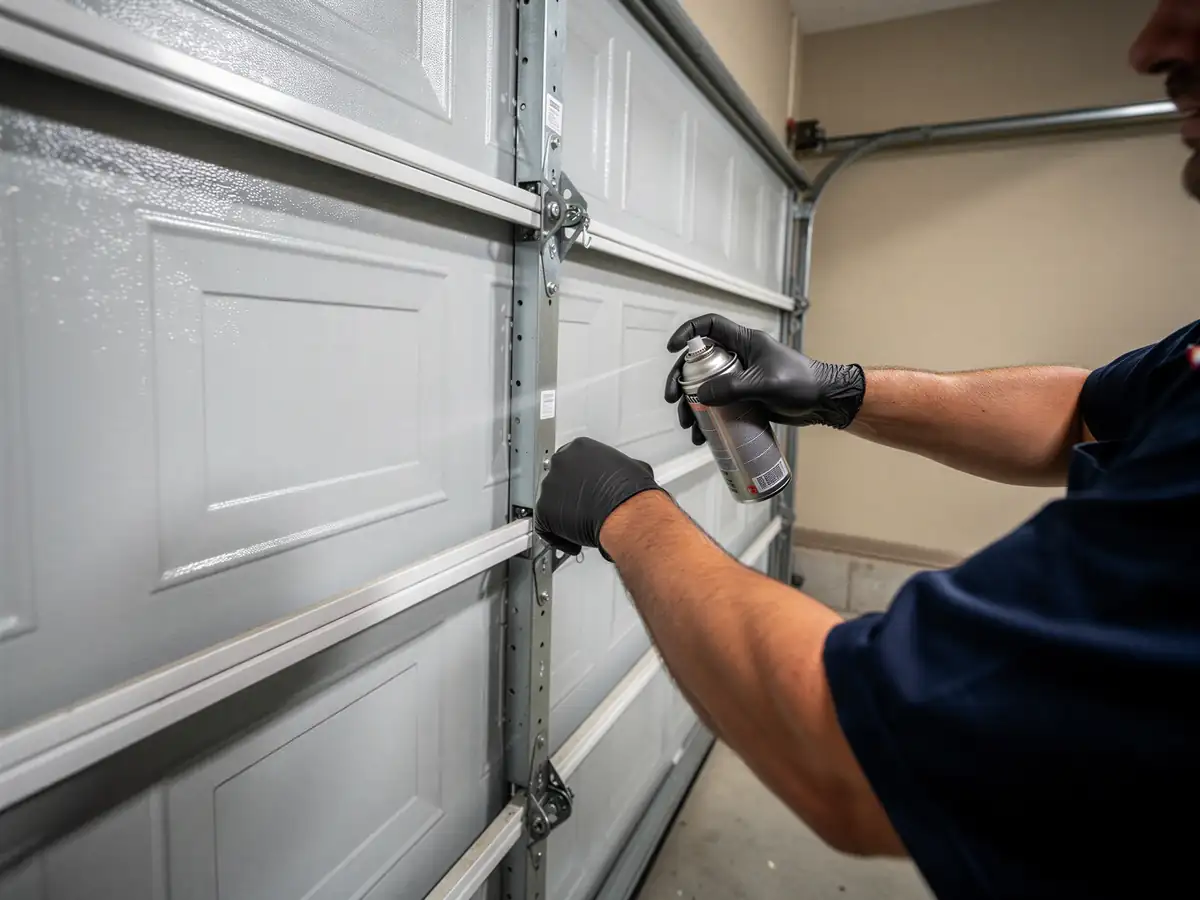
If the opener itself is the problem, we test the drive gear and the sensor alignment before assuming the motor's dead - a surprising number of 'dead opener' calls turn out to be a misaligned safety sensor, which is a five-minute fix, not a replacement. We'll tell you straight if a repair isn't worth it: once a door's frame is warped or the panels are rusted through, patching individual parts just delays a replacement that was coming anyway.
Parts We Carry
We stock torsion springs across the common sizes used on 1960s-70s doors
Along with standard steel panels and the rollers and cables that wear out first. For the cold, moderate climate this area sits in, insulated panel doors move better in winter and don't contract as hard on the seals, so that's what we carry for replacements rather than pushing a single-layer door that won't hold up to the swing between seasons here.
What we don't keep on the truck is anything custom
A specific wood-finish panel or a non-standard width has to be special ordered, and given the median income level and home values in this part of the territory, that's a request we get more often here than in some other stops. If your door needs a match to an existing custom finish, tell us up front so we can order before we show up rather than after.