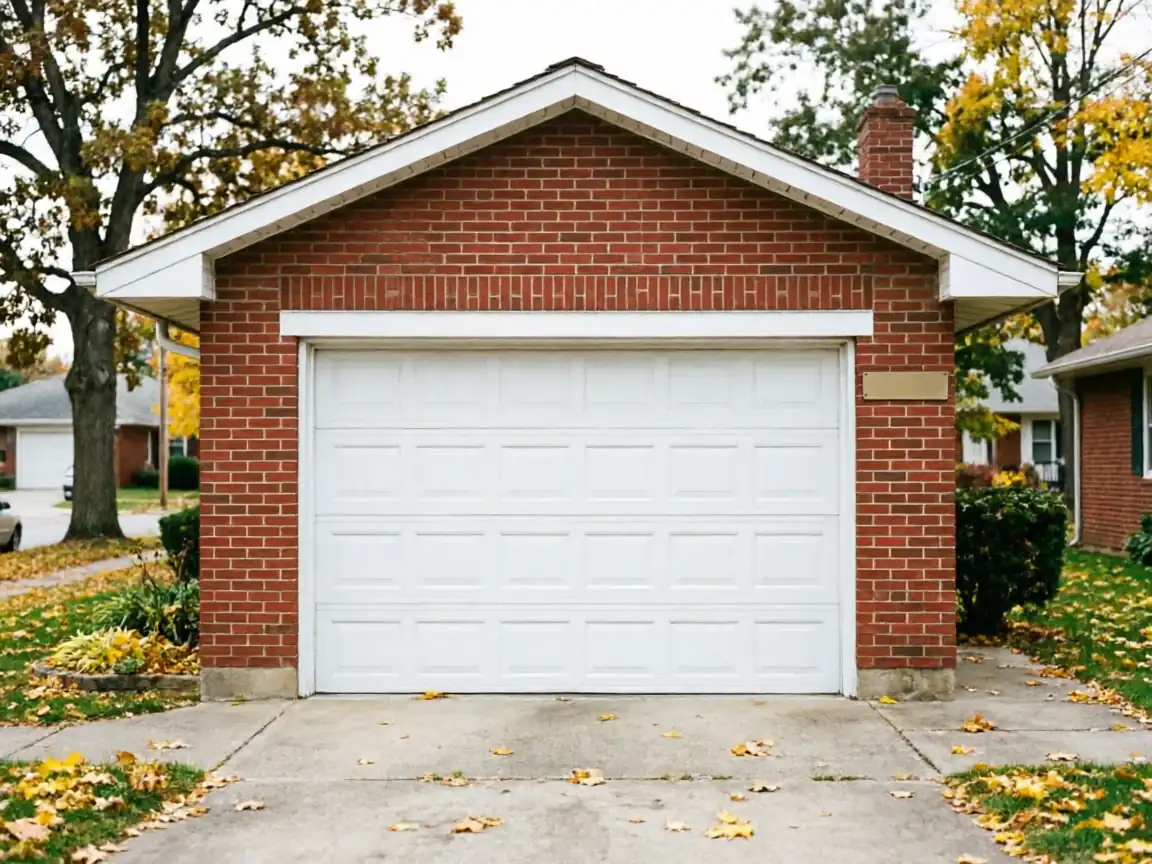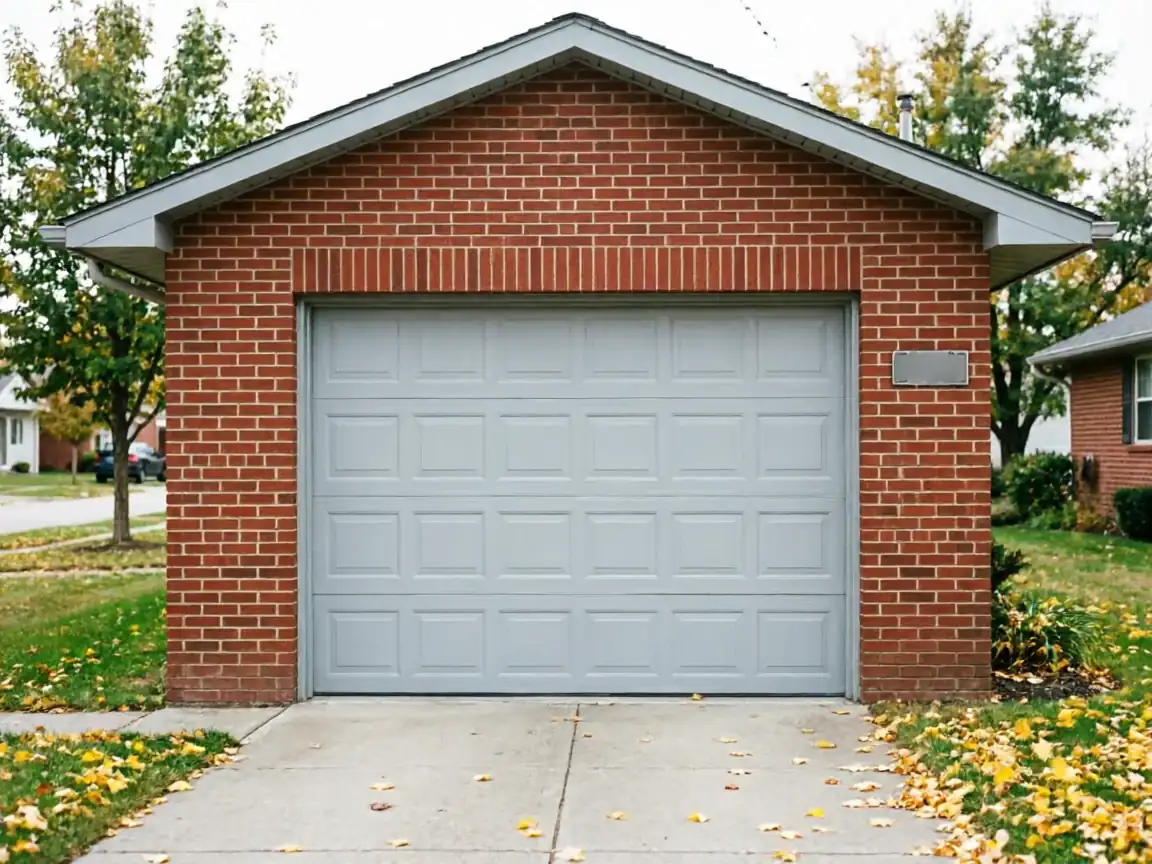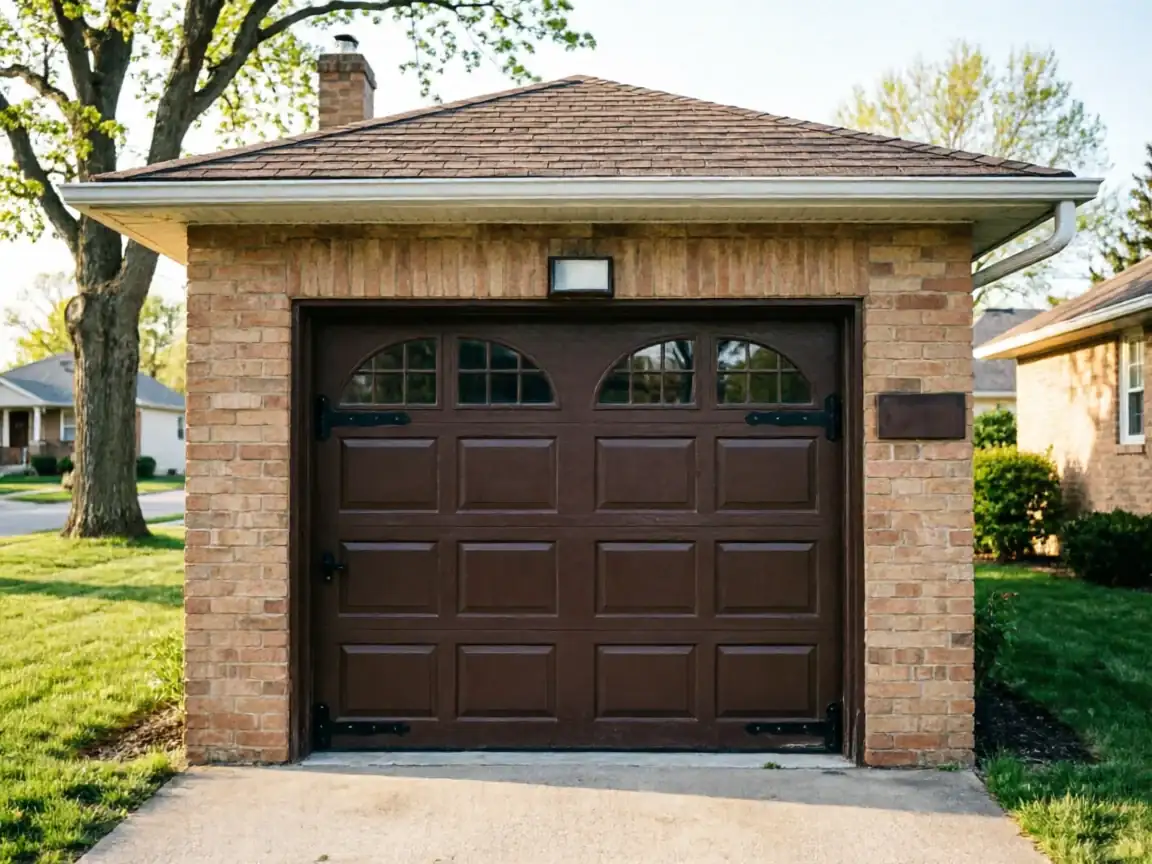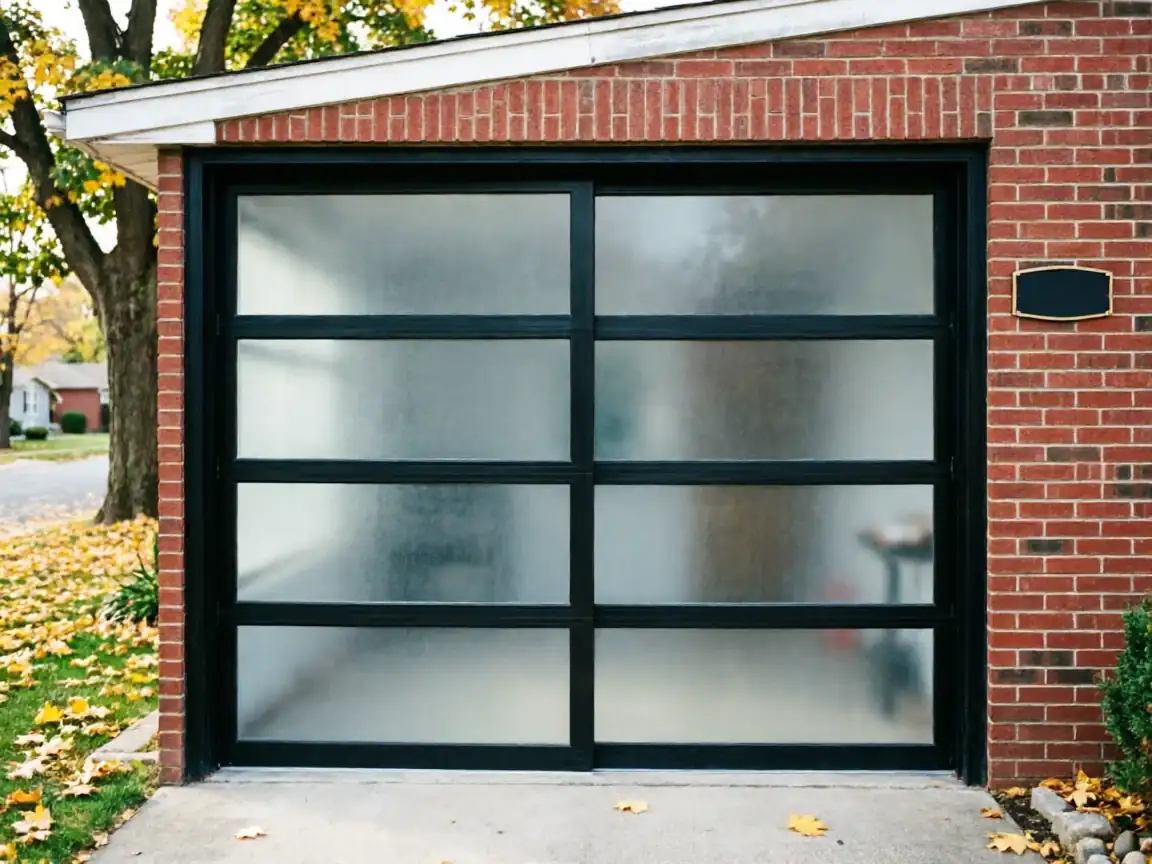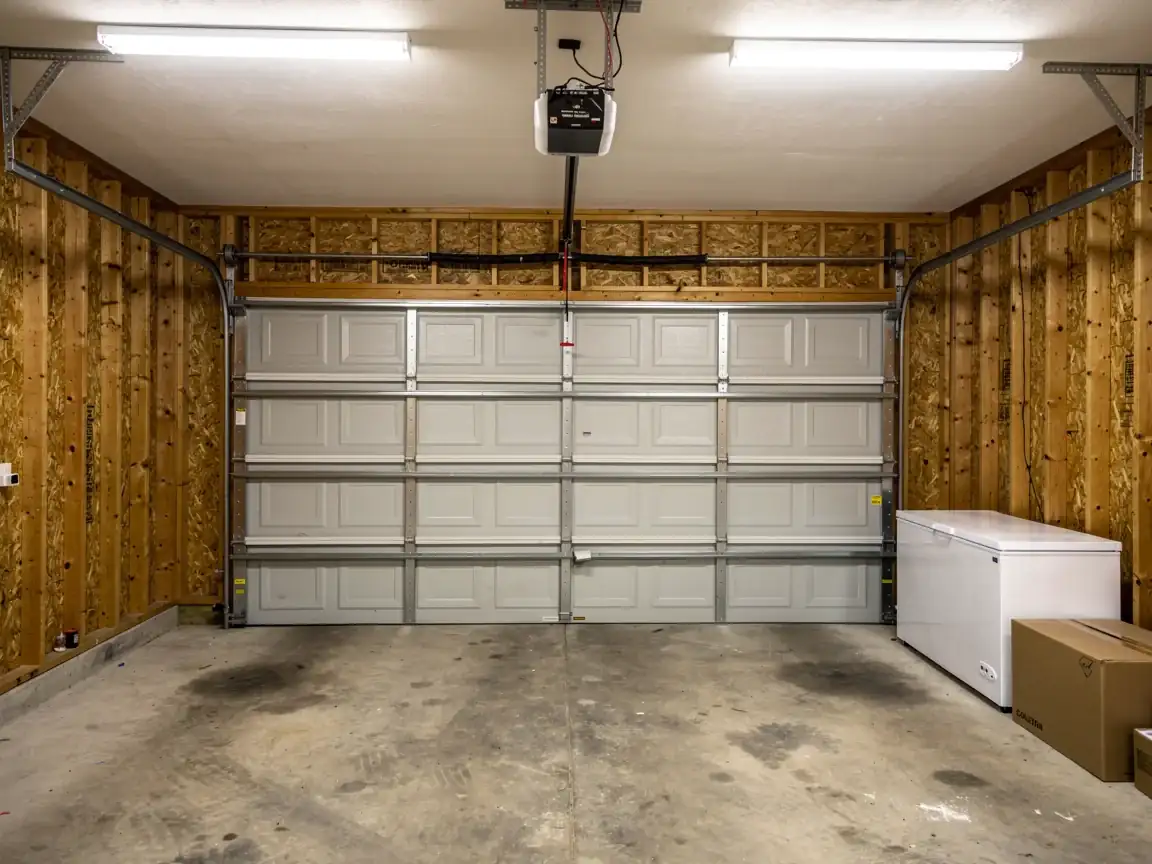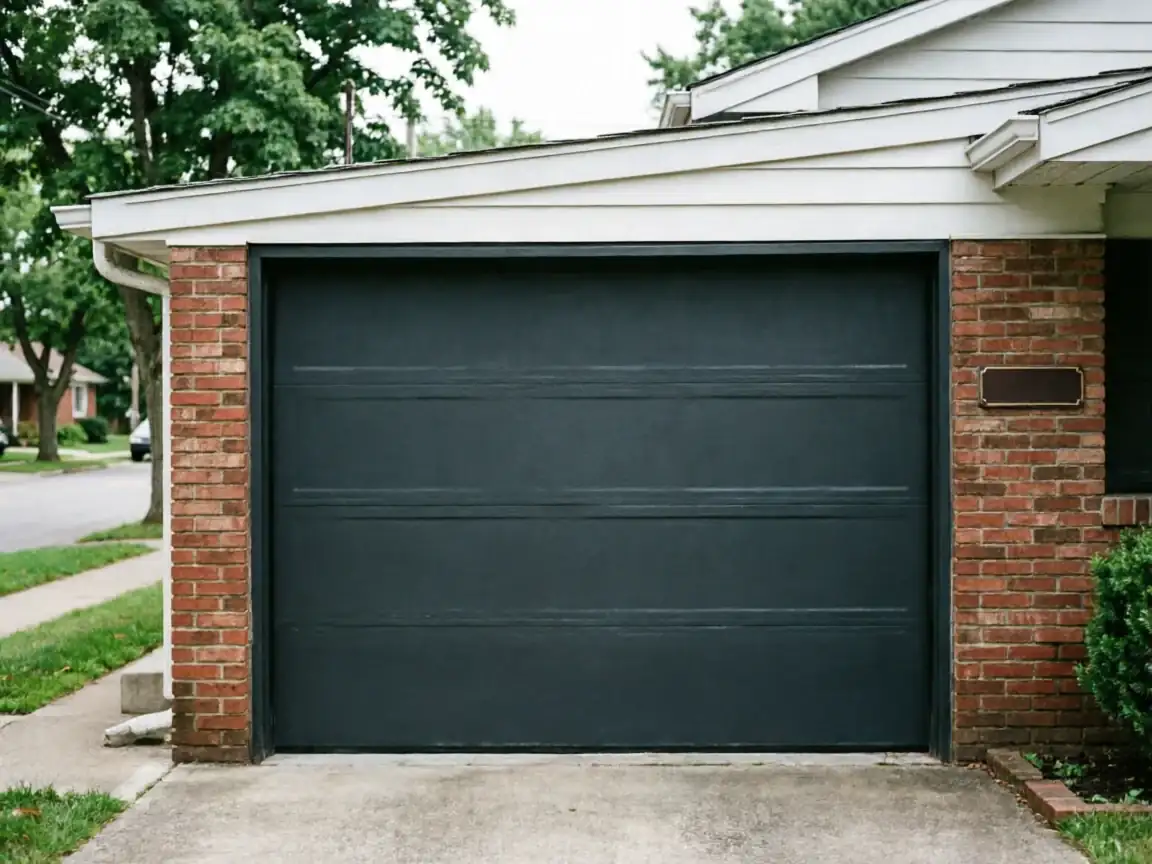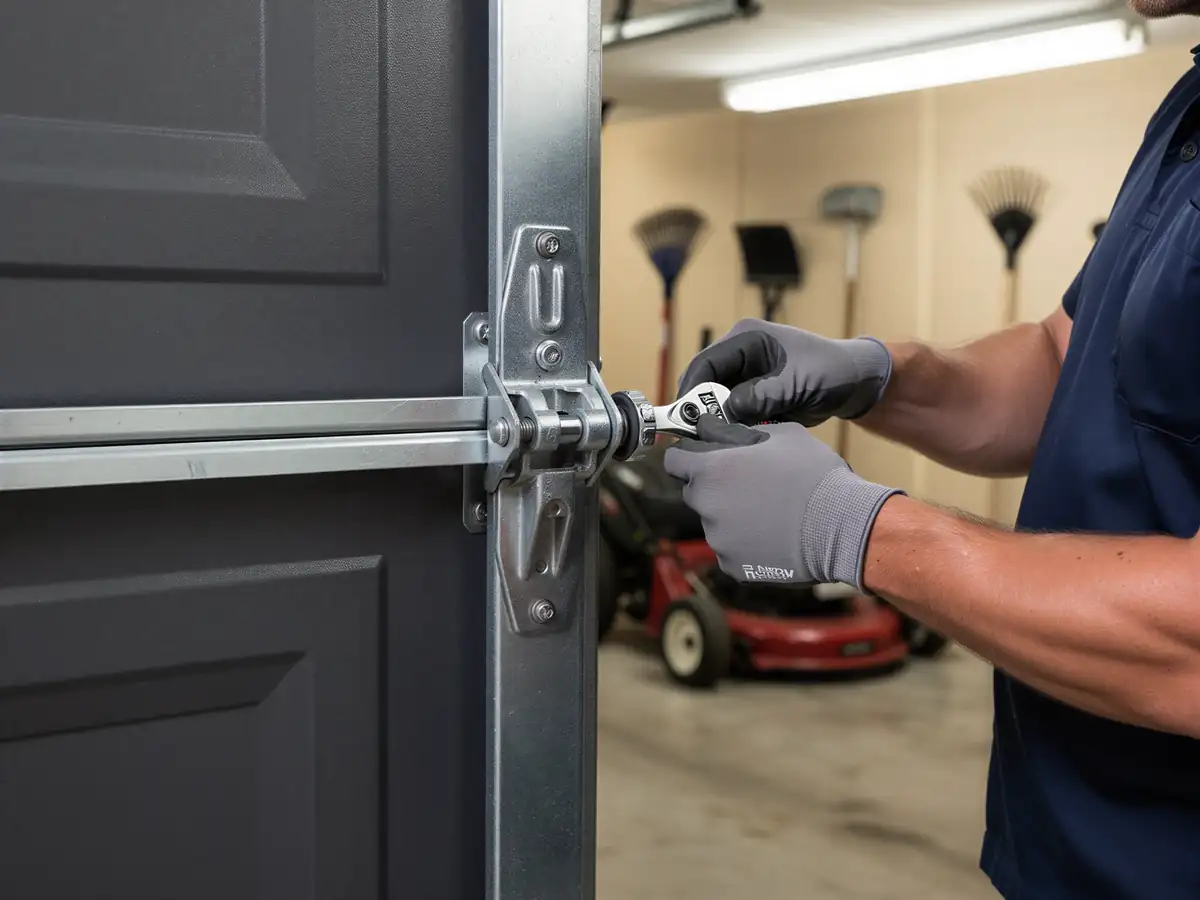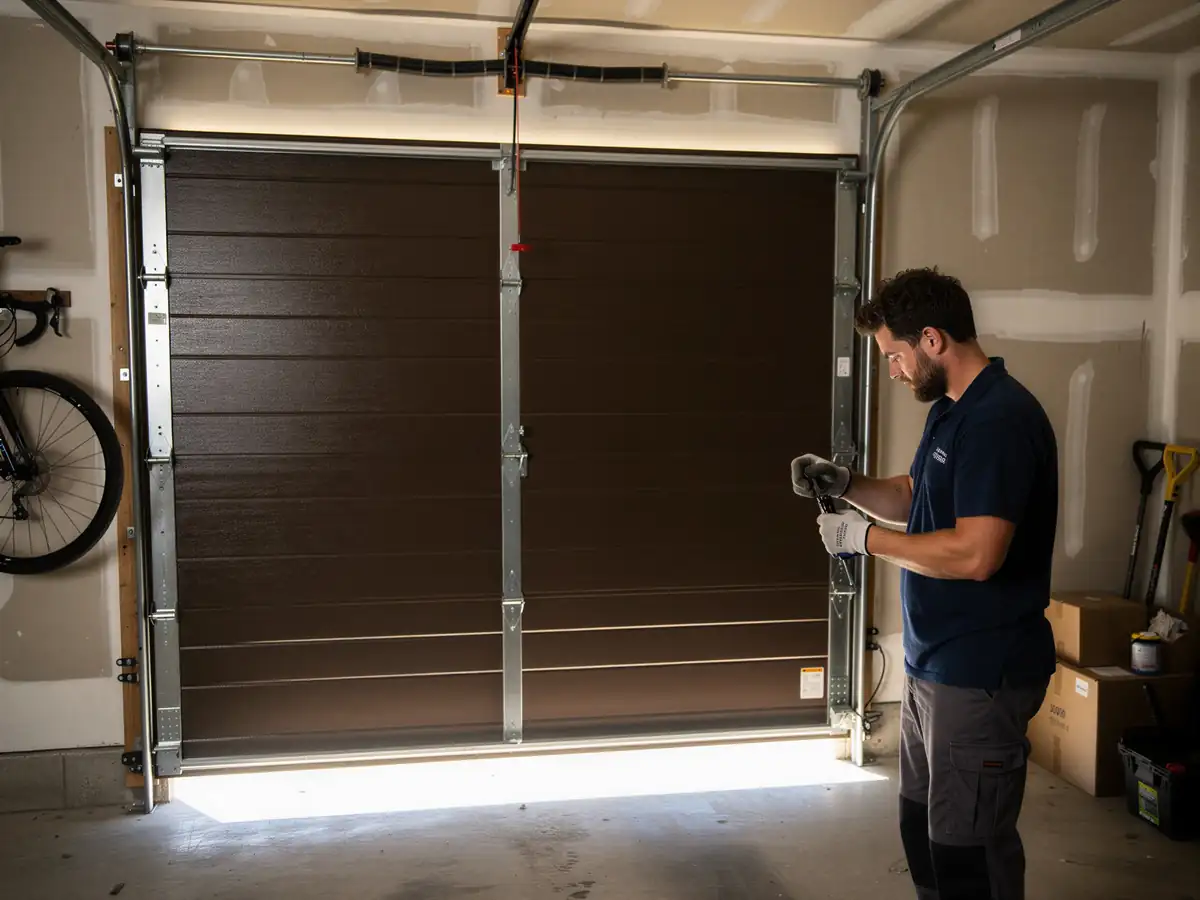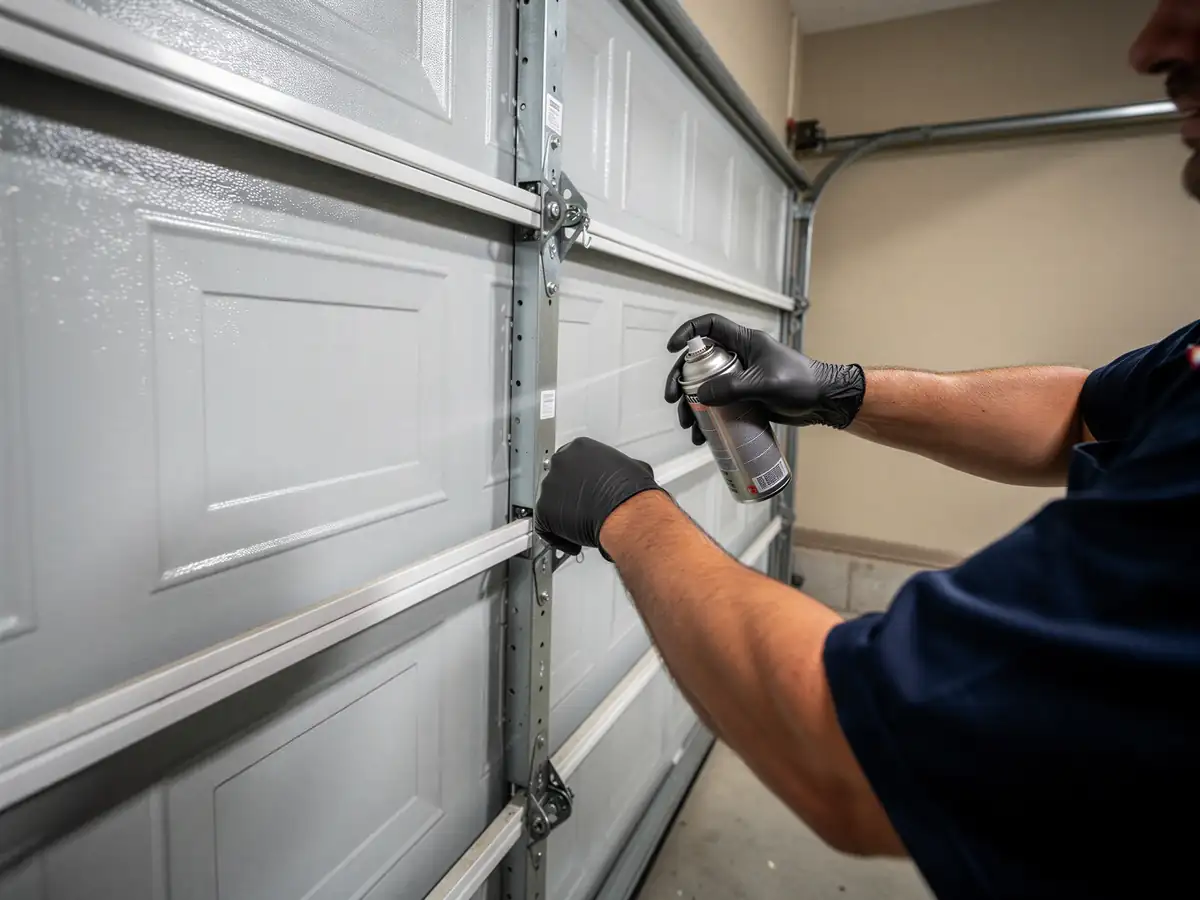
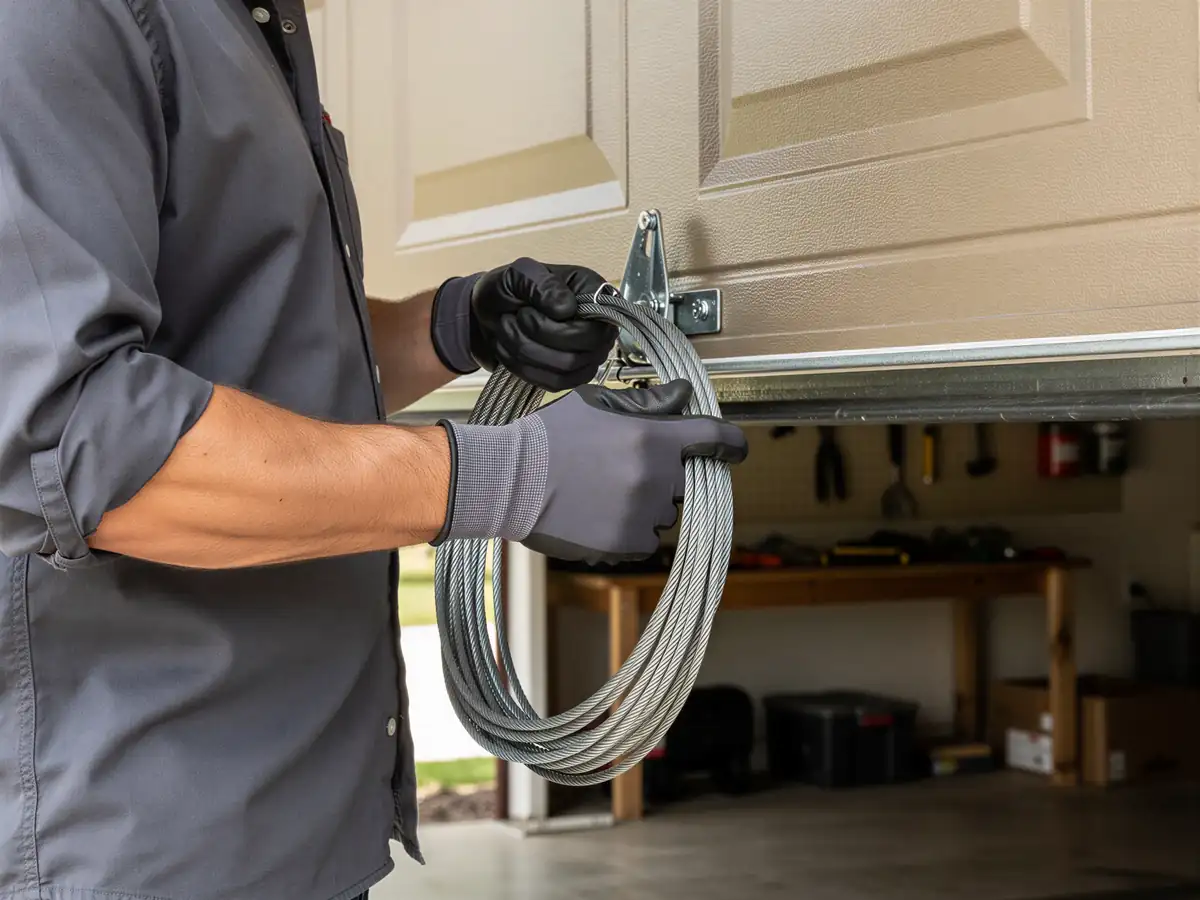
What You Are Seeing
Riverwoods sits two miles from our Deerfield shop, close enough that a cable call here doesn't mean waiting on a parts run or guessing at what's on the truck. That short drive matters because a snapped or frayed cable isn't a job you want sitting overnight with a door stuck half-open or jammed shut on its track.
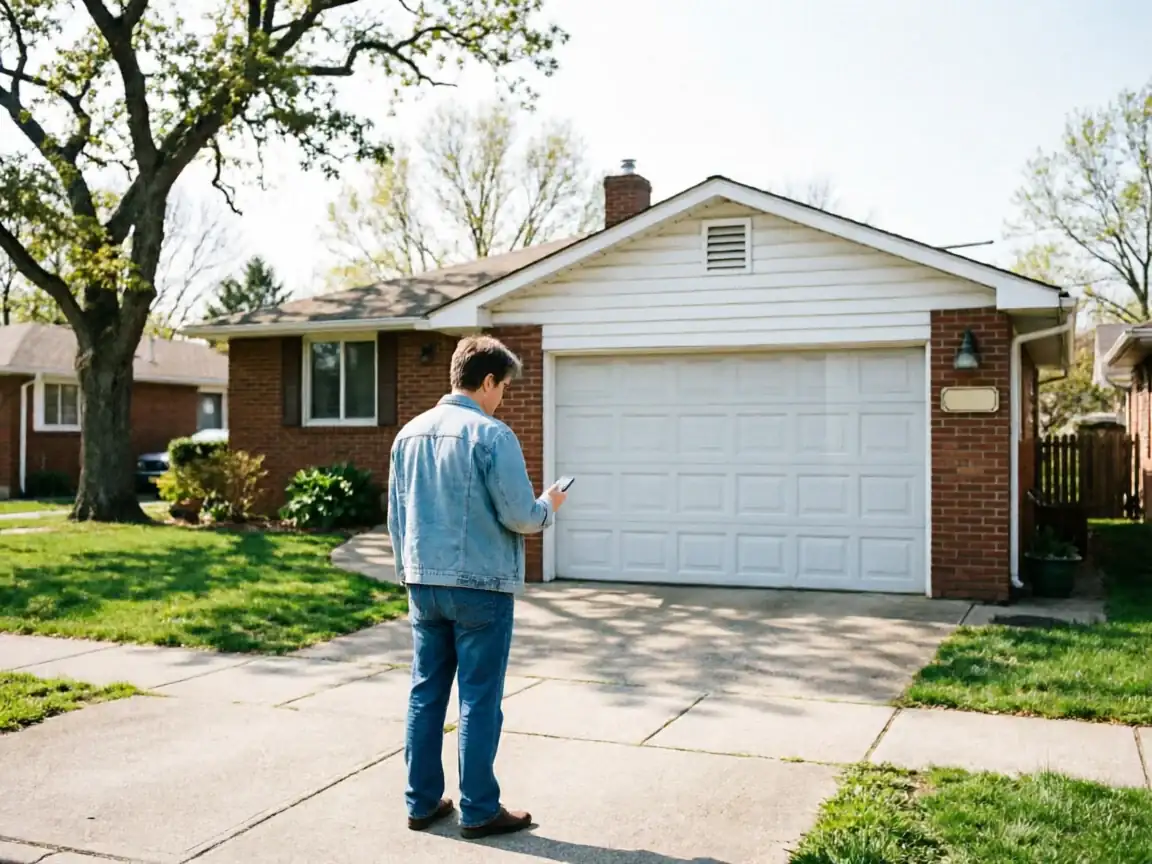
Most houses in Riverwoods were built around 1984, a good decade after the 1960s and '70s stock that fills much of the rest of our service area. That later build date usually means galvanized aircraft cable on standard torsion drums rather than the older extension-spring setups you still find on homes built before the mid-1970s. The failure looks the same either way - a door that drops crooked, a cable unwinding off the drum, or a loud bang followed by a door that won't lift - but what's actually broken and what it takes to fix it depends on which setup is behind your panel.
Winters here sit in the same cold moderate climate band as the rest of the territory, so cable corrosion from road salt spray and repeated freeze-thaw cycles is still a yearly concern, even on newer hardware.
Parts We Carry
For doors from the Riverwoods era, galvanized aircraft cable in standard gauges and lengths is a stock item, along with the drums, pulleys, and bottom brackets that go with a torsion-spring, cable-drum system. We don't carry every oddball cable length for every custom door, and if a house has a non-standard track height or an unusual drum size, that can mean a short delay while we source the right part rather than installing something close enough.
That's the one honest limit worth stating up front: standard parts, we have on the truck; nonstandard ones, we order. Given how uniform construction was through the 1980s in this part of the territory, most Riverwoods jobs fall into the standard category, but we won't pretend every door does.
What the Fix Involves
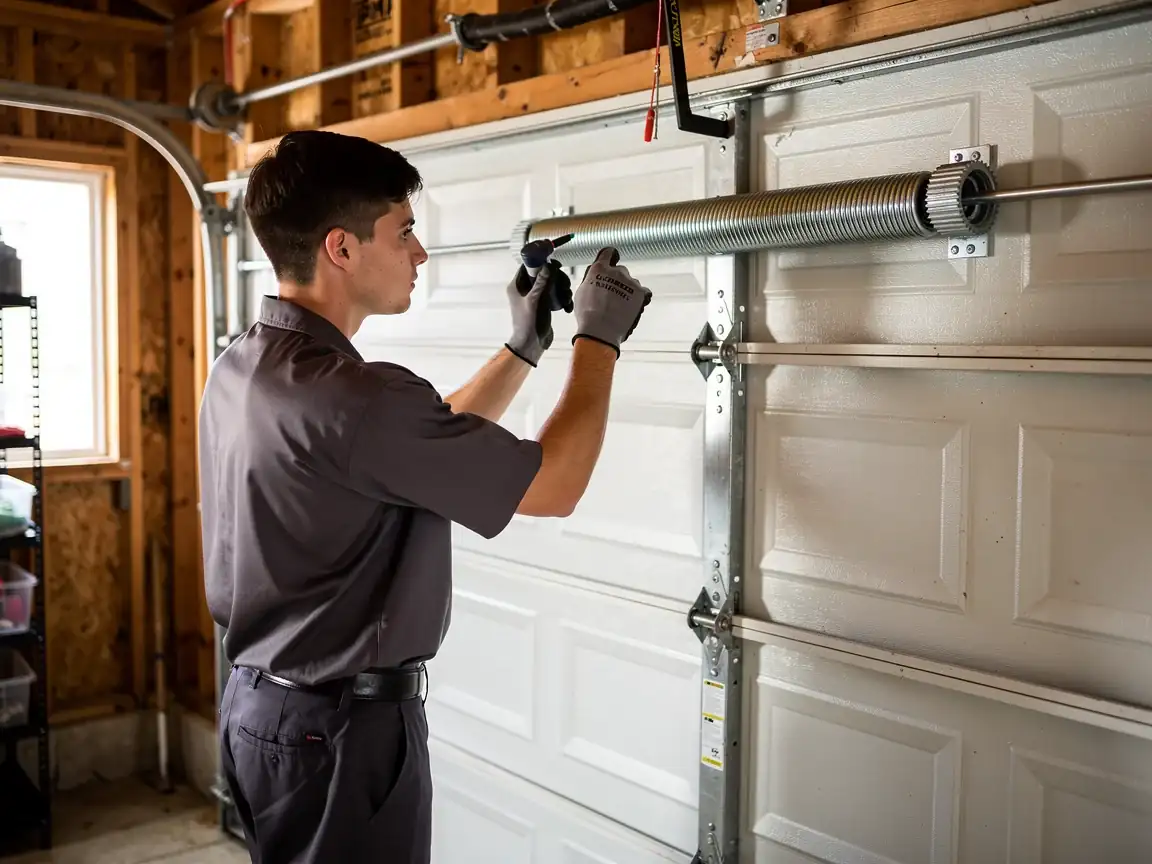
Cable repair means releasing tension on the torsion spring first
Never cutting or pulling a wound cable under load, which is how fingers and faces get hurt. Once the spring is unwound and the door is secured, we pull the old cable off the drum, check the drum and bottom bracket for wear or rust pitting, and run new cable at the correct length and gauge for your door's weight and track height.
On a double door especially, we check both cables and both drums even if only one side failed
Because a cable that snapped from age or corrosion usually has a matching cable on the other side that's close behind it. Replacing one side and leaving the other to fail in a few months isn't a fix, it's a second service call.
What You Pay
We don't post a flat number here because cable repair cost depends on whether it's one cable or two, whether the drums or bottom brackets also need replacing, and whether the spring itself took damage when the cable let go. A straightforward one-cable swap on a standard double door costs less than a job where the drum chewed through and needs replacing too.
Given the income level in this part of the territory, we also get more requests to replace older hardware outright rather than patch it piece by piece, especially on a door that's already shown one cable failure and is likely to show a second. That's a conversation we have on site, not a number we quote blind over the phone.
Can You Do This Yourself
A wound torsion spring holds enough stored energy to cause serious injury if it lets go while you're working near it, and cable work happens right at that spring. This isn't a job for a Saturday with a socket set, even for an otherwise handy homeowner.
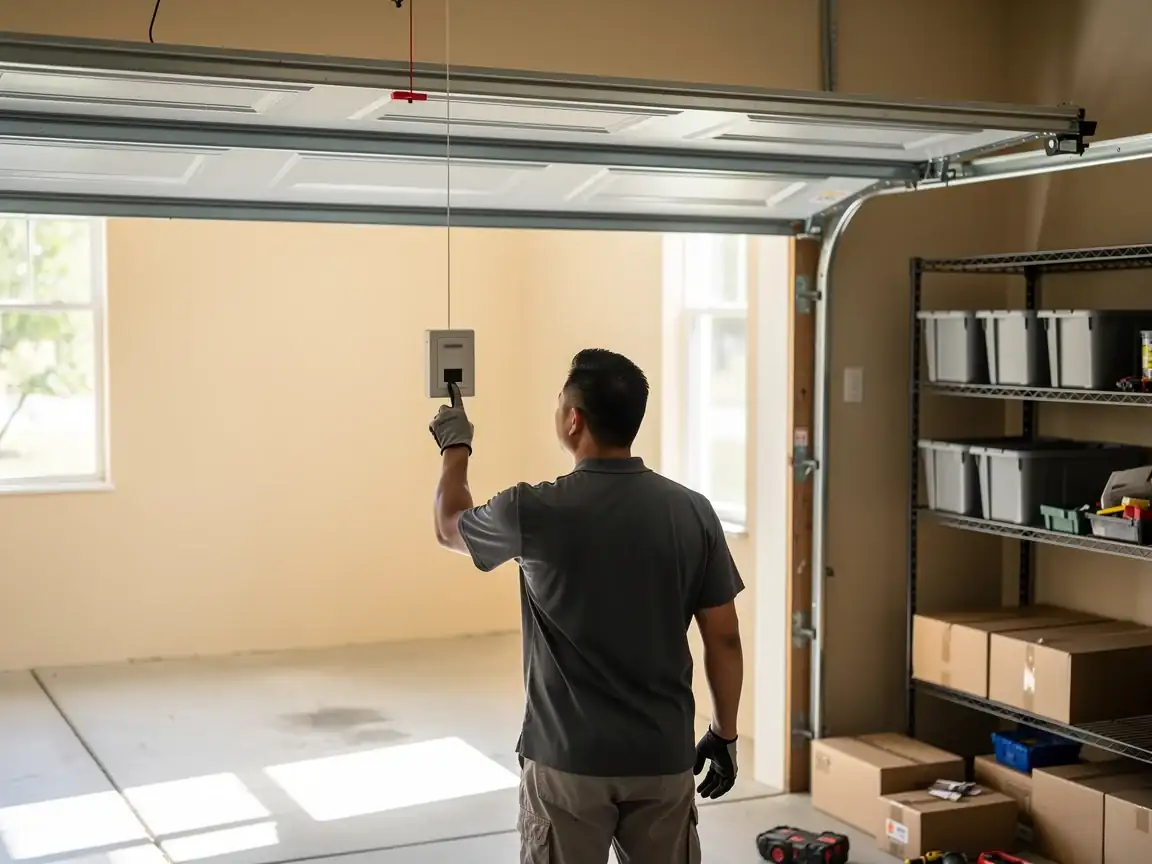
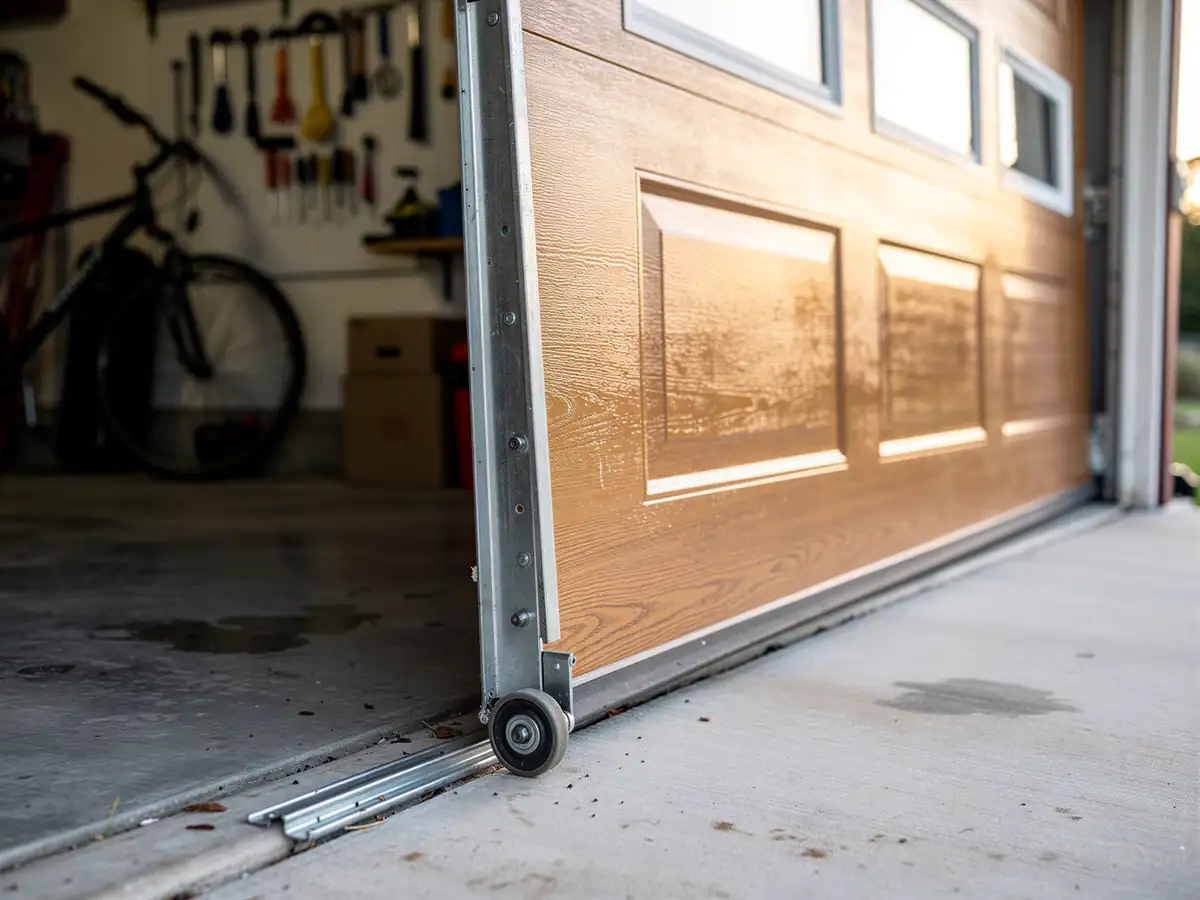
What you can safely check yourself: whether the cable is visibly frayed or off the drum, whether the door is sitting crooked in the frame, and whether the opener is still trying to pull against a door that physically can't move. Any of those means stop using the opener and the door until it's looked at, since forcing a door with a bad cable can bend the track or crack a panel, turning a cable job into a bigger one.